
There is a disease in the soil of the jarrah forest that you cannot see, smell or hear. It travels in a bit of mud on a boot or a tyre, and it does its damage underground for years before a single tree looks sick. It is called dieback, and most land managers agree it is the most serious disease the jarrah forest faces. Fire, the forest can recover from. This, on its own, it cannot.
This article explains what dieback is, why there is no cure, and what it actually takes to keep it out of a forest.
What dieback is
Dieback is caused by Phytophthora cinnamomi, a tiny organism that lives in soil and attacks the roots of plants. It is not a fungus and not an insect. It is a water mould, and it works by infecting the roots and cutting off the tree’s water and food until the tree slowly starves.
The jarrah tree is its best known victim, but it also kills marri and much of the smaller growth beneath them. Those pages cover the basics. This one covers what happens next, and what can be done about it.
Why dieback is so hard to stop
Most plant diseases give you something to work with. You see them early, they affect a few species, and you can often treat them. Dieback does the opposite on every count.
| Most plant diseases | Dieback |
| Show up early | Stay hidden for years before symptoms show |
| Hit a few species | Can kill more than 40% of WA’s native plants |
| Can be treated or cured | Cannot be removed from soil, ever |
| Spread slowly | Spread fast, on anything that moves soil |
| Die off in summer heat | Wait out summer, then spread again in wet soil |
The row that matters most is the third one. There is no cure. Once the organism is in the soil, nothing takes it out again. Everything people do about dieback is either keeping it out of clean forest or slowing it down where it has already taken hold.
It is treated as a national problem, not just a local one. P. cinnamomi is listed as a key threatening process under federal law, the same level of concern given to the country’s worst environmental threats.
How dieback spreads
Dieback cannot really move on its own. It has to be carried, and mostly it is carried by water and by people.
- In soil, on things that move. Tyres, boots, tools, machinery, bike wheels, even the feet of animals. Anything that picks up mud can pick up dieback.
- In water. Once it is in the ground, it moves short distances through wet soil and gets washed downhill by winter rain.
- Quickest of all, on wheels. One lump of infected mud dropped on a clean track can start a new patch that keeps spreading for decades.
That is how a disease with no way of moving itself has reached so much of the Southwest since the 1960s. It travels as fast as the boots and tyres that carry it.
What dieback does to a forest
The disease was first identified in WA’s jarrah forest in the 1960s, and it has been changing the landscape ever since.
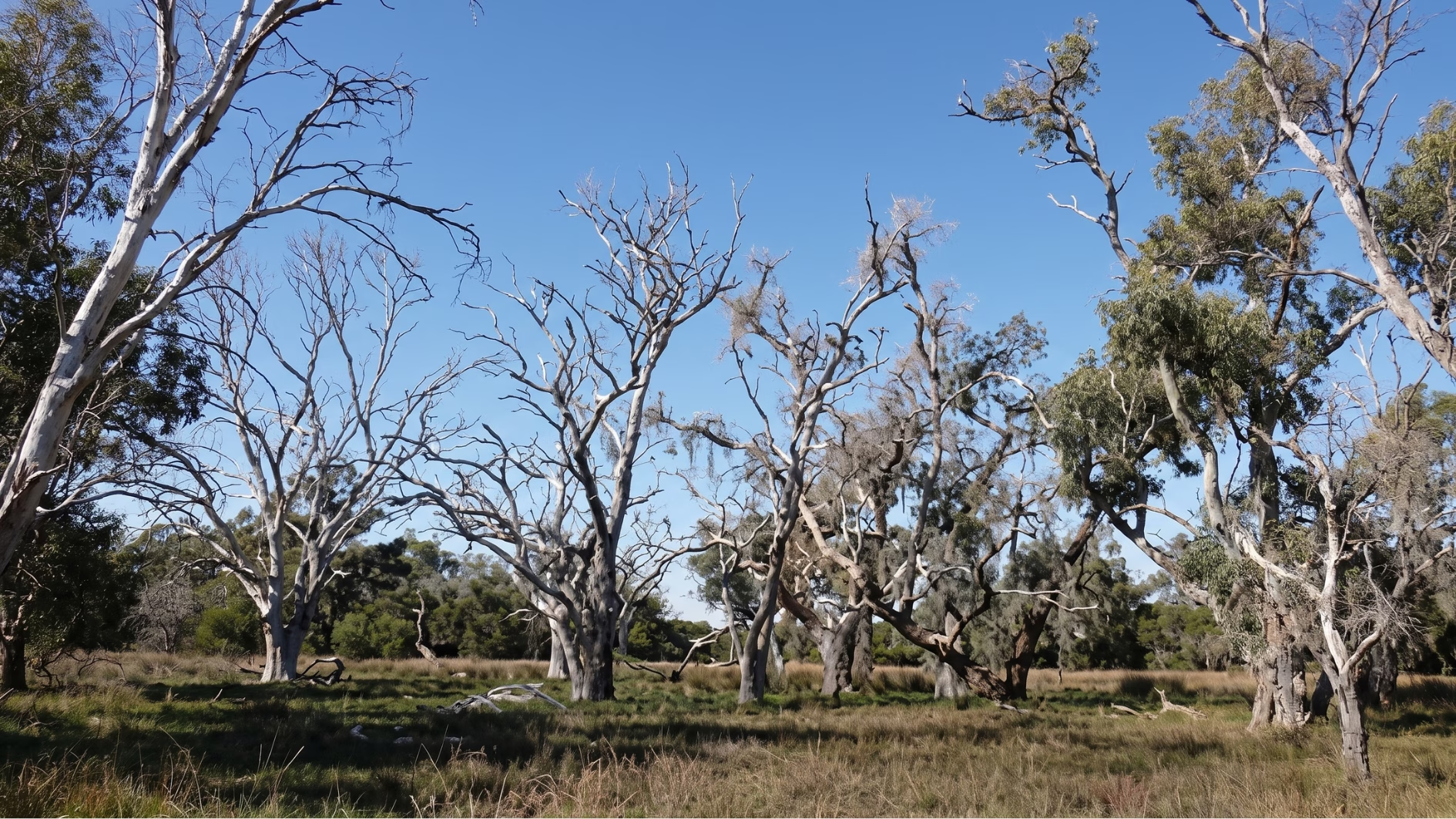
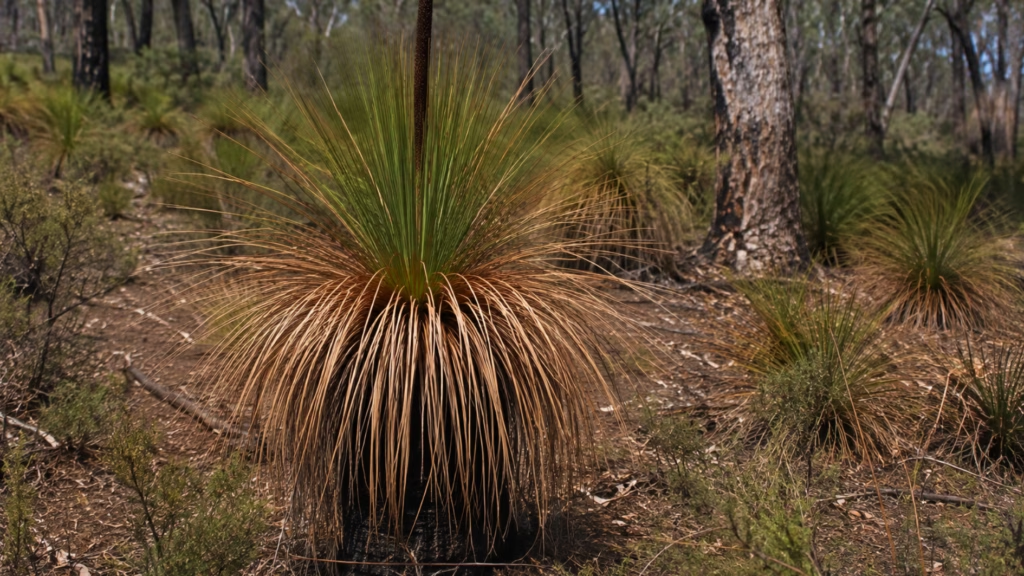
It starts small. A few yellow leaves, a dead grasstree, a banksia turning brown. But within a few seasons a patch of forest that looked fine can be standing thin and grey. The smaller plants usually die first, and they are the ones that feed and shelter the forest’s birds and animals. So dieback does not only kill trees. It empties out the whole system living beneath them.
If you know what to look for, an infected patch tends to die back in this order:
- Grasstrees (balga) turning brown, usually the first sign
- Banksias and zamias dying off next
- Bare, open ground where thick scrub used to be
- Dead and dying jarrah and marri, which go last, not first
For how the forest is layered and what lives in each part, see [the jarrah forest ecosystem guide].
There is no cure, but the spread can be stopped
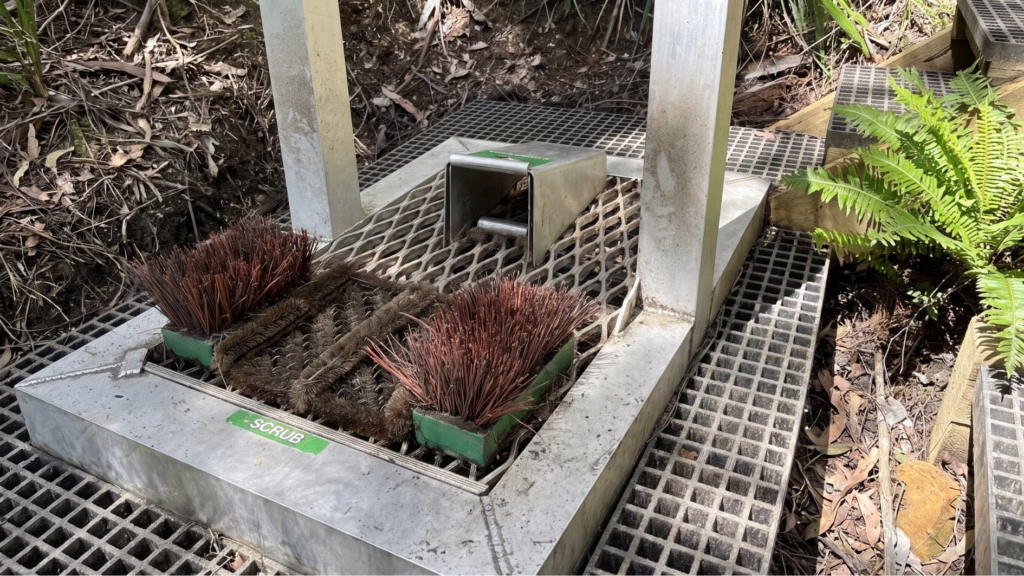
Since the disease cannot be removed, everything comes down to two jobs: keep clean forest clean, and slow the disease where it has already taken hold. This is the work of DBCA, the government department that manages the state’s forests, and it is what a well run conservation forest does too.
When DBCA surveys a forest, it sorts the ground into three types: infested, uninfested, and what it calls protectable areas, meaning ground that is likely to stay disease free as long as hygiene is kept up. That middle idea, protectable, is the whole point of careful management. A forest does not have to be untouched to be worth protecting. It has to be kept clean enough to stay that way.
Keeping it clean. DBCA’s rule is simple. Before you go into a natural area, anything that could carry soil, your vehicle, boots, tools or machinery, has to be free of mud and plant matter. It is called Clean on Entry, and in higher risk places you clean on the way out too, so you do not carry infected soil home to your own garden.
In practice this means boot cleaning stations, vehicle wash points, and doing any digging in dry summer weather, when the organism is least active. Where the risk is high, DBCA also controls access directly, closing roads in wet weather when soil sticks and travels most easily. None of it is glamorous, and together it is the most useful thing anyone does about dieback.
Buying time. For valuable trees already under threat, DBCA uses phosphite, a fungicide it has been researching on jarrah since the late 1980s. It does not kill the disease. It strengthens the tree’s own defences and slows things down, which can protect a tree for years. It is a stay of execution, not a cure.
Knowing where it is. You cannot keep out of infected ground if you do not know where it starts. Trained mappers mark the line between clean and infected forest, so tracks, access and work can all be planned to keep the disease on the wrong side of it.
Why dieback matters when you plant a memorial tree
A memorial tree is meant to last for centuries, and dieback is the thing most likely to cut that short. A forest that takes hygiene seriously is protecting every tree in it, including the ones planted from now on. It is a fair thing to ask about before choosing where to plant.
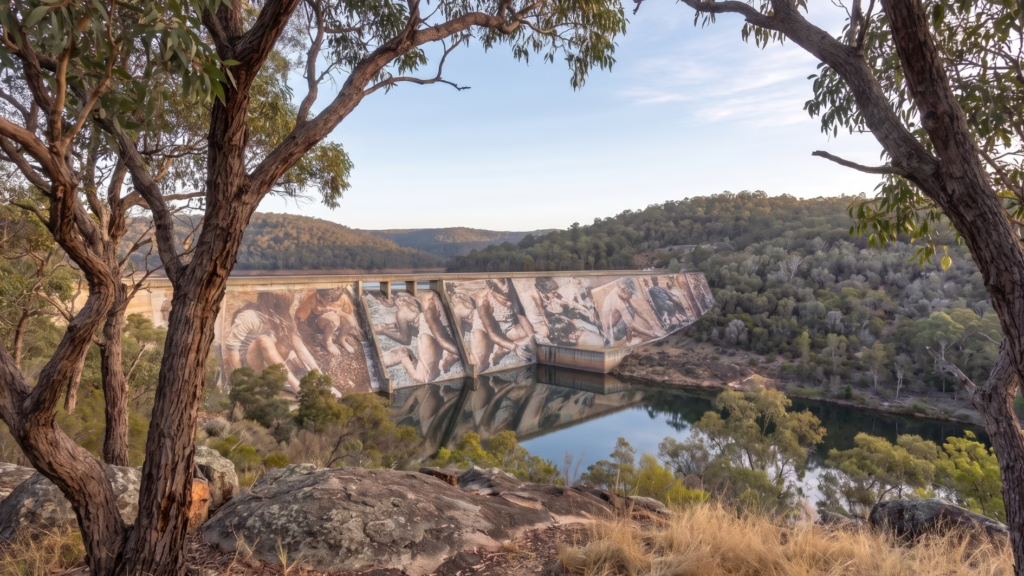
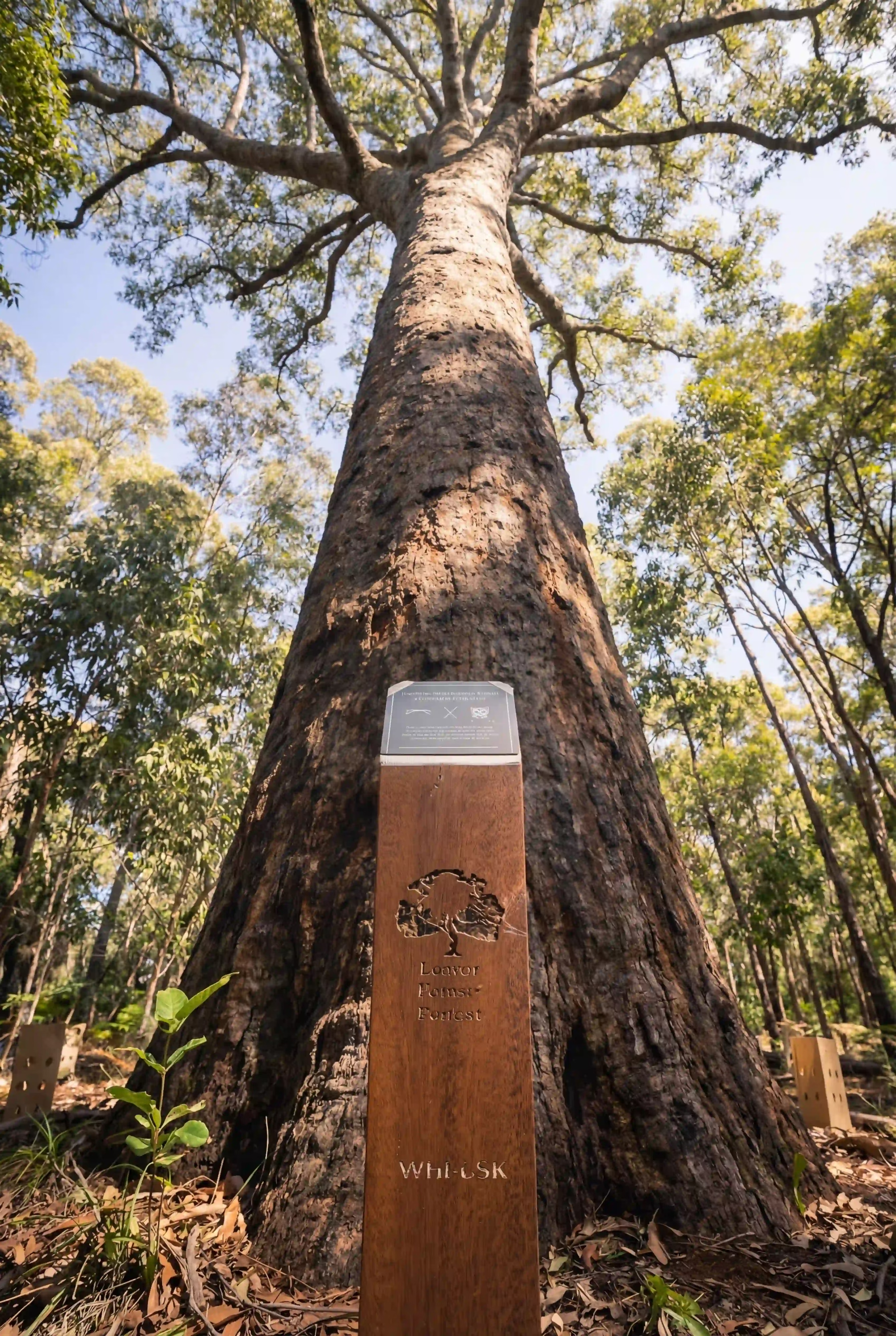
Living Legacy Forest plants native jarrah, marri, blackbutt and bullich in protected jarrah forest at Wellington Dam. You can see what a planting involves on the memorial tree packages page.