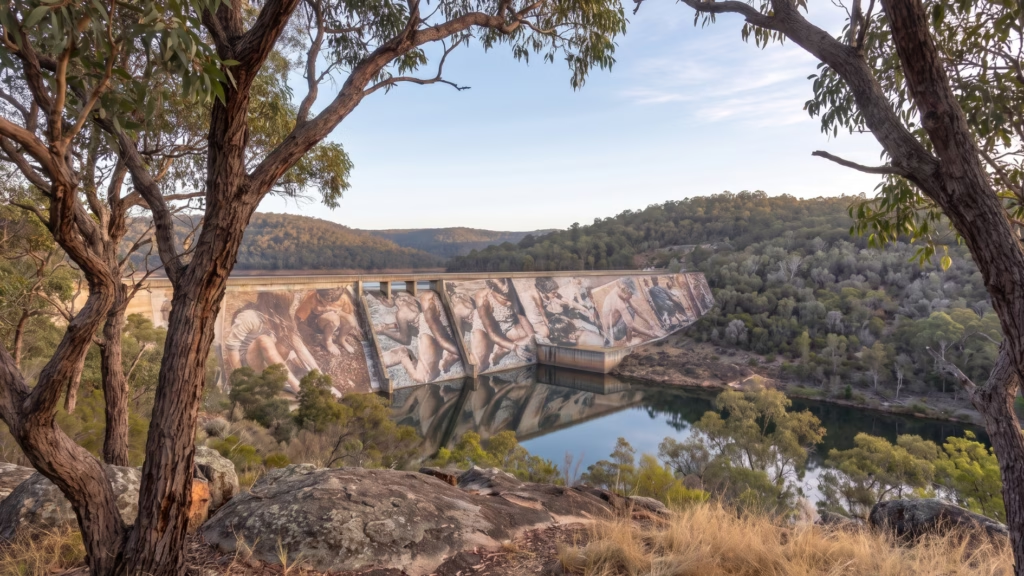

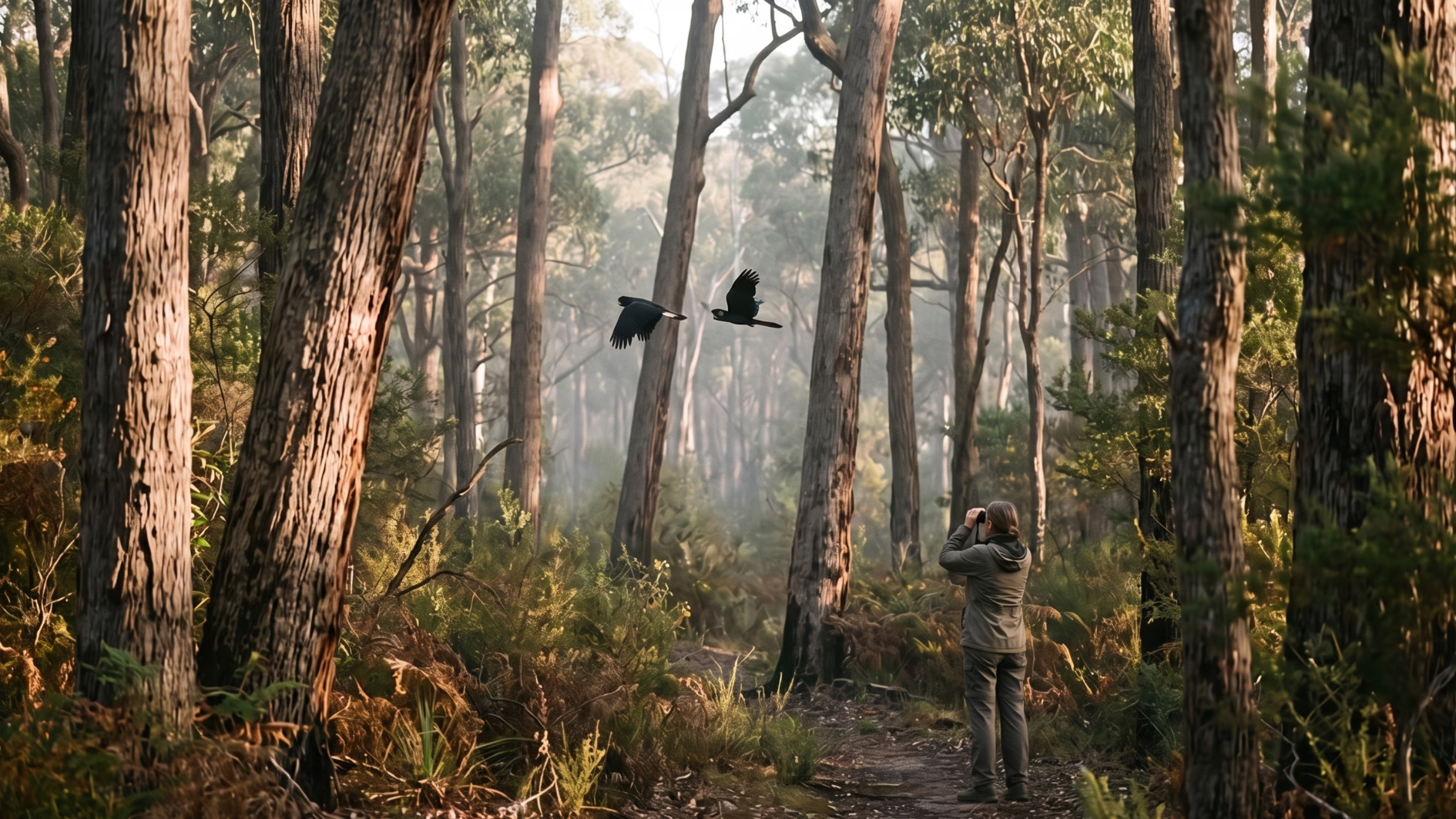
Wellington National Park covers 17,000 hectares of jarrah, marri, and blackbutt forest along the Collie River in Southwest WA, about two hours south of Perth.
Tourism WA lists more than 70 bird species associated with the park. eBird records from visitors add more direct sightings: Western Rosella, Red-eared Firetail, Red-winged Fairywren, White-fronted Scrubwren, and all three of the southwest’s threatened black cockatoos.
The park sits on Country of the Kaniyang and Wiilman people.
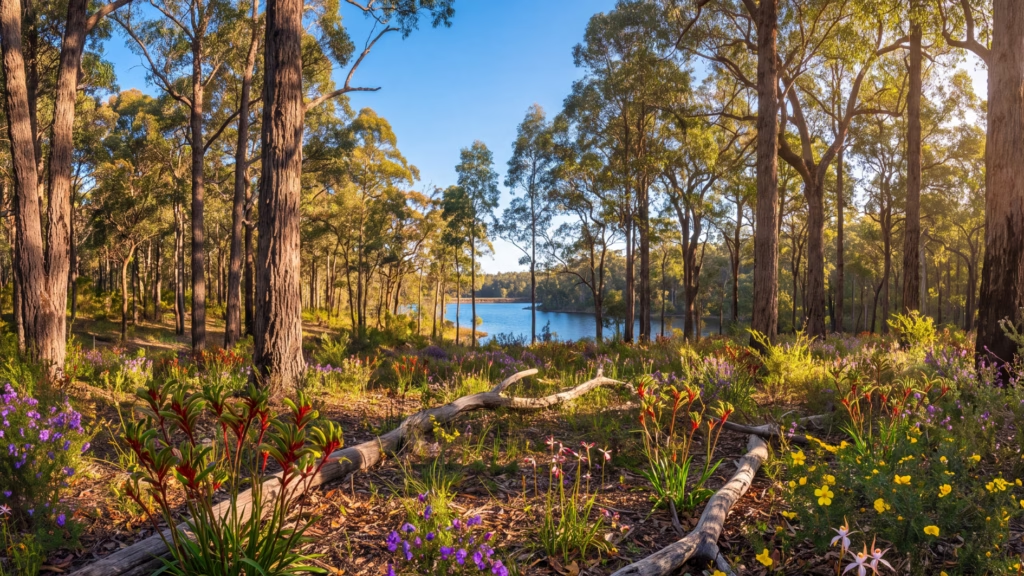
Tall forest canopy, flowering understorey, a flowing river, and open dam surrounds all sit within a short drive of each other, so a single visit can cover several different types of birding habitat. This guide covers the best locations, what to expect through the year, and how to watch without disturbing what you came to see.
Also near Wellington Dam
Wellington Dam Living Legacy Forest is a protected conservation forest in the jarrah zone. Tours are free.
[ Book a tour — livinglegacywellingtondam.org.au ]
What birds live here
Canopy and forest species
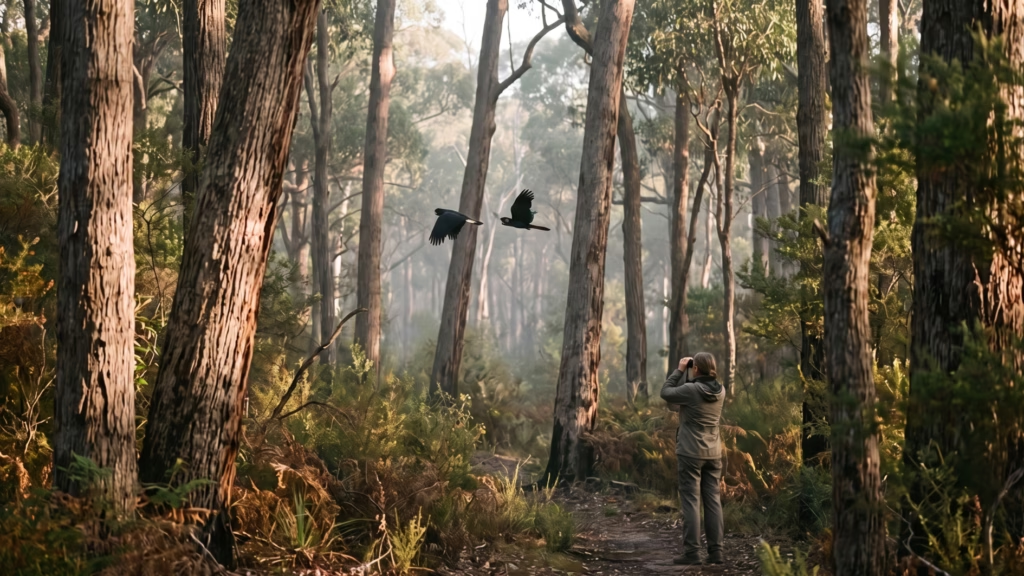
The tall jarrah, marri, and blackbutt canopy supports all three of the southwest’s black cockatoo species: the forest red-tailed black cockatoo (Vulnerable), and Carnaby’s and Baudin’s black cockatoos (both Endangered).
Flocks pass through at different times of year. Late summer and autumn movements are often the most visible.
The forest also holds Western Rosella, Red-capped Parrot, Australian Ringneck, Kookaburra, and Rainbow Bee-eater.
Forest floor and midstorey
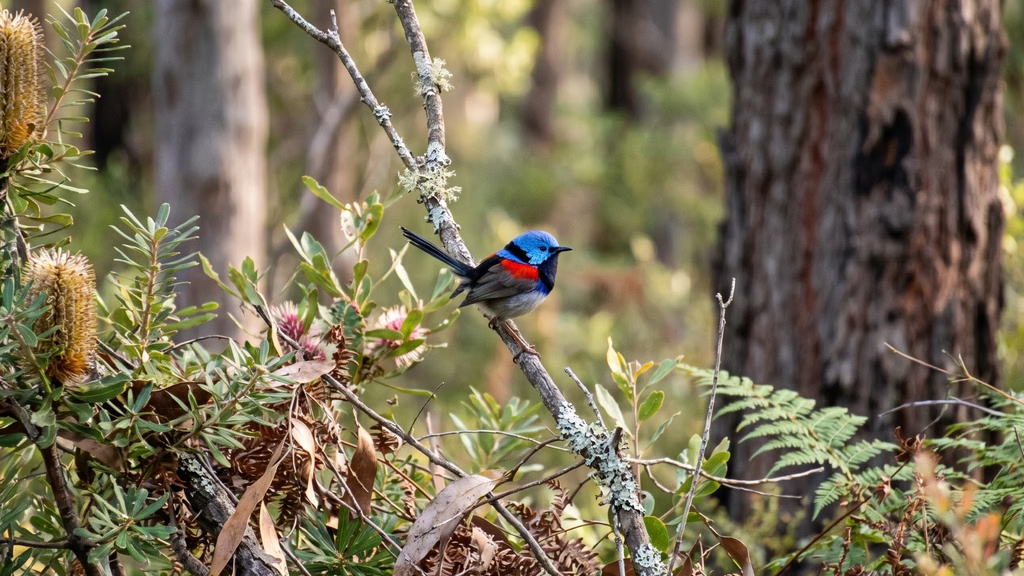
Red-winged Fairywren is one of the most reliable sightings at Wellington. Look for it in dense scrub along creek lines and forest edges. Red-eared Firetail turns up in the same habitat.
White-fronted Scrubwren, Brown Thornbill, Weebill, and several honeyeater species move through the midstorey. Western Spinebill is active around flowering banksia and grevillea in the understorey.
Tawny Frogmouth is present, but you will need to spotlight after dark to find one.
River and waterbirds
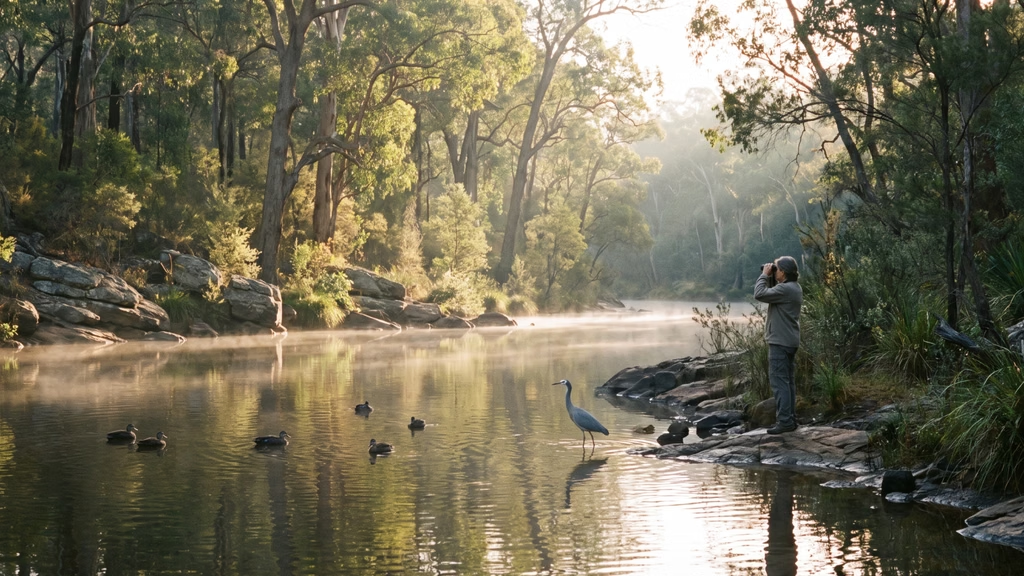
The Collie River attracts Pacific Black Duck, Maned Duck, White-faced Heron, Little Pied Cormorant, and Great Cormorant, especially around Honeymoon Pool, Long Pool, and the dam surrounds.
Azure Kingfisher has been reported along creek lines in the park, and Buff-banded Rail uses the denser waterside vegetation along the river corridor.
Raptors
Brown Goshawk and Collared Sparrowhawk occur in the forest. Whistling Kite is often seen over the dam and open areas.
Black-shouldered Kite and Nankeen Kestrel work the open ground near forest edges, and Brown Falcon appears in the clearer country on the park’s margins.
Where to go
| Location | What you might see | Best time | Practical notes |
| Honeymoon Pool | Waterbirds, forest edge species, wrens, fairywrens, bronzewings, parrots. Pacific Black Duck on the river | Dawn on weekdays. The deck gives an elevated view of the river | Busy on weekends and school holidays. Arrive by 7am for the best conditions |
| Lennard Drive | Canopy scanning for cockatoo flocks, parrots in flowering trees, raptors over clearings | Early morning, driving slowly with the windows down. Stop at Long Pool and Big Rock | One way road. Do not reverse. Park only in designated areas |
| Wellington Dam and surrounds | Kites perched on powerlines, cormorants on the dam wall, forest birds from the dam road | Any time. The kiosk area has bird activity nearby | Check current access. Do not enter restricted dam infrastructure areas |
| Creek lines and riparian zones | Red-eared Firetail, scrubwrens, wrens, herons, cormorants | Early morning. Move quietly and stay on the bank | Do not enter restricted or sensitive vegetation areas |
Do not publish or geotag active nest sites, black cockatoo roosts, or specific hollow locations. Sharing sensitive locations attracts disturbance and can affect breeding outcomes.
Log sightings through eBird, and use the platform’s sensitive species settings for threatened birds.
When to visit
| Season | Conditions | What to expect |
| Spring (Aug to Nov) | Most active breeding season. Forest birds are vocal | Flowering marri and banksia draw in honeyeaters. Black cockatoo flocks move through. Best time for orchids and wildflowers in the understorey |
| Summer (Dec to Feb) | Early morning is essential. Heat limits midday activity | Water sources on the Collie River concentrate birds. Wrens and robins stay active in shaded creek line vegetation |
| Autumn (Mar to May) | Cooling conditions. Good forest visibility as the understorey dries out | Thornbills and pardalotes are active. Fairywrens remain visible. River levels are dropping |
| Winter (Jun to Jul) | Quieter forest, but the river is flowing. Forest wren and scrub species stay active | Shorter daylight and wet tracks. River levels rise and crowds thin out at every site. Pack warm layers |
Spring is the best window for most birdwatchers.
Flowering marri is the single most reliable sign of black cockatoo activity. When marri is producing seed capsules or in flower, the cockatoos follow. Marri flowers from December through May, peaking around February and March, which means late summer and autumn can still produce good cockatoo sightings outside spring.
The jarrah understorey wildflowers guide covers the parallel flowering calendar that drives honeyeater activity.
How to birdwatch without disturbing wildlife
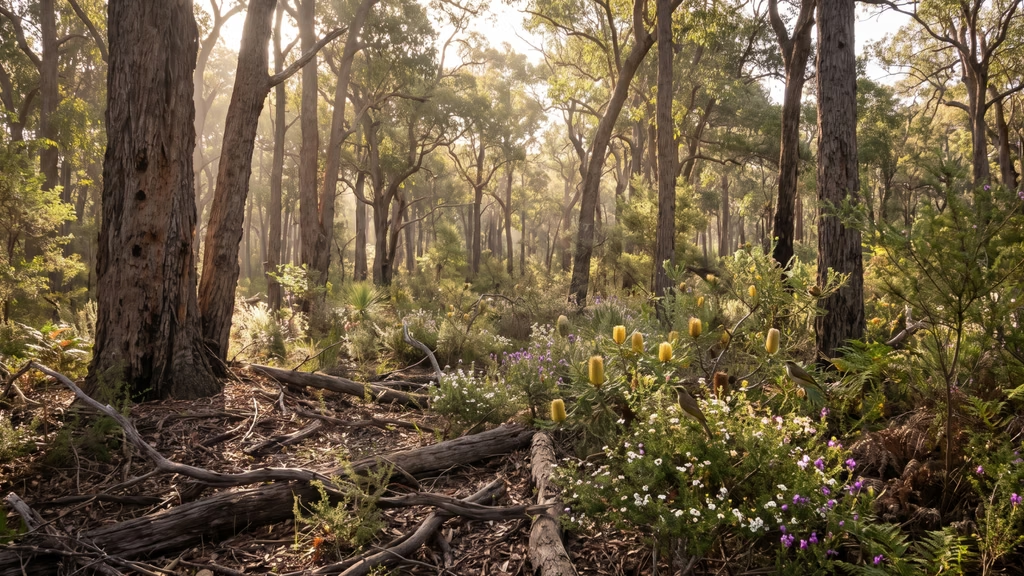
Arrive early. Most forest bird activity peaks in the first two hours after dawn, and again for an hour or so before dusk.
Move slowly and quietly. Birds hear you before you see them, and a pause after you stop moving often reveals activity that a steady approach would suppress.
Use binoculars or a telephoto lens rather than approaching. Do not use call playback to lure threatened species. Do not feed wildlife, handle feathers or nests, or approach trees with active hollows.
Keep dogs leashed and controlled at all times. In the campground, secure your food and do not let scraps attract birds. It trains them to expect food from people.
The three black cockatoos: a quick identification note
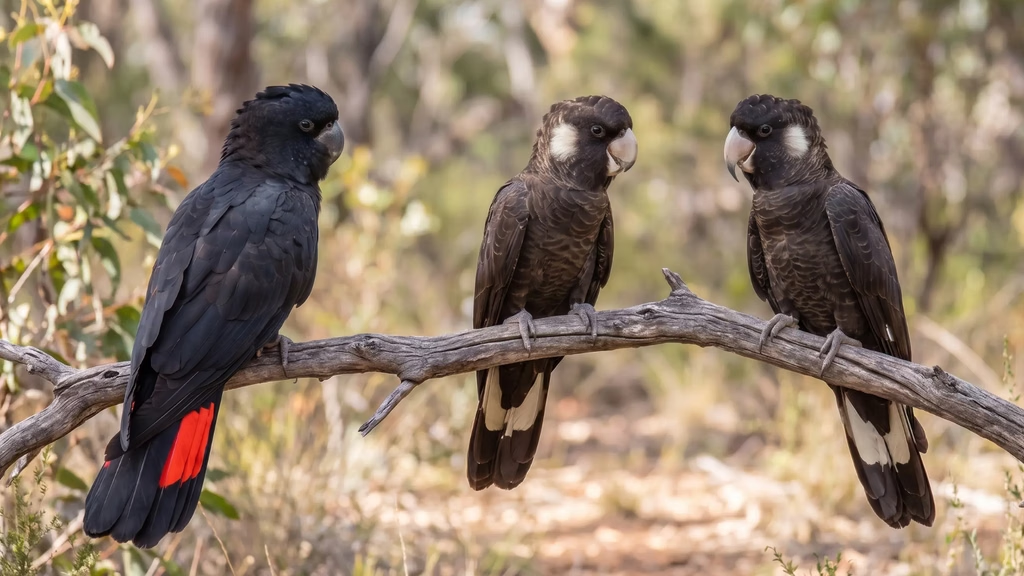
All three southwest black cockatoos occur in or near Wellington National Park. Telling them apart matters for accurate eBird reporting.
Red tail panels mean forest red-tailed black cockatoo. White tail panels mean either Carnaby’s or Baudin’s. To separate those two, look at the bill. Carnaby’s has a short, wide bill. Baudin’s has a long, thin one.
For the full picture on all three species, including diet, habitat, and conservation status, see the separate WA black cockatoos field guide.
Wellington Dam Living Legacy Forest
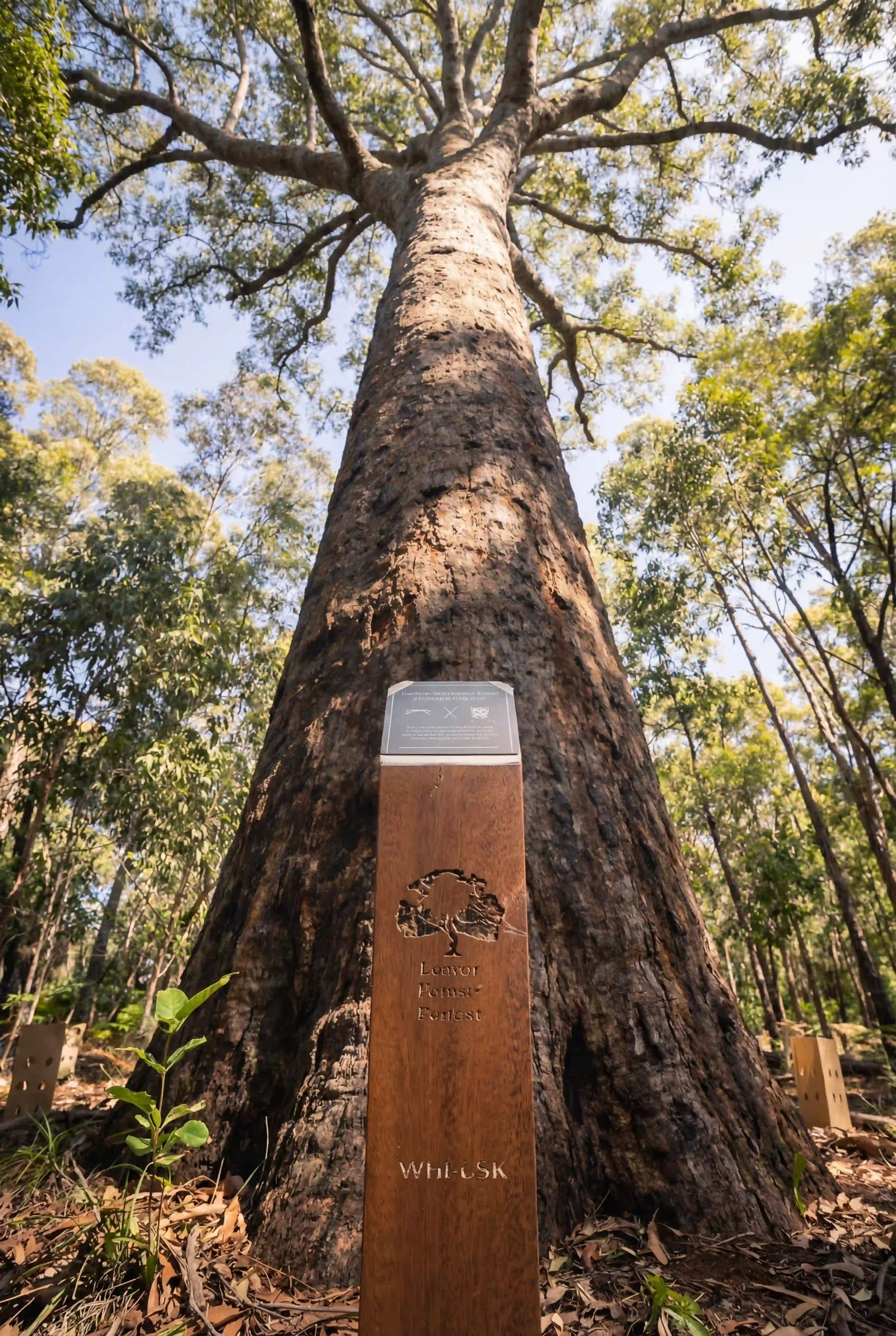
Wellington Dam Living Legacy Forest is a protected conservation forest near the dam, a short drive from the main birdwatching sites in the park.
A DBCA conservation covenant protects the forest from clearing, which preserves the old marri and jarrah trees black cockatoos need for nesting hollows.
It is not a public birdwatching reserve. It is a memorial tree forest, open by booked tour.
If you are birdwatching in the park and curious about conservation memorial planning, it is worth adding to your day. Tours are free. Call 0427 096 944 or visit livinglegacywellingtondam.org.au.
“My husband and I have a tree here. Visited recently and the sunlight filtering through was beautiful. There’s a kiosk nearby and bush camps if you want to make a weekend of it.”
— Melody Jones
Common questions
What birds can I see in Wellington National Park?
The park supports more than 70 bird species, including all three of the southwest’s threatened black cockatoos, Western Rosella, Red-capped Parrot, Red-winged Fairywren, Red-eared Firetail, White-fronted Scrubwren, several honeyeaters, waterbirds on the Collie River, and raptors over the open areas. What you see depends on season, time of day, and conditions.
Are black cockatoos found at Wellington National Park?
Yes. All three southwest black cockatoo species occur in the broader Wellington jarrah forest zone. Forest red-tailed black cockatoo is most reliably associated with the tall jarrah and marri forest here. Carnaby’s and Baudin’s also occur, and seasonal movement affects when and where they appear. Do not share or geotag active roost or nest locations.
When is the best time to go birdwatching at Wellington National Park?
Spring, from August to November, is generally the most active period, driven by breeding activity and flowering plants. Early morning beats midday at any time of year. Late summer and autumn can also be productive for cockatoo movement, particularly when marri is seeding.
Can I see waterbirds at Honeymoon Pool?
Yes. Pacific Black Duck, Maned Duck, White-faced Heron, Little Pied Cormorant, and Great Cormorant have all been recorded on the Collie River here. Watch from the viewing deck or established bank areas, and stay away from nesting sites and sensitive river vegetation.
How do I tell the three black cockatoos apart?
Red tail panels mean forest red-tailed black cockatoo. White tail panels mean Carnaby’s or Baudin’s. To separate those two, check the bill: short and wide is Carnaby’s, long and slender is Baudin’s. The WA black cockatoos article on this site has the full field guide.
Wellington National Park rewards patience. The birds are there. Get there early, move quietly, and give yourself time in one spot rather than covering ground quickly.
Sources and references
These are the sources behind the numbers used above: black cockatoo status, marri’s flowering window, and the park’s bird species count.
- DBCA fire information note, Black Cockatoos: species status, Vulnerable and Endangered (dbca.wa.gov.au/media/3196/download)
- Prendergast & Willers (2024), Pacific Conservation Biology: marri flowers December to May, peaking February to March (connectsci.au)
- WA Parks Foundation, Wellington National Park: over 70 bird species recorded (ourwaparks.org.au)
Book a free tour of Wellington Dam Living Legacy Forest
Walk a protected jarrah forest near all the birdwatching sites in the park. No obligation.
[ Book a tour — livinglegacywellingtondam.org.au ]
Or call 0427 096 944