
Nobody tells you this until you are already holding the ashes: scattering in Western Australia is not as straightforward as it sounds. There is no statewide ban, but there is also no blanket permission. Where you scatter matters. What you scatter matters even more.
This guide covers the rules for scattering ashes in Western Australia, where you can scatter ashes in Perth and beyond, what permissions you actually need, and what families are choosing instead. If you have been wondering what to do with ashes in Perth, this is a practical, honest breakdown.
Is Scattering Ashes Legal in Western Australia?
Yes, but with conditions. There is no law in Western Australia that prohibits ash scattering outright. The rules depend on where you want to scatter and who manages that land.
The key principle is this: if you do not own the land, you need permission from whoever does. That applies to beaches, parks, rivers, private property, and national parks alike.
Local councils in the Perth metro area often set additional conditions. Some have designated zones for ash scattering. Others restrict timing to avoid high-traffic periods. A handful require written notice even when they do not charge a fee.
The Department of Biodiversity, Conservation and Attractions (DBCA) manages national parks and nature reserves across WA. Scattering ashes inside these areas typically requires a formal permit, which is assessed case by case.
For private land, written consent from the landowner is standard practice. Verbal agreements are difficult to document and can create complications later.
Where Can You Scatter Ashes in Perth?
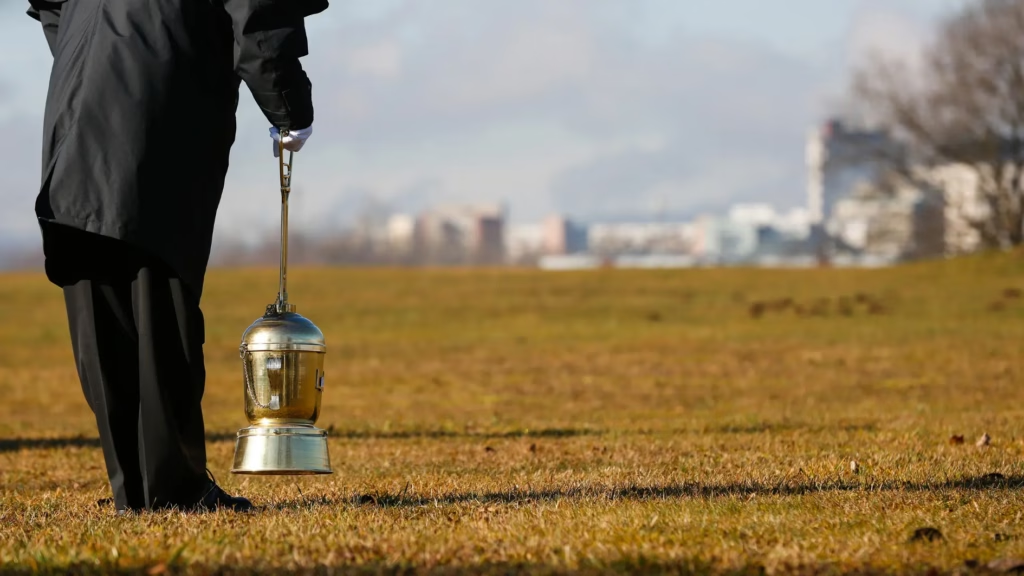
Perth has several options for families, though each comes with its own conditions.
Beaches
Beaches in Perth fall under the jurisdiction of the relevant local council and, in some cases, the State Government. Cottesloe Beach, for example, requires council notification and may have conditions around timing, method, and volume. The council will typically ask that scattering occurs away from peak swimming periods and outside designated swimming enclosures.
Floreat Beach, City Beach, and Scarborough Beach are managed by their respective councils. The process is similar: contact the council, describe your plans, and wait for written confirmation before proceeding.
The Swan and Canning Rivers
The Swan River Trust (now managed under the Department of Water and Environmental Regulation) has historically required families to check before scattering near river foreshore land. The vessel master rules apply if you plan to scatter from a boat. For river scattering, the general expectation is that ashes are scattered on the water surface rather than near riverbanks, which can affect vegetation and water quality.
Parks and Reserves
City parks, bushland reserves, and metropolitan open spaces are typically managed by local councils or the Department of Planning, Lands and Heritage. Permission is required. Some councils have formal procedures; others handle it case by case.
Designated memorial gardens within existing cemeteries, such as Karrakatta Cemetery, allow ash scattering within specific garden areas. These are generally the path of least resistance for Perth families who want a straightforward, permitted option.
The Ocean
Scattering ashes at sea is permitted in Western Australia. The standard requirement is that scattering occurs at least three nautical miles from shore. If scattering from a vessel, the boat captain (vessel master) is typically responsible for confirming the location and conditions are appropriate.
There are no fees for ocean scattering itself, though charter boat hire adds cost. Most funeral directors can recommend trusted operators.
Restricted and Prohibited Areas
Knowing where scattering is not straightforward saves families a difficult situation on an already difficult day.
National parks and nature reserves managed by DBCA fall under strict ecological protections. Ash scattering is not automatically prohibited, but it requires a DBCA permit. Applications are assessed with consideration for the environmental sensitivity of the specific site.
High-use public spaces, such as popular playgrounds, sporting grounds, or busy foreshore areas, are typically off-limits during peak hours. Councils may approve scattering during early mornings or outside high-traffic seasons.
Cemeteries generally have designated memorial garden areas rather than open scattering. Scattering ashes over existing grave sites without consent from the plot holder is not permitted.
Private property without landowner permission is a hard no, regardless of the significance of the location to your family.
Tip: Always get permission in writing. Verbal approvals are difficult to rely on later, and having documentation means no complications on the day.
The Chemistry Problem With Scattering Ashes
This is the part most families are never told.
Cremated ashes are highly alkaline, with a pH between 10 and 12. For context, healthy soil sits around 6.5. Bleach sits around 12. When untreated ashes are scattered onto soil or around trees, they create a chemical environment where plant life struggles to survive.
A study from a Melbourne laboratory found that 90% of seedlings died within 21 days when planted directly in untreated cremated remains. The cause was the extreme pH combined with elevated sodium levels, which prevent plants from absorbing the nutrients they need.
This does not mean scattering is wrong. It means the romantic image of ashes returning to nature and nurturing new life is, chemically speaking, the opposite of what tends to happen with untreated remains.
For families who want their loved one to genuinely become part of the natural environment rather than sit in toxic alkalinity, the solution requires a different approach.
What to Do With Ashes in Perth: Alternatives to Scattering
Scattering is one option. These are others, ranging from simple to permanent.
Keep the Ashes at Home
Many families choose to keep ashes in an urn at home, at least initially. There is no legal requirement to scatter or bury ashes in Western Australia within any particular timeframe. Ashes do not have a used-by date.
Memorial Garden at a Cemetery
Most WA cemeteries offer designated memorial gardens where ashes can be interred or scattered. Karrakatta Cemetery in Perth has several garden options. Fees vary depending on the type of interment.
Biodegradable Urns
Biodegradable urns are designed to be buried or placed in water. The urn itself decomposes over time. However, the ashes inside remain in their original high-pH state. The urn breaks down; the cremated remains do not transform. This is worth understanding before choosing this option.
Living Conservation Forest at Wellington Dam
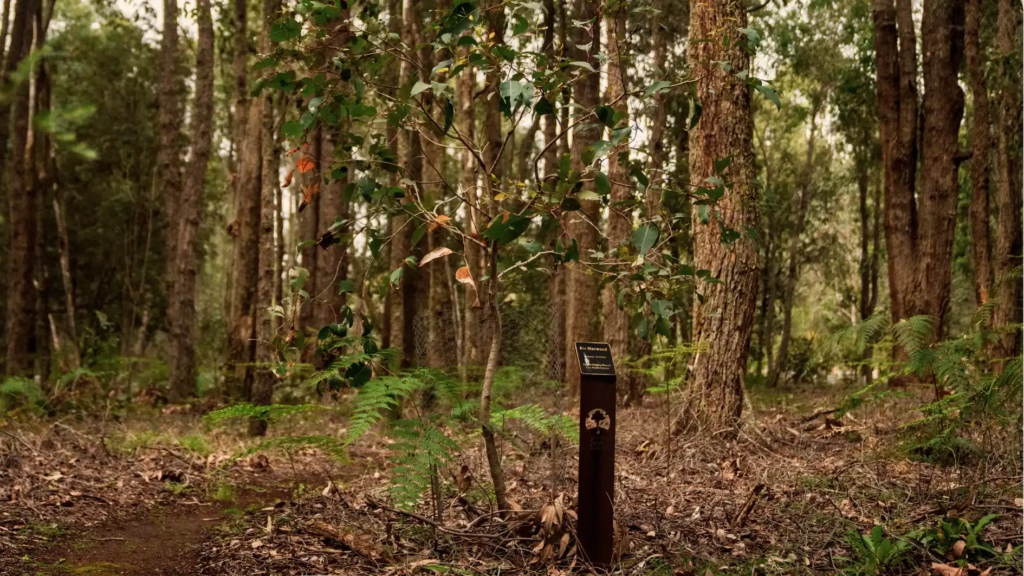
For Perth families looking for a permanent, nature-based memorial without the permit complications of public scattering, Living Conservation Forest at Wellington Dam has become a well-used alternative.
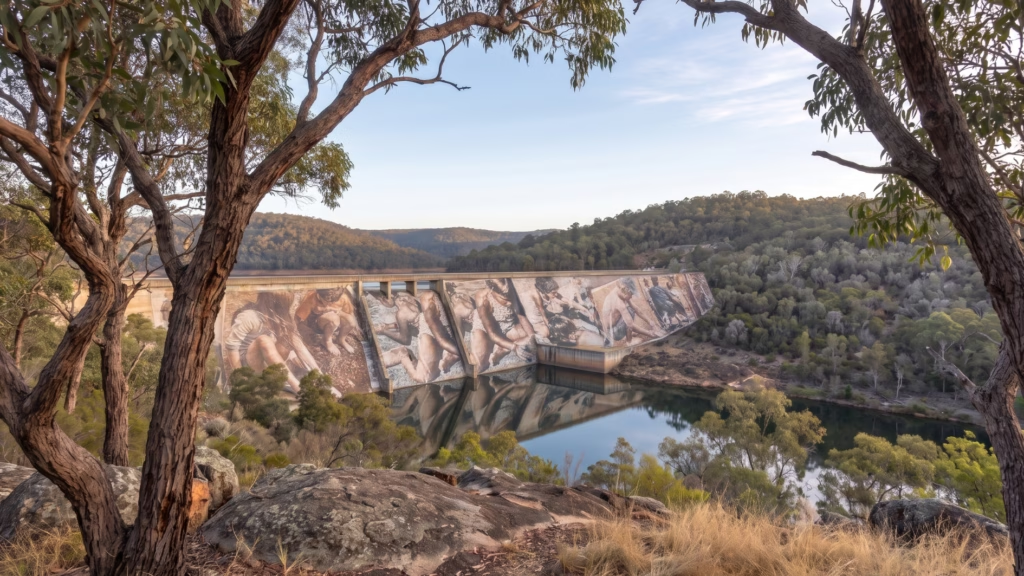
Wellington Dam sits inside Wellington National Park, roughly two hours south of Perth and 30 minutes from Bunbury. The program uses a patented four-stage ash treatment process that neutralises the alkaline chemistry of cremated ashes and converts them into bioavailable nutrients that feed native trees.
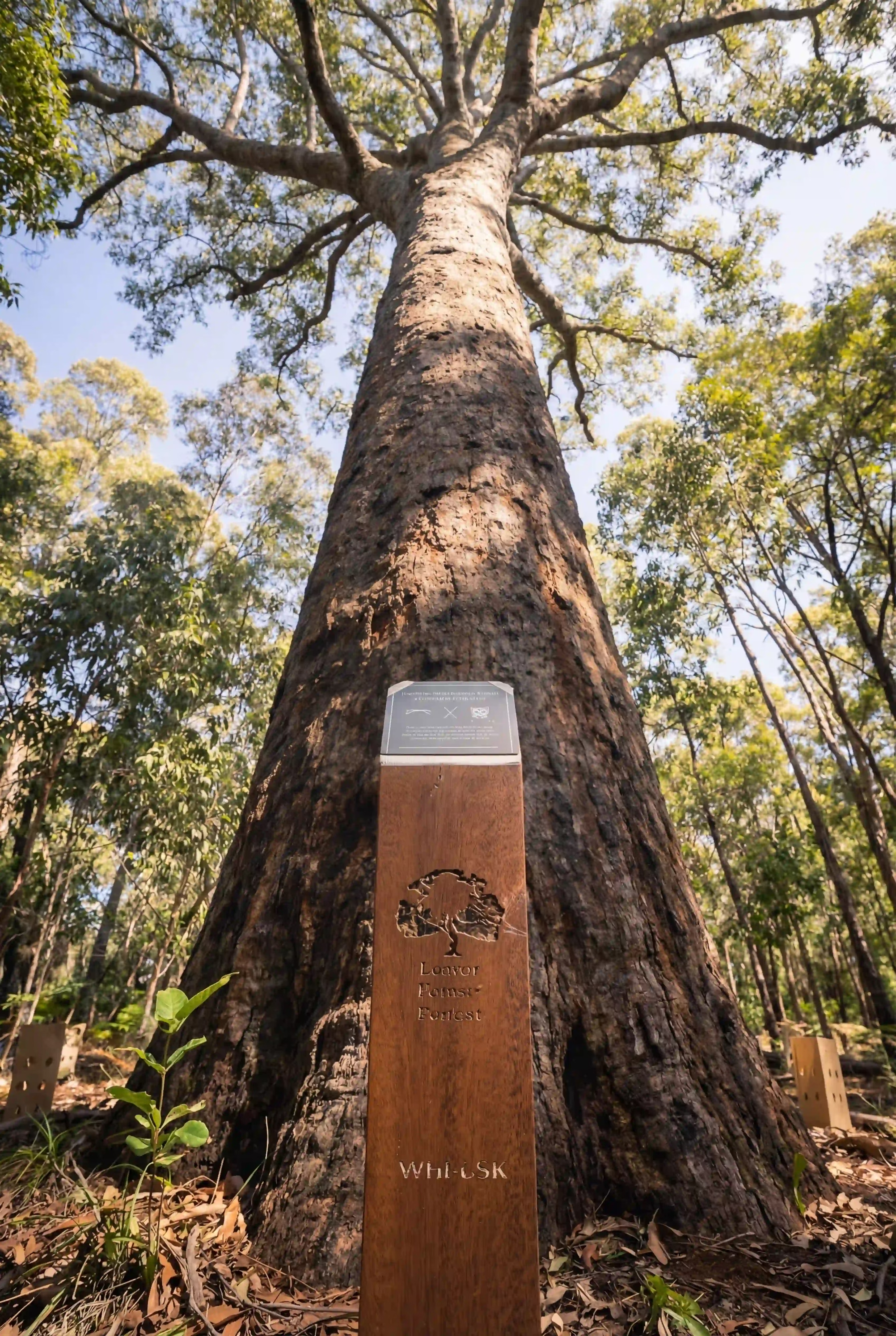
The science addresses the exact problem that makes regular scattering ecologically ineffective. The process lowers the pH from around 12 down to the 6.5 range trees actually need, and reduces the sodium content that would otherwise prevent nutrient absorption. The treated ashes are then placed directly beneath the root system of a chosen native tree, where they become part of the tree’s physical growth over decades.
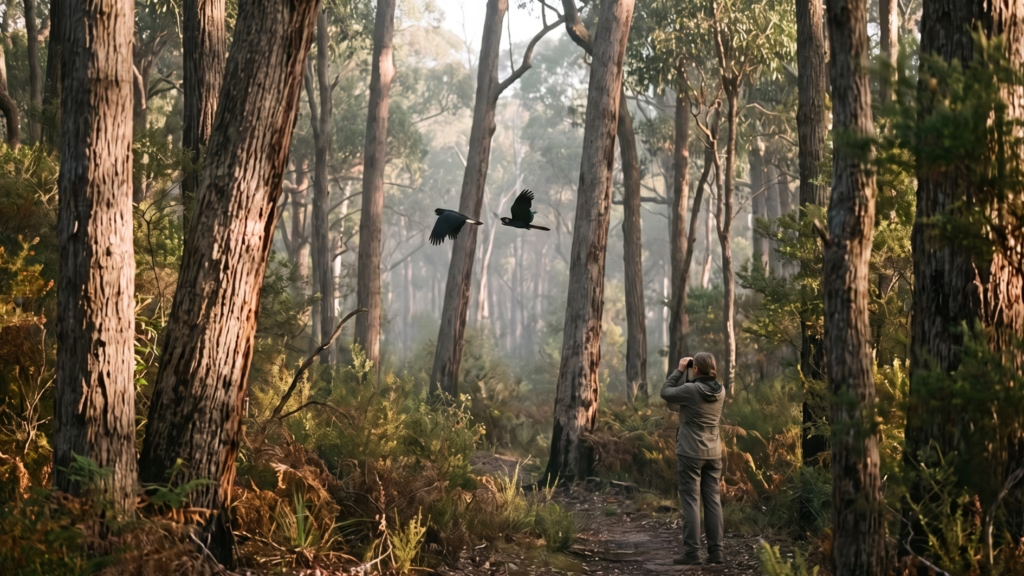
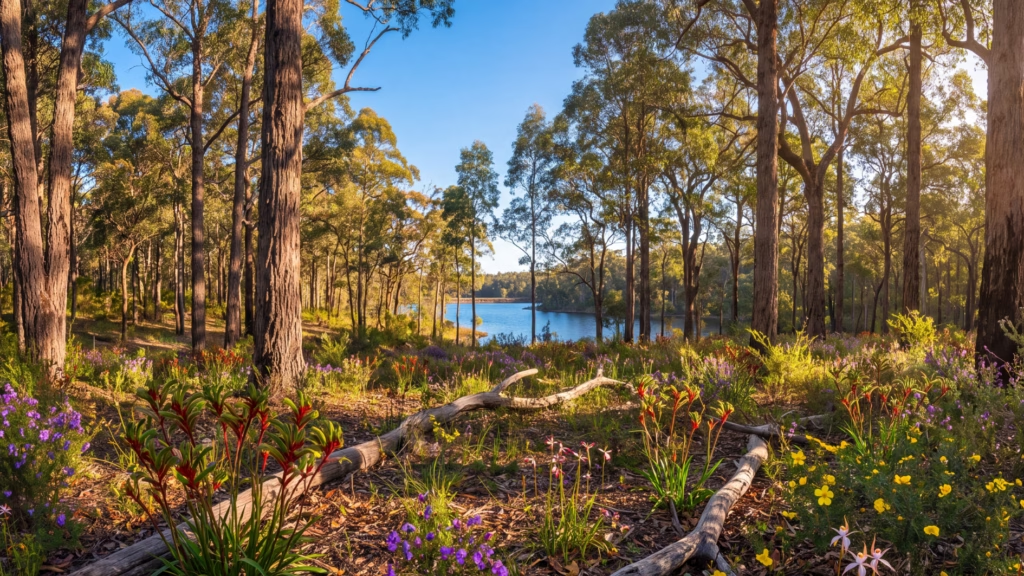
Native species include Jarrah, Marri, and Blackbutt, trees that grow over 40 metres and can live for centuries. Each tree holds up to two sets of ashes, so families can share one tree across generations.
The forest sits on land protected by a state government conservation covenant. No ongoing fees. The program handles all permits and regulatory requirements.
“From death comes life and the circle is now complete.” Christina Lisson, Living Conservation Forest family
Packages start from $4,950, covering the ash treatment, tree planting ceremony, plaque, and perpetual care with no ongoing fees.
How This Compares to a Traditional Burial in WA
The figures below are drawn from the Metropolitan Cemeteries Board, Western Australian funeral directors, and the Australian Seniors Cost of Death Report. They reflect 2025 pricing for Perth and surrounding areas.
| Expense Category | Estimated Cost Range (WA, 2025) |
|---|---|
| Burial plot (25-year Grant of Right of Burial) | $2,527 – $8,000+ |
| Opening and closing (interment fee) | $1,500 – $3,000 |
| Headstone or memorial | $1,000 – $10,000+ |
| Full funeral service and coffin | $7,500 – $15,000+ |
| 25-year lease renewal (at year 25) | ~$2,600 |
| Total estimated cost | $14,000 – $30,000+ |
| Living Conservation Forest at Wellington Dam (one-time) | From $4,950, no ongoing fees |
Sources: Metropolitan Cemeteries Board, Australian Seniors Cost of Death Report, Cost of Death Report 2.0, Greenfields Funerals Perth (2025 pricing).
The most important detail in WA specifically: no burial plot is permanent. Under the Cemeteries Act 1986, every grave in Western Australia is sold on a 25-year lease known as a Grant of Right of Burial. Families can renew once for another 25 years. Further renewals sit at the cemetery board’s discretion. When leases expire, the cemetery board has the legal power to reclaim the grave. This is currently happening at Karrakatta, where large sections are being redeveloped.
By contrast, a tree at Wellington Dam sits on land protected by a state government conservation covenant that cannot be revoked. There is no 25-year expiry. There are no renewal fees. Your family will not receive a bill in 25 or 50 years asking them to pay again.
How to Scatter Ashes Legally in WA: A Practical Process

- Identify the site. Choose your specific location before contacting anyone. The more precise you can be, the more useful the council or land manager can be in their response.
- Contact the land manager. For council parks and beaches, start with the relevant local council. For national parks, contact DBCA. For rivers and foreshores, contact the Department of Water and Environmental Regulation.
- Submit your request in writing. Include the proposed date and time, the approximate volume of ashes, the method of scattering, and the number of people attending.
- Wait for written confirmation. Do not schedule the gathering until permission is confirmed in writing. This protects you and makes the day itself far less stressful.
- Keep your documentation. Store the permission confirmation with any relevant council references or permit numbers. If a family member wants to revisit the site in future, this documentation helps establish context.
Frequently Asked Questions
Do I need permission to scatter ashes anywhere in Western Australia?
For land you do not own, yes. This includes public beaches, parks, national parks, reserves, and private property. Permission requirements vary by location and land manager. Ocean scattering at least three nautical miles from shore is generally permitted without a formal application, provided you notify the vessel master.
Where can you scatter ashes in Perth without a permit?
Ocean scattering is the most accessible option without a formal permit, provided you are at least three nautical miles offshore and have the vessel master’s agreement. For any land-based location in Perth including beaches, parks, and reserves, some form of council or land manager notification is required.
What happens if I scatter ashes without permission?
This depends on the location and circumstances. In most cases, the consequence is a formal request to not repeat the act. In protected ecological areas, penalties can be more significant. Setting aside the legal question, getting permission in advance means the experience itself is not overshadowed by uncertainty or interruption.
Can I scatter ashes in Swan River?
The Swan River is managed under Western Australian legislation, and scattering near the foreshore or in sensitive ecological zones requires prior contact with the relevant authority. Scattering on the water surface from a vessel is generally more straightforward than foreshore scattering. Check with the Department of Water and Environmental Regulation for current requirements.
What to do with ashes in Perth if scattering is too complicated?
The most common alternatives are designated cemetery memorial gardens, which handle the permissions on your behalf, and Living Conservation Forest at Wellington Dam, where the program manages all regulatory requirements and the ashes become part of a living native tree in a protected national park forest. Ashes can also be kept at home indefinitely.
Are cremated ashes harmful to the environment?
Untreated cremated ashes have a pH of around 10 to 12, which is harmful to soil and plant life when scattered in volume. A Melbourne laboratory study found 90% of seedlings died within 21 days of contact with untreated remains. This is why some families choose a treatment process like the one used at Wellington Dam, which neutralises the pH before the ashes are placed in the ground.
How far from Perth is Wellington Dam?
Wellington Dam is approximately two hours south of Perth via the South Western Highway, and about 30 to 40 minutes from Bunbury. The park is open seven days a week, and camping facilities are available if families want to make a longer trip of it.
Can multiple family members share one memorial tree?
Yes. Each Living Conservation Forest at Wellington Dam tree holds up to two sets of treated ashes. Families can add a second person over time, making the tree a shared memorial. Pet ashes are also welcome.
Find Out More About the Trees at Living Conservation Forest at Wellington Dam
For families in Perth and across WA who want a permanent, permit-free alternative to scattering, Living Conservation Forest at Wellington Dam offers a practical path forward. The team handles all regulatory requirements, explains the science clearly, and does not pressure families into decisions before they are ready.
Call 0427 096 944 for a no-obligation conversation with a Legacy Planner, or visit livinglegacywellingtondam.org.au to learn more about the process, pricing, and tree options available.
You can also book a tour of the Wellington Dam forest to see the trees and the site in person before making any decisions.