When someone dies, or when someone is planning ahead, there is a practical question to answer before the emotional one. What kind of ceremony do we want, and where will it take place?
Families in Australia have more options today than they did a generation ago. Each option carries different costs, different legal requirements, and different things to weigh up. This guide covers the six main types of memorial ceremony available to Australian families, what each involves in practice, and what to think through before deciding. It is written for families choosing for a person and for families choosing for a pet.
How to think about the decision
Two questions sit underneath the ceremony choice. Answering them separately makes the rest easier.
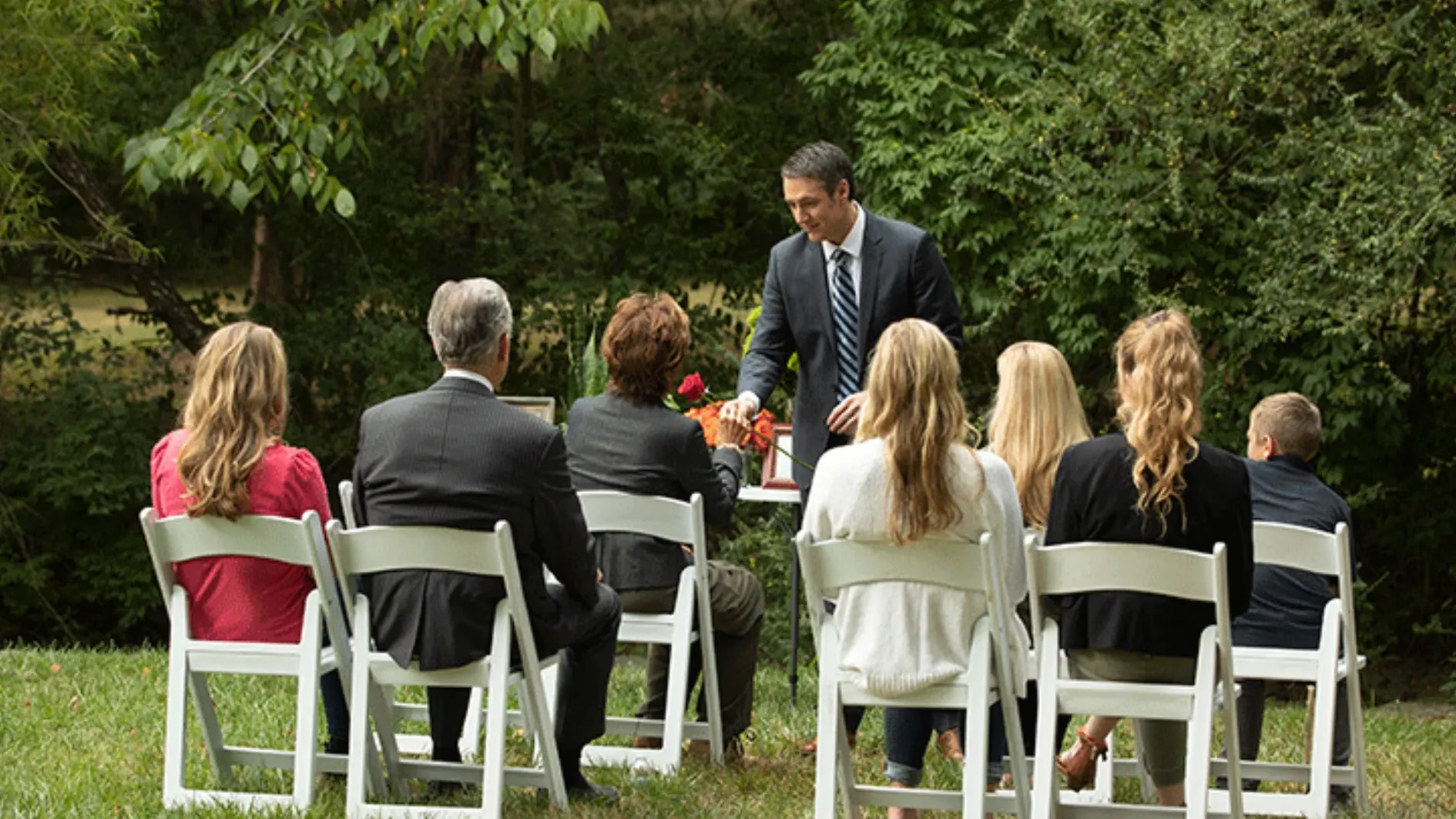
The first is what you want the ceremony itself to do. Some families want a structured, public occasion with an order of service and a room full of people. Others want a small outdoor gathering. Others want no ceremony at all and prefer a private moment with the ashes.
The second question is what you want afterwards. A ceremony is a single day. A resting place, or the absence of one, stays with the family forever. Some options give you both. Others give you one without the other. Most families find, once they think about it honestly, that one of these two questions matters more to them than the other.
1. Traditional funeral or church service
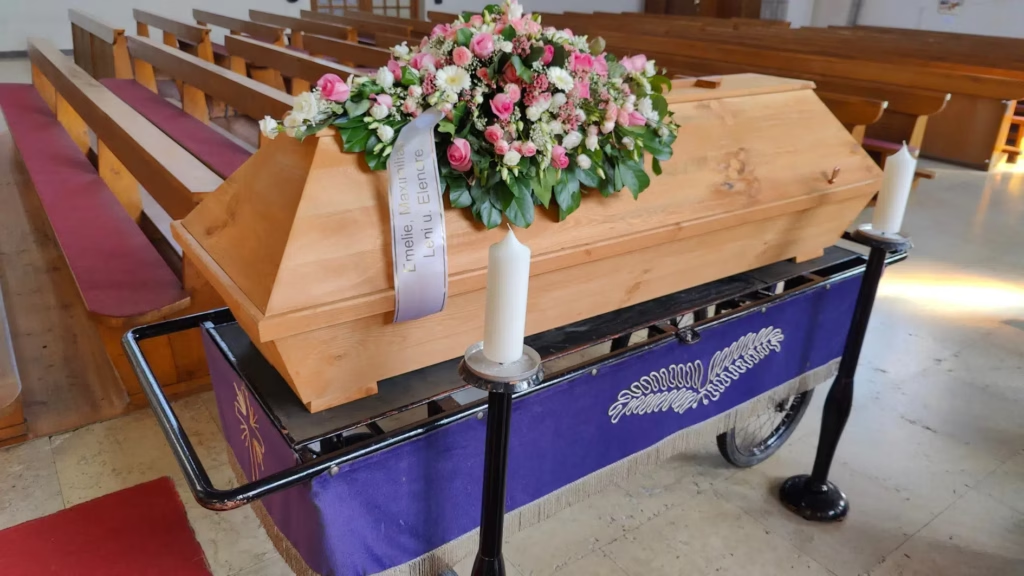
A structured service held at a church, chapel, or funeral home, typically with a eulogy, music, and either clergy or a civil celebrant. This is the most common format in Australia and the one most people picture when they hear the word “funeral.” It is usually followed by burial or cremation.
In Western Australia, a basic direct cremation without a chapel service starts at around $3,200 to $4,200 depending on the provider. Once a celebrant, chapel time, flowers, and catering are added, total costs typically reach $6,000 to $9,000. A full service funeral with burial commonly sits between $10,000 and $20,000, and can rise further at Perth metropolitan cemeteries where plot fees alone can reach several thousand dollars. For a fuller breakdown of current Perth pricing, see our Perth funeral cost guide.
Plot fees are worth understanding. At Karrakatta and other Perth metropolitan cemeteries, most interments are granted for a fixed renewable term rather than in perpetuity. The family can pay to renew when the term expires. Details and term lengths vary by cemetery and should be confirmed with the Metropolitan Cemeteries Board directly.
2. Celebration of life
An informal gathering focused on stories, music, and shared meals rather than religious rites. Held at home, at a venue, in parks, or on beaches. Costs vary dramatically depending on whether you cater, hire a venue, or simply gather at home. A celebration of life is not an alternative to the practical question of what happens to the body or the ashes. It is an alternative to the formal service, and usually runs alongside a cremation or a burial.
3. Cremation with ash scattering
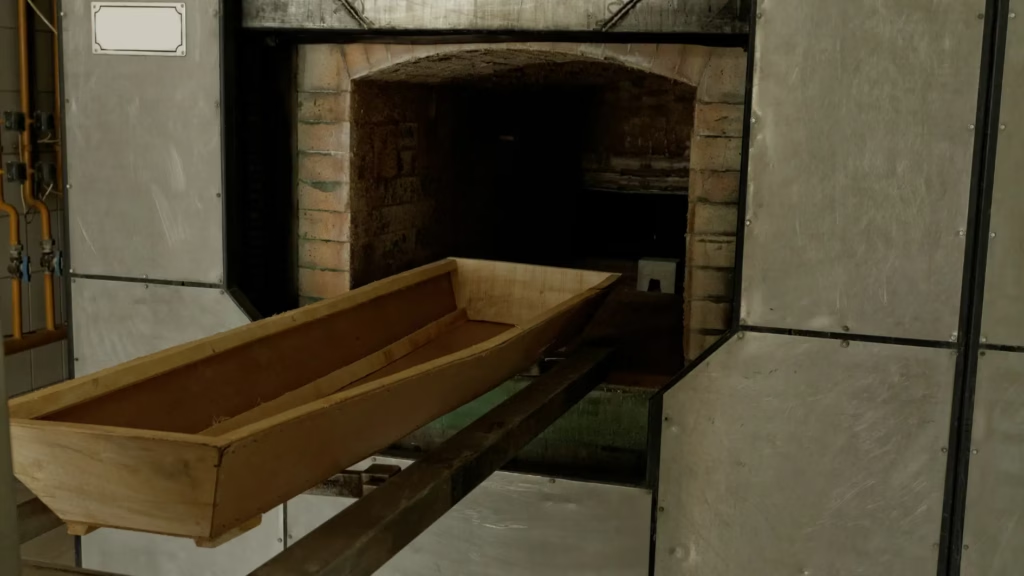
After cremation, ashes are released at a location of significance. Common settings in WA include the coast, bushland, gardens, and family properties. Rules vary by location, and council, harbour authority, or Department of Biodiversity, Conservation and Attractions (DBCA) approval is typically required for scattering at beaches, in harbours, or in national parks. On private land, written permission from the landowner is the practical standard. Families should check with the relevant authority before the day rather than on it.
There is one detail about scattering that most families are not told. Cremated ashes have a pH of around 11 to 12, close to household bleach, and contain sodium at levels far beyond what plants can tolerate. When concentrated at the base of a tree, in a memorial garden, or directly into soil, they commonly damage or kill the surrounding vegetation over time. Scattering thinly across a wide area or into flowing water avoids this problem. Scattering concentrated in one small spot creates it.
Families who want a plantable memorial generally need a treatment step before the ashes touch soil. Our guide on turning ashes into a tree in Western Australia covers how this works.
4. Natural burial
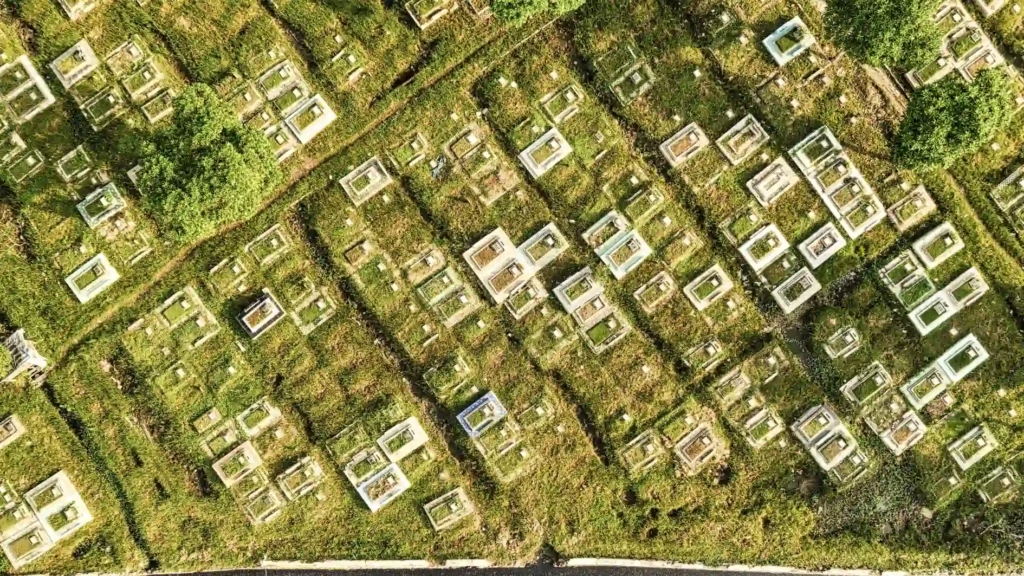
The body is interred without embalming, in a biodegradable shroud or a simple untreated coffin, at an approved natural burial ground. There is no traditional headstone, only a flat bronze or natural stone plaque. A native plant is sometimes placed at the site. In Western Australia, natural burials are held at Fremantle Cemetery and at Pinnaroo Valley Memorial Park in Perth’s northern suburbs, both managed by the Metropolitan Cemeteries Board.
Costs typically sit between $5,000 and $10,000 once the plot, interment fee, and simple coffin are included. Natural burial is often cheaper than conventional burial because there is no embalming, no concrete vault, and a minimal coffin. One important practical detail: a natural gravesite accommodates one person only, unlike a conventional grave which can hold multiple interments. Natural burial applies to whole body burial, not to cremated ashes.
5. Wellington Dam Legacy Conservation Forest tree planting
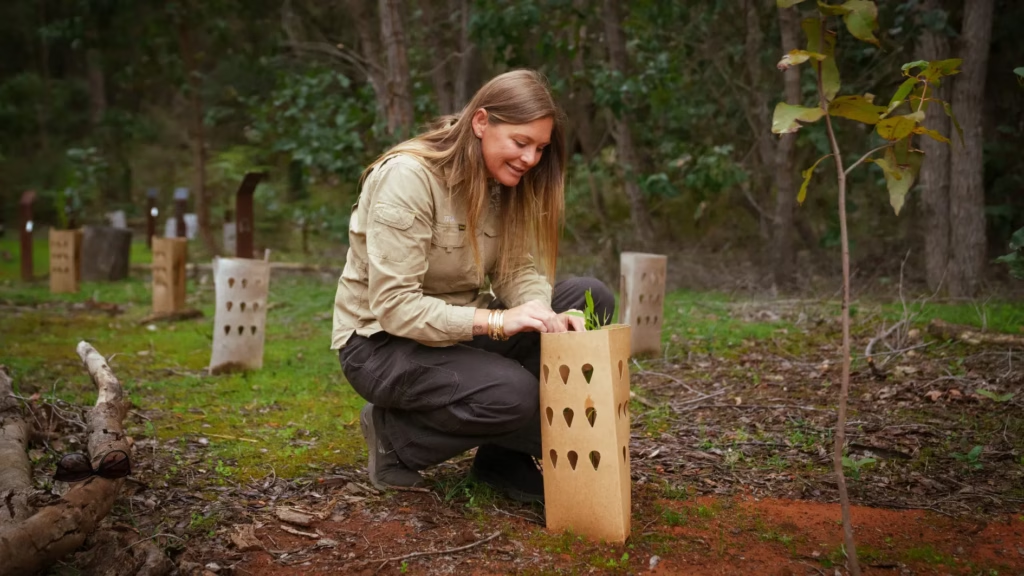
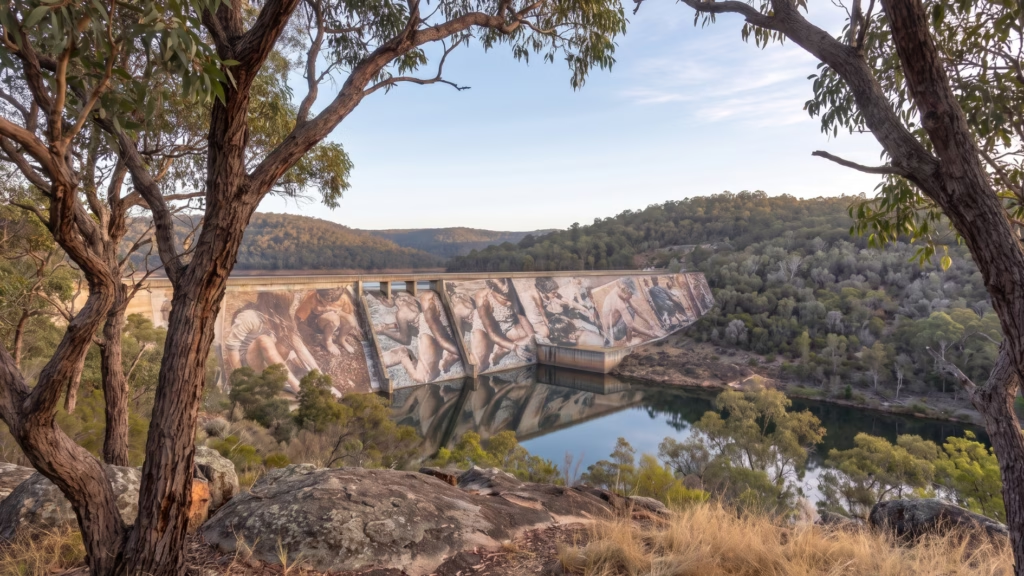
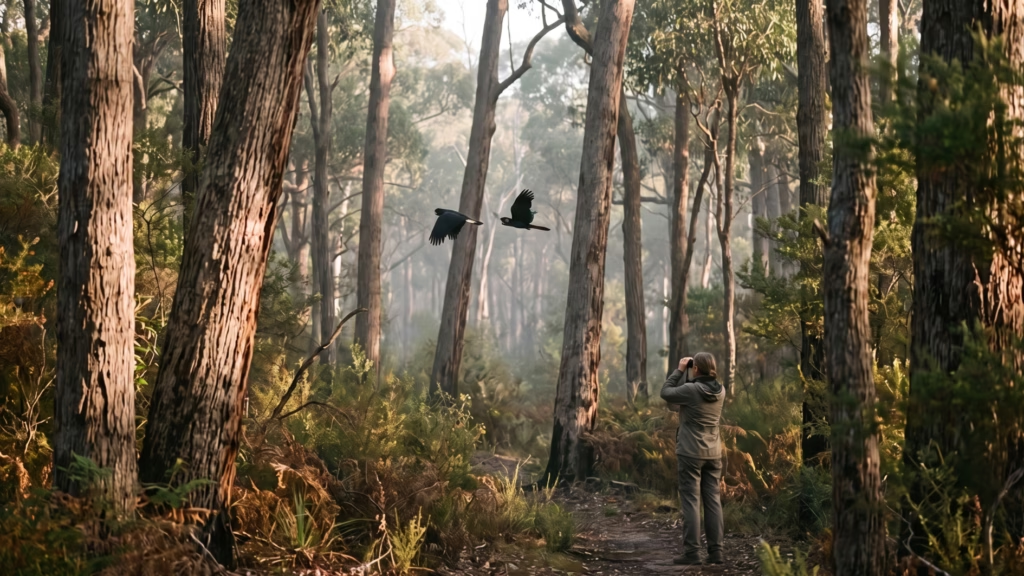
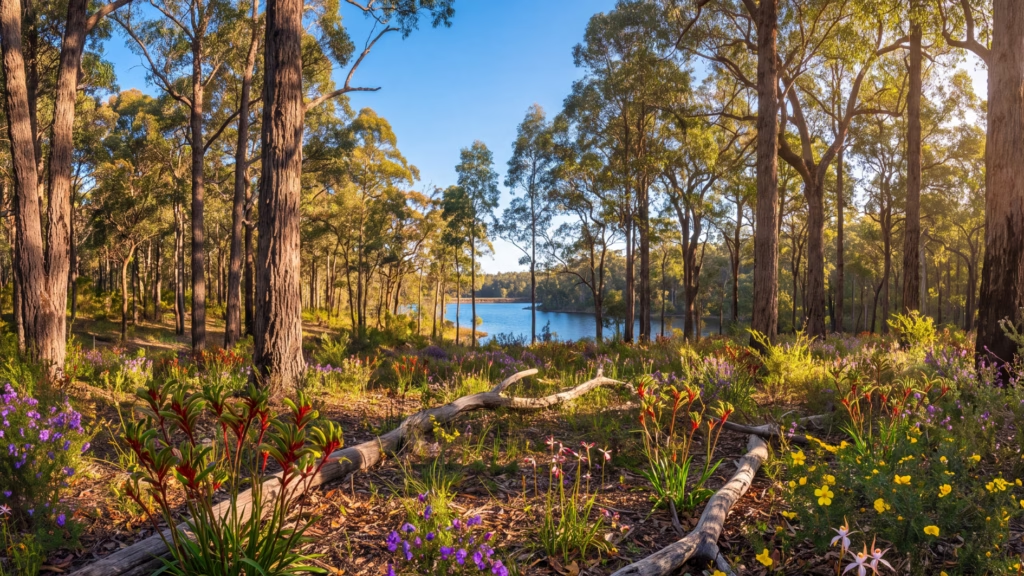
A tree planting ceremony at Wellington Dam Living Legacy Conservation Forest, a conservation forest inside Wellington National Park near Worsley in Southwest WA. About 30 minutes from Bunbury and roughly two hours south of Perth. The forest sits within 25,000 hectares of protected bushland.
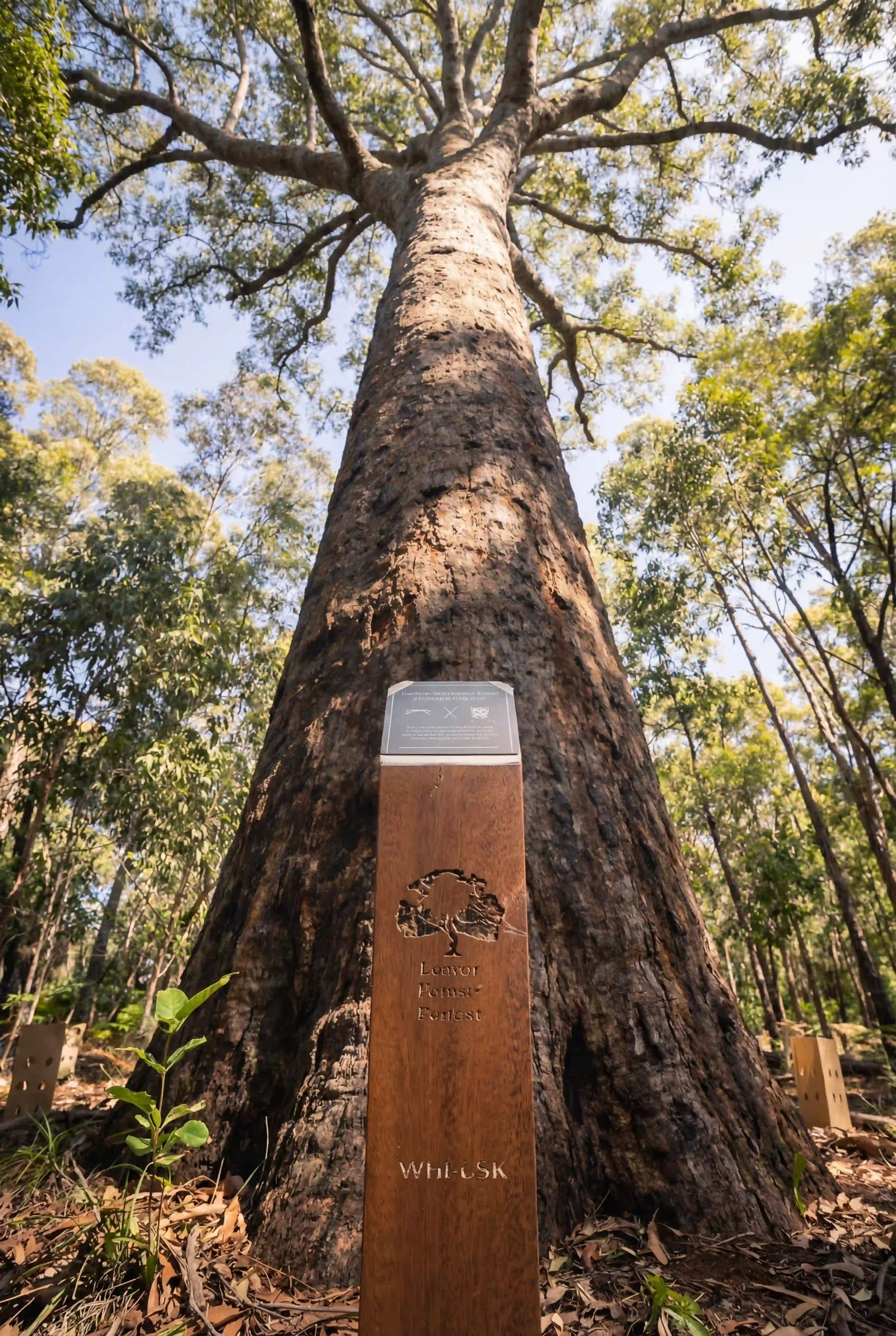
Families choose a native Jarrah, Marri, or Blackbutt. These trees grow over 40 metres tall and live for hundreds of years. The ashes are not scattered. They are processed through a four-stage treatment developed by Dr. Cole. The pH is adjusted from around 12 down to 6.5. Excess sodium is reduced. A blend of microorganisms and paramagnetic rock is added. The treated result is placed directly under the roots of a young tree. Over time, the calcium, phosphorus, and other minerals move up through the roots into the trunk, branches, and leaves. The person is not beside the tree. They are inside it.
The forest is protected by a conservation covenant enforced by the WA Department of Biodiversity, Conservation and Attractions. The covenant binds the land, not the organisation, which means the trees cannot be cut down for development, for logging, or if the organisation changes hands in the future. If a tree dies, it is replaced at no cost to the family.
Pricing starts from $4,950 as a one-time payment. There are no ongoing fees, no 25-year renewal, no plot costs. Each tree holds up to two sets of ashes, so a partner or family pair can share. Pet ashes are accepted, alongside a person or as a standalone pet memorial. More than 500 families have chosen Wellington Dam to date. The process from first contact to ceremony typically takes four to six weeks.
Download the forest brochure at livinglegacywellingtondam.org.au to see how a ceremony works, or register for an Open Day to walk the forest in person.
6. Aquamation (water cremation)
Aquamation, also called alkaline hydrolysis, is a water-based alternative to flame cremation. It uses roughly a tenth of the energy of flame cremation and produces fewer emissions. Availability in Australia varies by state and is expanding. Families with strong environmental preferences should check current availability with WA providers rather than assuming, as the regulatory picture continues to move.
Comparing the options
| Ceremony type | Where it happens | Typical WA cost | Environmental impact |
|---|---|---|---|
| Traditional funeral with burial | Church, chapel, cemetery | $10,000 to $20,000 and above | Higher (embalming, vault, plot) |
| Traditional funeral with cremation | Church, chapel, crematorium | $6,000 to $9,000 | Medium (cremation emissions) |
| Celebration of life | Home, venue, outdoor setting | Highly variable | Depends on format |
| Cremation with ash scattering | Sea, bushland, garden | $3,500 to $6,000 | Medium (emissions plus localised soil impact) |
| Natural burial | Fremantle or Pinnaroo Valley | $5,000 to $10,000 | Low |
| Wellington Dam Living Legacy Tree | Protected conservation forest, Southwest WA | From $4,950 | Very low |
| Aquamation | Where available | Similar to cremation, varies | Low |
Costs for conventional services are drawn from current Perth funeral provider pricing published under the WA Fair Trading (Funeral Pricing Code of Practice) Regulations 2022 and from cemetery board fee schedules. Wellington Dam pricing is current at time of publication. All ranges vary by provider, location, and inclusions.
A note on cultural and religious ceremonies
Smoking ceremonies are a traditional Aboriginal Australian cultural practice, conducted on Country and led by Elders. They are not a consumer service arranged through a funeral provider. If a smoking ceremony is culturally appropriate for your family, contact should be made through your own community or an Aboriginal cultural liaison, not through a funeral business. A smoking ceremony can accompany any of the ceremony types above rather than replace them.
The same principle applies to Buddhist, Hindu, Jewish, Muslim, Christian, and other religious or cultural traditions. Each has its own specific requirements and is best arranged through the relevant community. Most Australian funeral directors, and most memorial services including Wellington Dam, can work alongside these traditions.
What families say
“My husband and I have a tree here. Visited recently and the sunlight filtering through was beautiful. There’s a kiosk nearby and bush camps if you want to make a weekend of it.”
Melody Jones, Wellington Dam family
Frequently asked questions
What types of memorial ceremony are available in Australia? The main options are traditional funerals with burial or cremation, celebrations of life, cremation with ash scattering, natural burial, tree planting memorials in protected forests, and aquamation where available. Cultural and religious practices, including Aboriginal smoking ceremonies, can accompany most of these formats rather than replacing them.
What is the most eco-friendly memorial option? Natural burial and living tree memorials have the lowest environmental impact. Wellington Dam Living Legacy Forest uses a treatment developed by Dr. Cole that allows ashes to nourish rather than damage the host tree, inside a forest protected by a DBCA conservation covenant. Natural burial uses no embalming chemicals, no vault, and a biodegradable coffin or shroud.
Can I hold a memorial ceremony in a national park or forest in WA? Public land and national parks generally require formal approval for ceremonies, and ash scattering in parks requires DBCA permission. Wellington Dam Living Legacy Forest is a protected conservation forest that holds licensed tree planting ceremonies near Bunbury. All approvals are handled as part of the service.
Can I plan a memorial for a pet? Yes. Wellington Dam accepts pet ashes as a standalone pet memorial or alongside a person’s tree. The ceremony process is the same. Pricing starts from $4,950 as a one-time payment with no ongoing fees.
What happens to my tree if the organisation changes in the future? The conservation covenant is enforced by the WA Department of Biodiversity, Conservation and Attractions. It binds the land itself, not the operating organisation, so the trees are protected regardless of who owns or runs the forest. If a tree dies, it is replaced at no cost to the family.
How long does it take to arrange a tree planting ceremony? Typically four to six weeks from first contact to the day of the ceremony. Families can also pre-plan, choosing a tree during their own lifetime and visiting it across seasons before it is needed.
Choosing the right ceremony
Most families know roughly what feels right once they have answered the two questions at the start of this guide. A ceremony in a forest with a specific tree to return to suits some. A private scattering suits others. A traditional service with a headstone suits others again. None of these is objectively better than another. They serve different families.
If the question is still open, the Wellington Dam team is available for a conversation at any stage, before or after a death has occurred, and for both person and pet memorials.
Call 0427 096 944 or contact the team here
Wellington Dam Living Legacy Forest 1 Wellington Dam Road, Worsley WA 6225 PO Box 270, Dardanup WA 6236 0427 096 944 | office@legacyforest.org.au | livinglegacywellingtondam.org.au Monday to Friday, 9:00AM to 5:00PM