
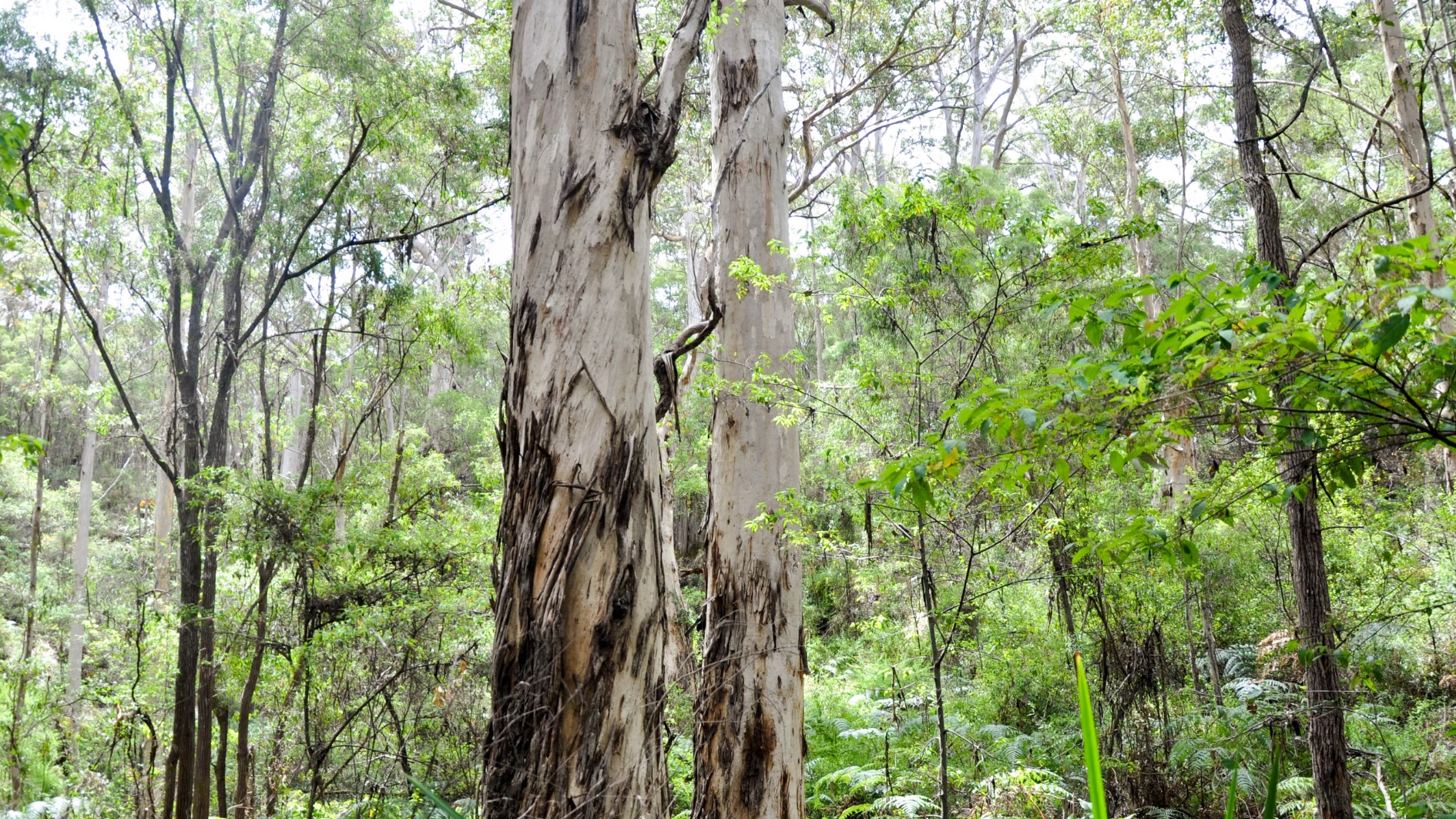
Every autumn in Southwest WA, a tree drops round woody fruit the size of a golf ball. The Carnaby’s black cockatoo arrives to crack them open. Without the Marri tree, the cockatoo would struggle to survive. The relationship is 45,000 years old.
If you have walked through the Jarrah forest between Perth and Bunbury and noticed large, ribbed seed pods scattered on the ground, you have already found a Marri. This article explains what you were looking at, how to identify it with confidence, and why this particular tree carries more ecological weight than almost anything else in the Southwest
What is the Marri tree?
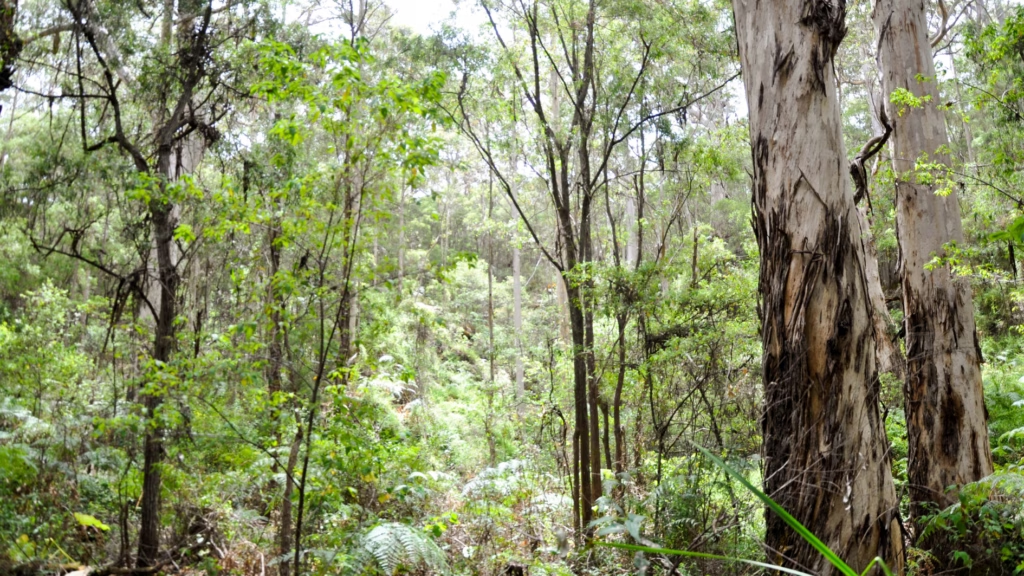
Marri (Corymbia calophylla) is a large flowering eucalypt native to Southwest Western Australia. It grows across the Darling Range and coastal plain, often alongside jarrah and sometimes alongside karri in wetter country. In Noongar language, marri means ‘blood’, a reference to the deep red kino, a natural gum, that seeps from wounds in the bark. It is a striking tree.
The scientific name tells you something too. Corymbia means ‘cluster’ (for the flower arrangement), and calophylla means ‘beautiful leaf.’ Botanists moved it out of the Eucalyptus genus into Corymbia in 1995, alongside other bloodwoods, because the bark, flower structure, and fruit are distinct enough to warrant separation. Most people still call it a eucalypt, and while that is broadly correct, botanically it is a little more specific than that.
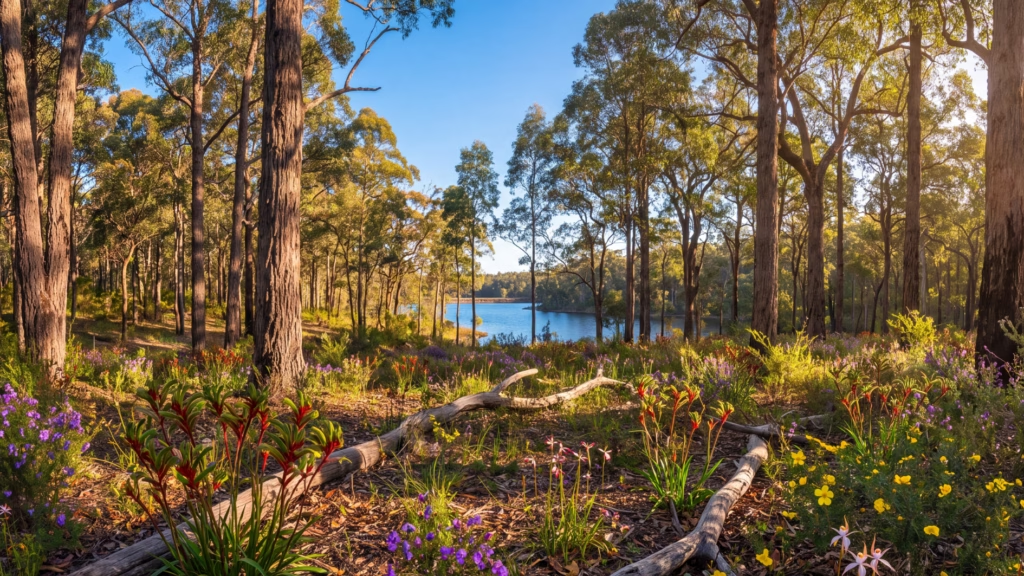
Its distribution runs roughly from Geraldton in the north down through Perth, through the Darling Range and southern forests, to around Albany. You are most likely to encounter it in tall, open forest on gravelly or lateritic soils, often with jarrah. In the Wellington National Park area near Bunbury, Marri is one of the dominant species.
How to identify a Marri tree
Marri is easier to identify than most eucalypts, largely because of its fruit. Once you have seen a honky nut, you do not confuse it.
The Honky Nut
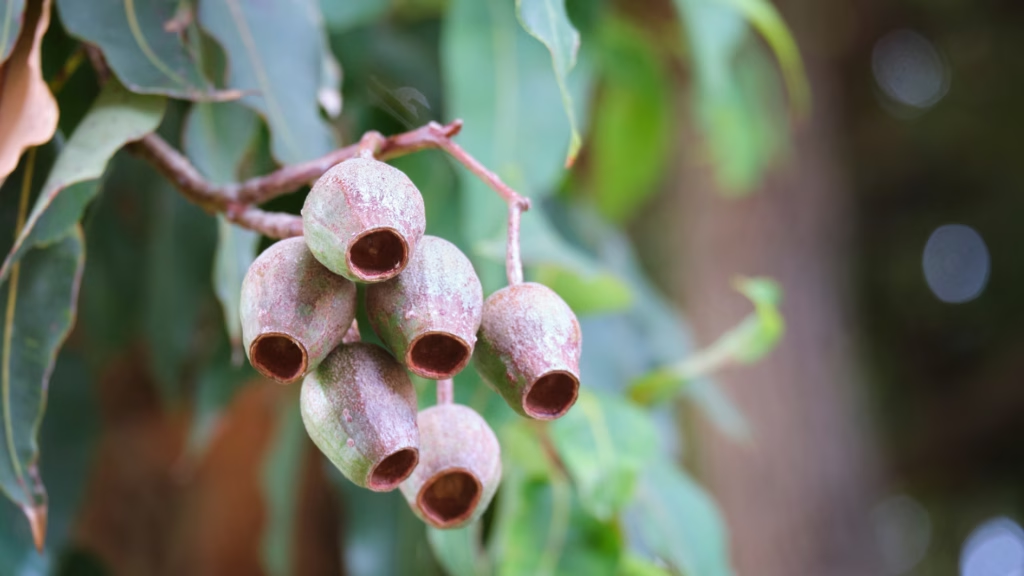
The fruit is the most reliable field character. Marri produces large, urn-shaped capsules between 3 and 5 centimetres long, with prominent ribs running lengthways and a wide, flared opening at the top. They are woody, heavy for their size, and unmistakable once you have held one. The name ‘honky nut’ is colloquial and widely used. The pods persist on the tree and on the ground, so even in seasons without flowers, identification is straightforward.
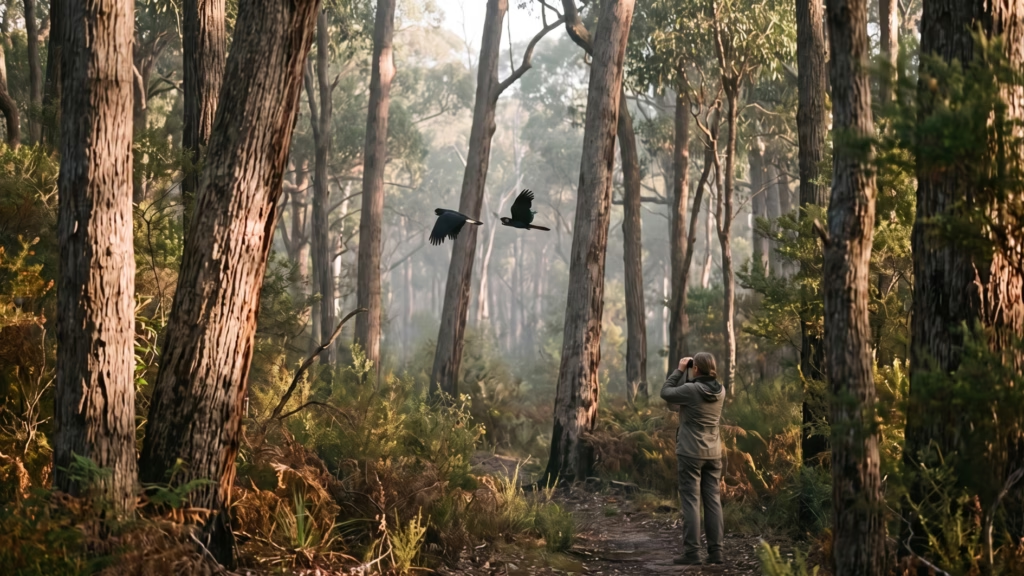
The Carnaby’s black cockatoo uses its heavy bill to crack these capsules and extract the winged seeds inside. The cockatoo is strong enough to open a nut that would be difficult to split by hand.
Bark and Trunk
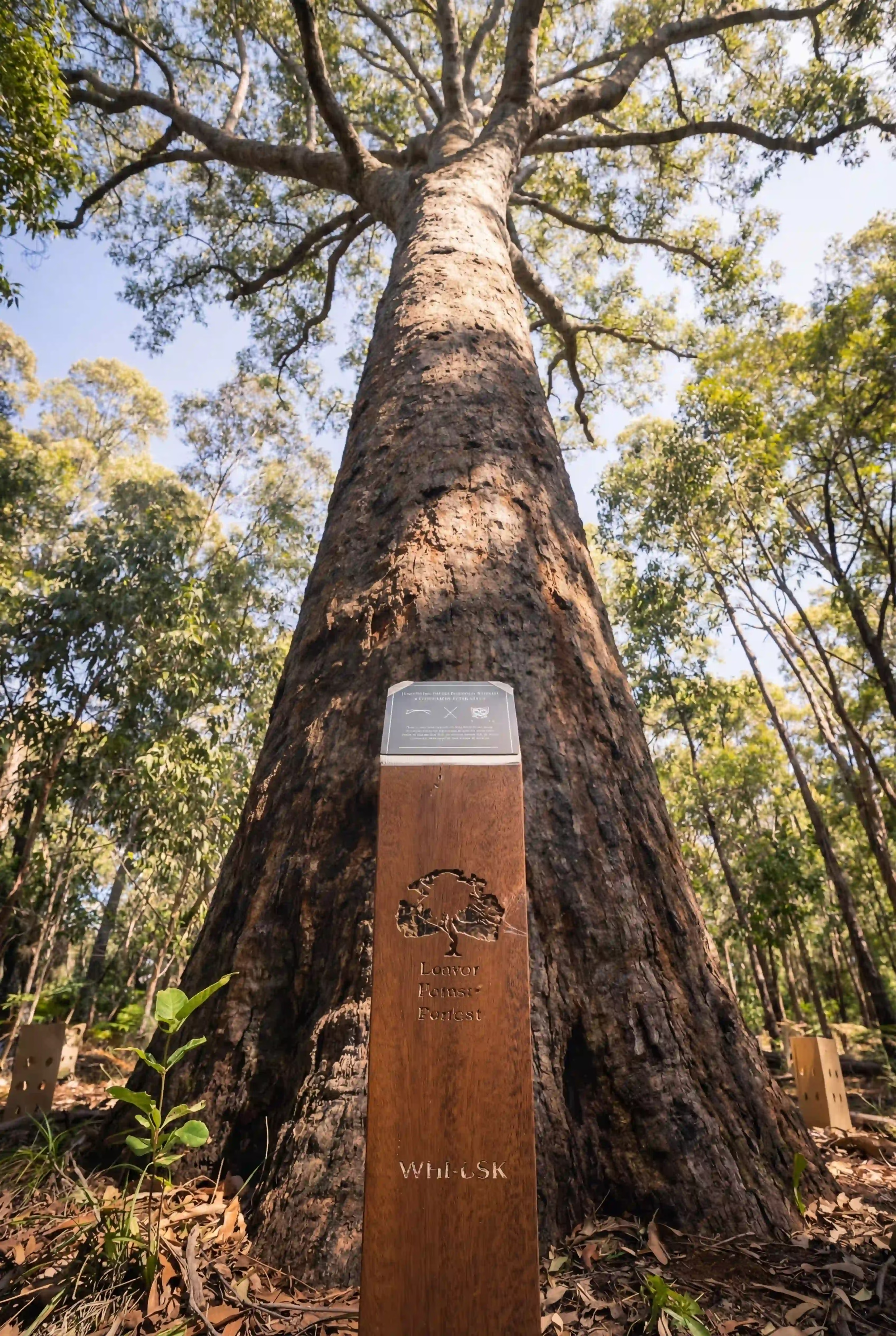
The bark is rough and fibrous across the entire trunk and main branches, with a tessellated or flaky surface that gives it a weathered, chunky appearance. It is not as deeply furrowed as jarrah, nor as stringy as some other eucalypts. The colour is grey-brown. The trunk is broad and often forks into two main limbs at moderate height, giving mature trees a characteristic double-crown silhouette.
One reliable clue: if the bark is cut or damaged, red kino may seep from the wound. This sticky red gum is why the Noongar people named it Marri. Not all trees exude it visibly, but it is diagnostic when present.
Leaves and Flowers
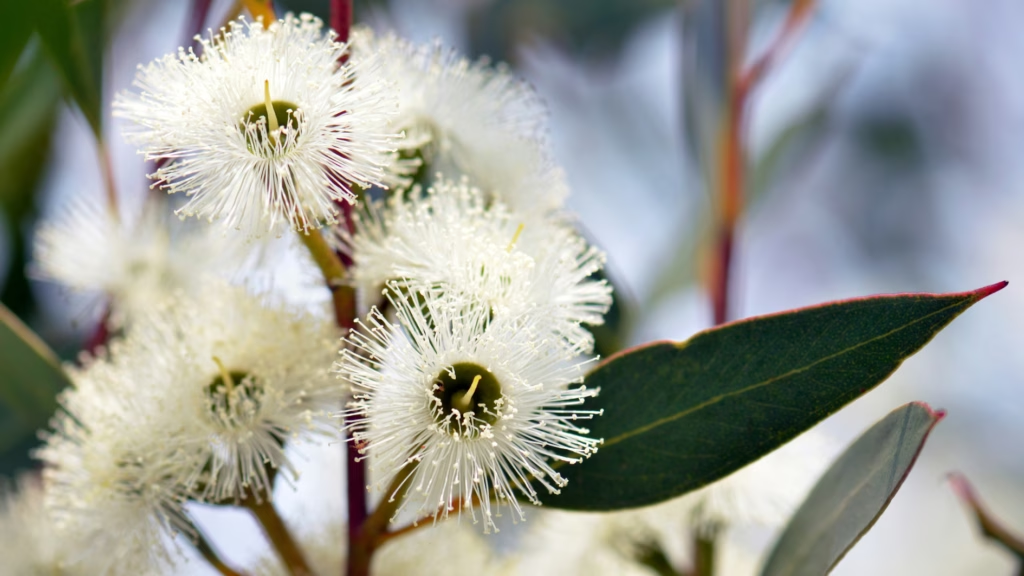
The leaves are lance-shaped to broadly oval, between 8 and 12 centimetres long, and a glossy mid-green. They hang on short stems and are similar in general appearance to many other eucalypts, which is why the fruit is more useful for identification.
The flowers are cream to white, large, and conspicuous, held in clusters of seven or more at the branch tips. They bloom from December through to May, peaking in February and March. If you are in the Southwest in late summer or autumn and see a tree covered in white flowers visited by birds, there is a good chance it is Marri.
Quick identification guide
| Feature | What to look for |
| Fruit (honky nut) | Round to urn-shaped, 3 to 5 cm, heavily ribbed, woody. Most reliable field character. |
| Bark | Rough, tessellated, grey-brown. Fibrous but not deeply stringy. Red kino may be visible at wounds. |
| Leaves | Lance-shaped to oval, 8 to 12 cm, glossy green, hanging on short stems. |
| Flowers | Cream to white, held in clusters of 7 or more. Blooms December to May, peaking February to March. |
| Trunk form | Broad, often forks into 2 main limbs. Wide double-crown silhouette. |
| Scientific name | Corymbia calophylla. Previously classified as Eucalyptus calophylla. |
Common lookalikes
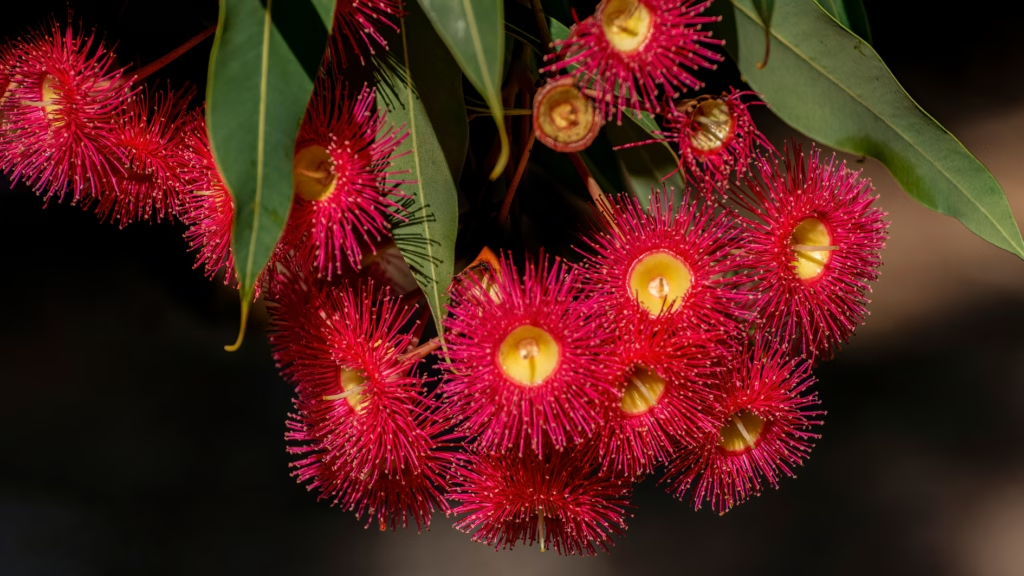
Red-flowering gum (Corymbia ficifolia) is the most common source of confusion for people unfamiliar with Marri. Red-flowering gum is widely planted as a street and garden tree and produces similar large nuts. The key differences are the flower colour (red or orange versus Marri’s cream-white) and the fact that red-flowering gum is almost always seen as a cultivated specimen rather than growing wild in forest. In natural bushland, if the nuts are large and ribbed and the tree is tall, it is almost certainly Marri.
Other Corymbia species in WA, particularly yellow bloodwood and spotted gum, have similar bark but produce smaller, thinner-walled fruit. The combination of large ribbed nuts, cream flowers in autumn, and rough grey bark in tall forest narrows identification to Marri in the Southwest.
Why the Marri tree matters
The Carnaby’s black cockatoo
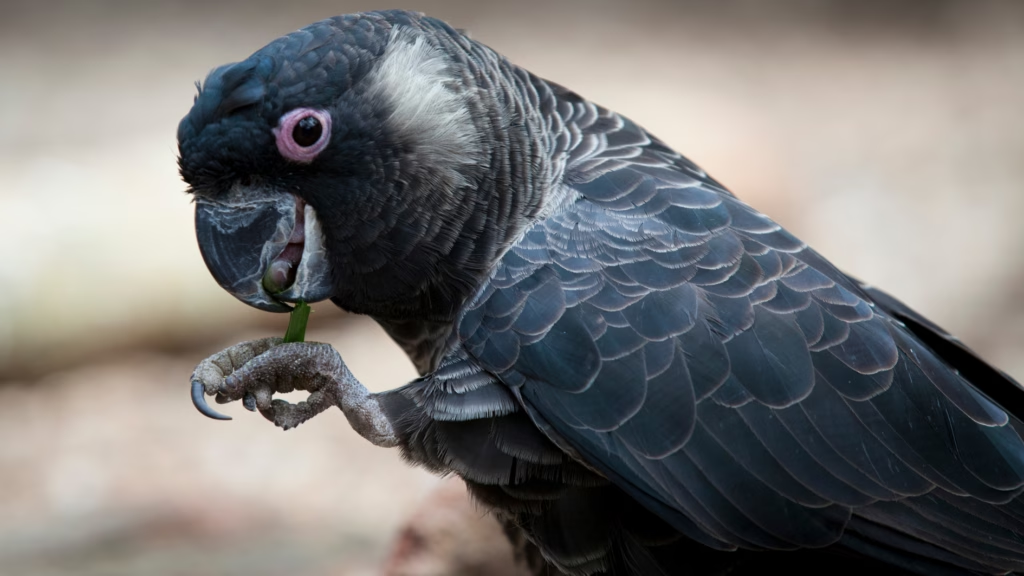
The Carnaby’s black cockatoo (Zanda latirostris) is listed as endangered under both state and federal law. It is a large, slow-moving bird with a lifespan of up to 50 years and a breeding pair may raise only one chick per season. It needs old-growth or mature trees for nesting hollows, and it needs specific food sources, including marri seeds, to survive the cooler months when other food is scarce.
Marri is central to the cockatoo’s diet in the late-summer and autumn months. The timing matters: Marri blooms from December to May, peaking when the cockatoo needs rich food before the cooler months. The seed inside the honky nut is large, nutritious, and extractable by the cockatoo’s powerful bill. No other common tree in the Southwest provides quite this combination of size, timing, and nutrition in the same season.
Research has documented cockatoo flocks moving through marri forest in autumn and winter, following the flowering and fruiting as they shift through the landscape. A single mature Marri in good health can support dozens of birds over a season. When Marri is cleared or fragmented, the cockatoos have fewer options, and the population declines.
Native bees and other wildlife
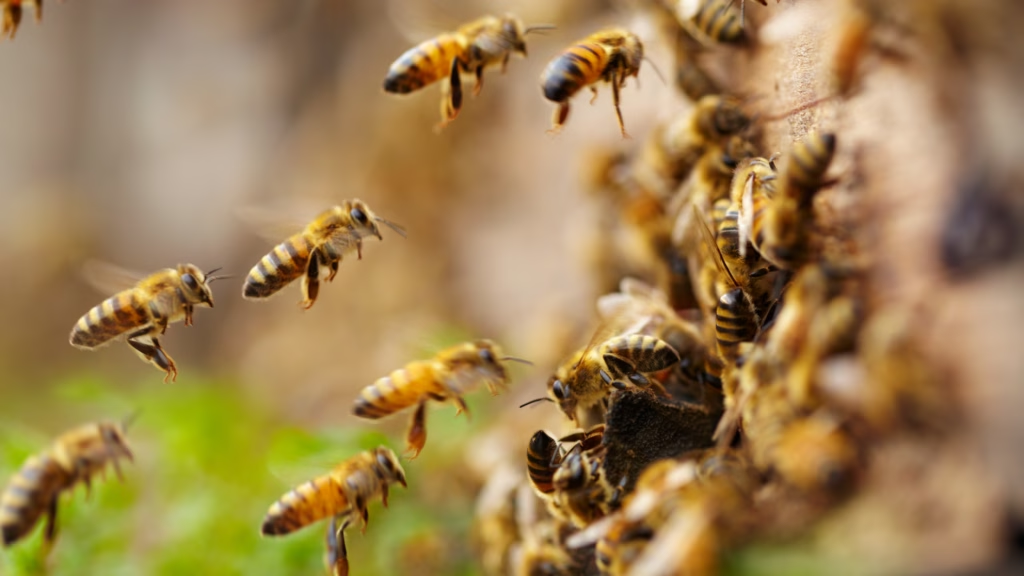
Research published in Botany One found that giant Marri trees are disproportionately important for native bee populations in Southwest WA. The large cream flowers produce abundant nectar and pollen, and the sheer size of a mature Marri means it can support hundreds of bee visits per day during peak flowering. Native bees do not produce honey at commercial scale, but they are critical pollinators for many native plant species, and Marri appears to act as a keystone resource for bee communities in some landscapes.
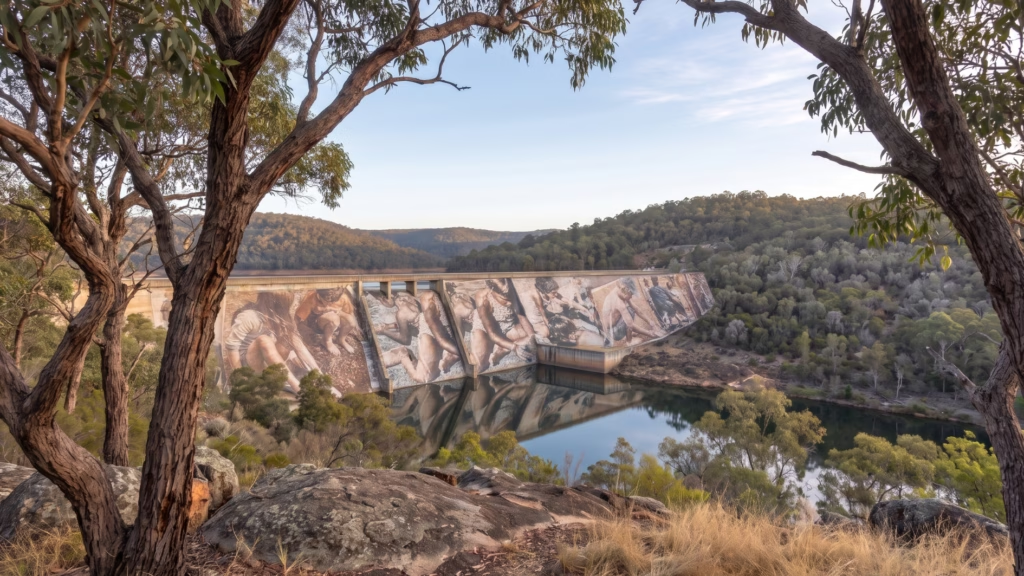
Marri also provides food and habitat for possums, gliders, lorikeets, honeyeaters, and many other native species. The hollow branches and trunk of older trees become nesting sites for parrots and owls. A mature Marri that has lived for two or three hundred years has accumulated a biological complexity that no young tree can replicate. The Living Conservation Forest at Wellington Dam sits inside this same web of native species and habitat.
Noongar cultural significance
Marri sits within Noongar country and has deep cultural significance for Noongar people. Traditional uses include collecting kino as a wound treatment, using the tree as a water source, and reading the flowering and fruiting cycle as a seasonal calendar. Noongar people used hollowed tree trunks to access water pooled in branches, a practice documented in recent research as a sophisticated understanding of the tree’s hydrology.
The name marri itself, meaning blood, reflects an intimate knowledge of the tree’s living qualities, the red gum that seeps from wounds as if the tree is bleeding. This is less metaphor than precise observation. Noongar relationships with marri are part of a continuous presence in this landscape stretching back tens of thousands of years.
Marri at the Living Conservation Forest at Wellington Dam
Marri is not currently listed as threatened, but the species faces significant pressure. Urban expansion across the Swan Coastal Plain and Darling Range has cleared large areas of marri woodland over the past century. Dieback caused by Phytophthora cinnamomi, the same water mould that devastates jarrah, affects marri in some areas. Timber harvesting has taken large volumes of marri for flooring, furniture, and firewood over many decades.
The ecological consequence of losing Marri is not just the loss of a tree species. It is the loss of a keystone resource for at least one endangered animal, dozens of other native species, and the broader fungal and soil communities that depend on the roots and leaf litter of large, old trees.
A Marri takes decades to reach the size where it produces large quantities of honky nuts. It takes more than a century to develop the hollows that Carnaby’s black cockatoos need for nesting. Conservation value is not instantaneous. It accumulates over time, in living trees, in actual forest. This is the case conservation covenants are designed to protect.
| Marri is one of three native tree species available at the Living Conservation Forest at Wellington Dam. Learn more at livinglegacywellingtondam.org.au or call 0427 096 944 |
Frequently asked questions
What are the round seed pods found on the ground in Southwest WA?
They are almost certainly Marri (Corymbia calophylla) fruit, commonly called honky nuts. The pods are woody, urn-shaped, between 3 and 5 centimetres long, with prominent ribs and a wide opening at the top. They are one of the most distinctive seed pods in the Australian bush and the most reliable way to identify a Marri tree.
When does the Marri tree flower?
Marri flowers from December through to May, peaking in February and March. The flowers are cream to white and held in large clusters at the branch tips. This late-summer to autumn flowering season is one reason Marri is so important to native birds and bees, providing nectar and seed at a time when most other species have finished flowering.
Why is Marri important for the Carnaby’s black cockatoo?
Carnaby’s black cockatoo (Zanda latirostris) is an endangered species that feeds heavily on Marri seeds during autumn and winter. The cockatoo uses its powerful bill to crack the woody honky nut and extract the seeds inside. Marri flowers and fruits during the period when the cockatoo most needs food, and the seeds are nutritionally significant. Mature Marri trees also provide hollows for nesting. When Marri is cleared or fragmented, the cockatoo population suffers. Planting Marri in protected forest is one way to support that recovery.
What is the scientific name of the Marri tree?
The Marri’s scientific name is Corymbia calophylla. It was formerly classified as Eucalyptus calophylla before being moved into the Corymbia genus in 1995 along with other bloodwood species. The species name calophylla means ‘beautiful leaf’ in Latin.
How do you tell Marri apart from other eucalypts?
The honky nut is the most reliable field character. The large, ribbed, urn-shaped fruit capsules between 3 and 5 centimetres are unique to Marri in the Southwest WA forest. The combination of rough grey-brown tessellated bark, cream winter flowers, glossy lance-shaped leaves, and large woody fruit in tall forest narrows identification to Marri with high confidence.
Where does the Marri tree grow in Western Australia?
Marri grows across Southwest Western Australia, from around Geraldton in the north through the Swan Coastal Plain, Darling Range, and southern forests down to the Albany area. It is particularly common in tall, open forest on gravelly or lateritic soils, often alongside jarrah. In Wellington National Park near Bunbury, Marri is one of the dominant species.