
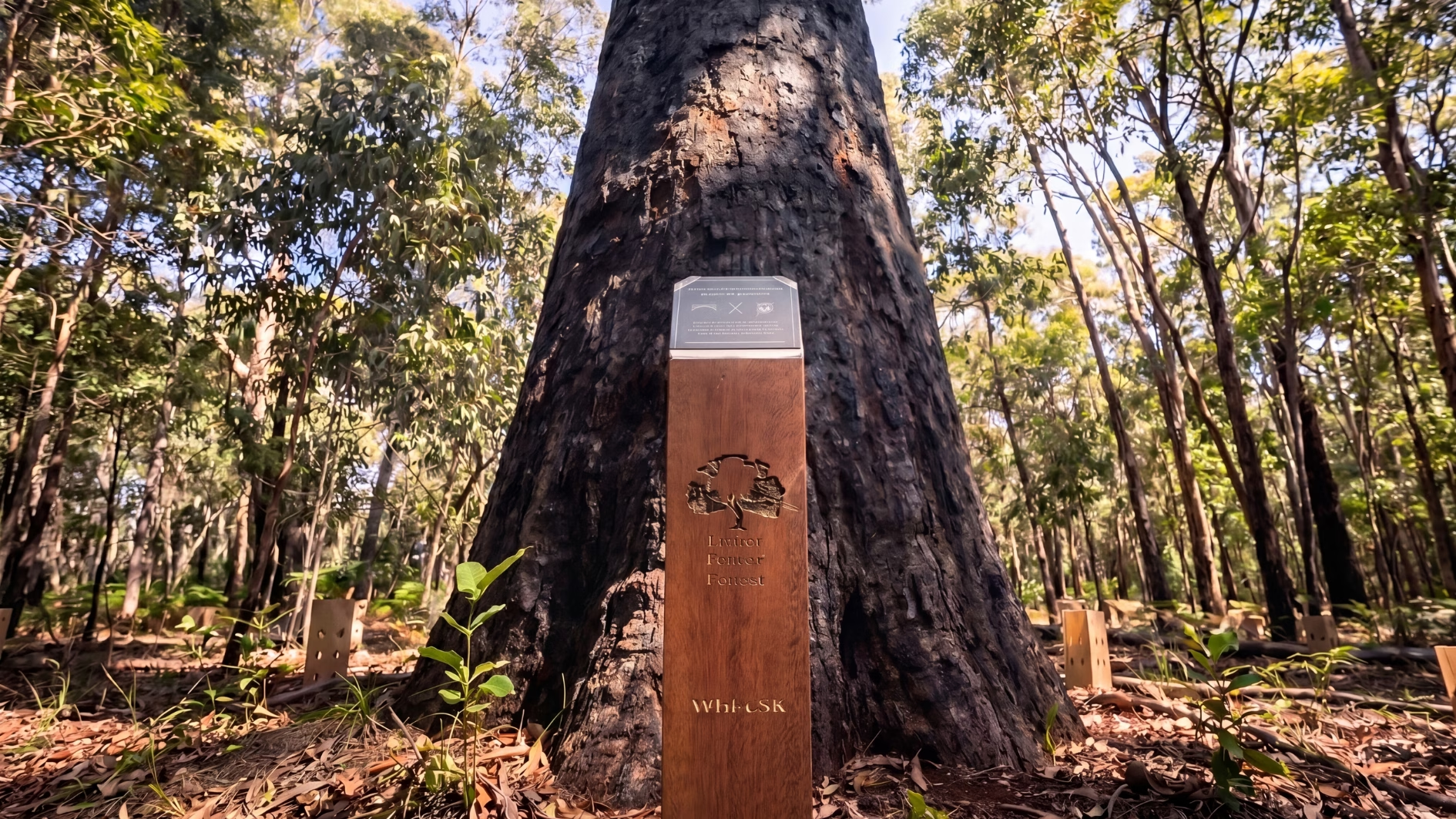
The Blackbutt is named for its darkened base, scorched by fire over centuries. Everything above that scorched base grows clean and straight for 40 metres. The fire did not kill it. The fire is part of it.
If you have walked through a gully in Southwest WA and noticed a tall tree with a charred base and a smooth pale upper trunk, you have found a Blackbutt. This article explains what you were looking at, how to identify it, and why a tree adapted to survive fire for centuries carries a particular kind of meaning in the Southwest landscape.
What is the Blackbutt tree?
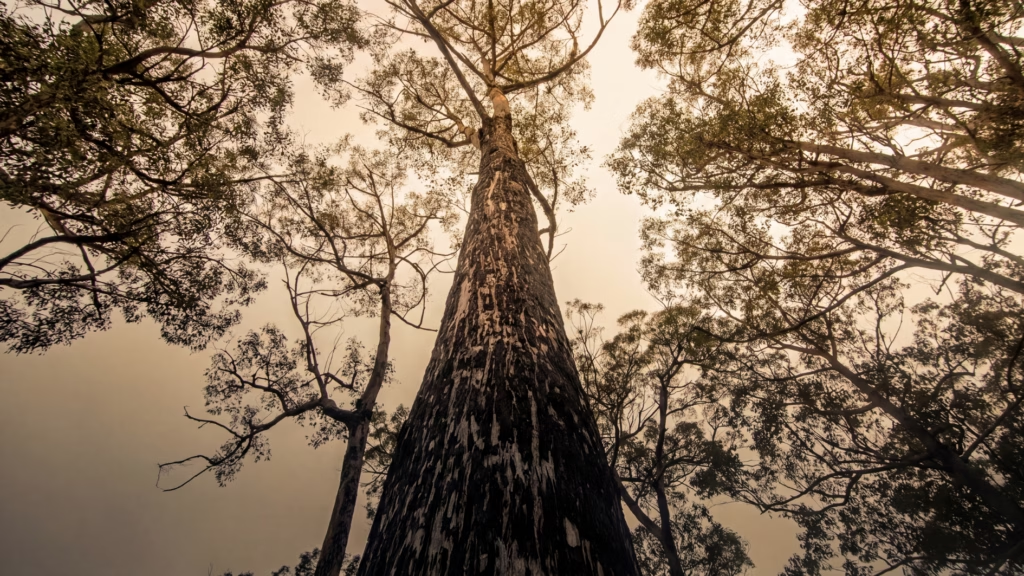
Blackbutt (Eucalyptus patens) is a large native eucalypt endemic to Southwest Western Australia. It is also known as yarri, the Aboriginal name that many botanists and land managers now prefer for its specificity: ‘blackbutt’ is a name shared by several unrelated eucalypts in eastern Australia, including a very different species in Queensland and New South Wales. When someone in WA says Blackbutt, they mean Eucalyptus patens, the Southwest’s own.
It is one of the six forest giants of Western Australia, alongside Jarrah, Marri, Karri, Tuart, and Red tingle. That classification puts it in rare company. These six species are the ones that define the character of the Southwest’s tall forests, and Blackbutt earns its place among them through sheer size and ecological significance.
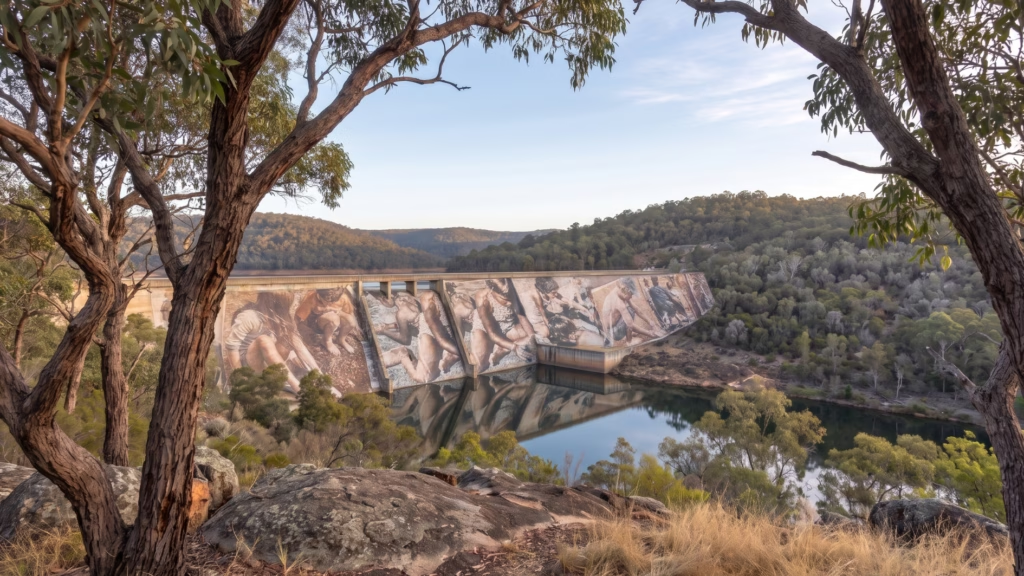
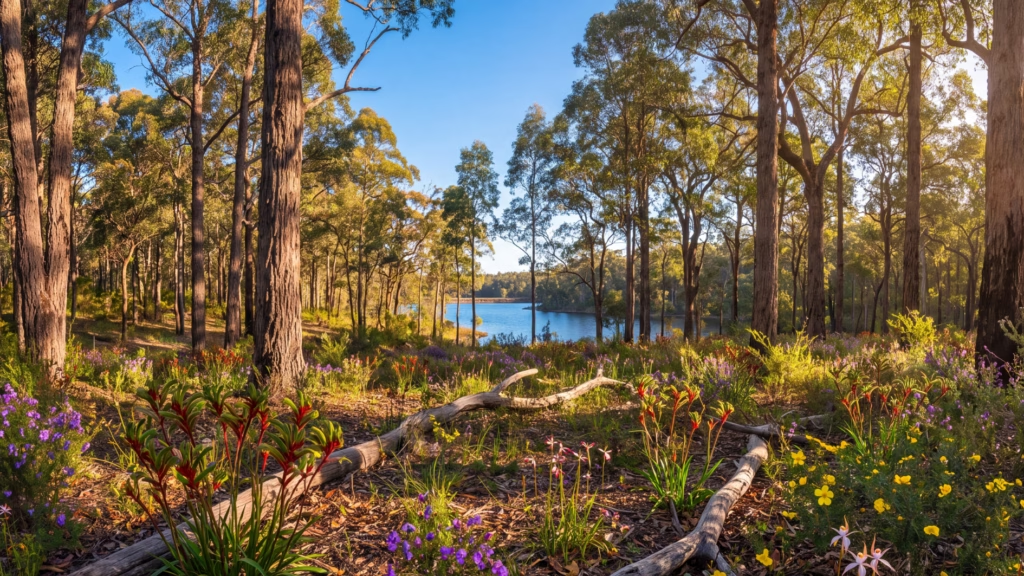
Its natural habitat is gullies, creek lines, and valley floors in the Darling Range and the broader southwest, where it grows in moist, loamy soils alongside Jarrah and Marri. At Wellington Dam, within Wellington National Park, Blackbutt grows in exactly these conditions: sheltered gullies where water moves through the landscape and the soil holds more moisture than the surrounding ridges.
How to identify a Blackbutt tree in Western Australia
The blackened base
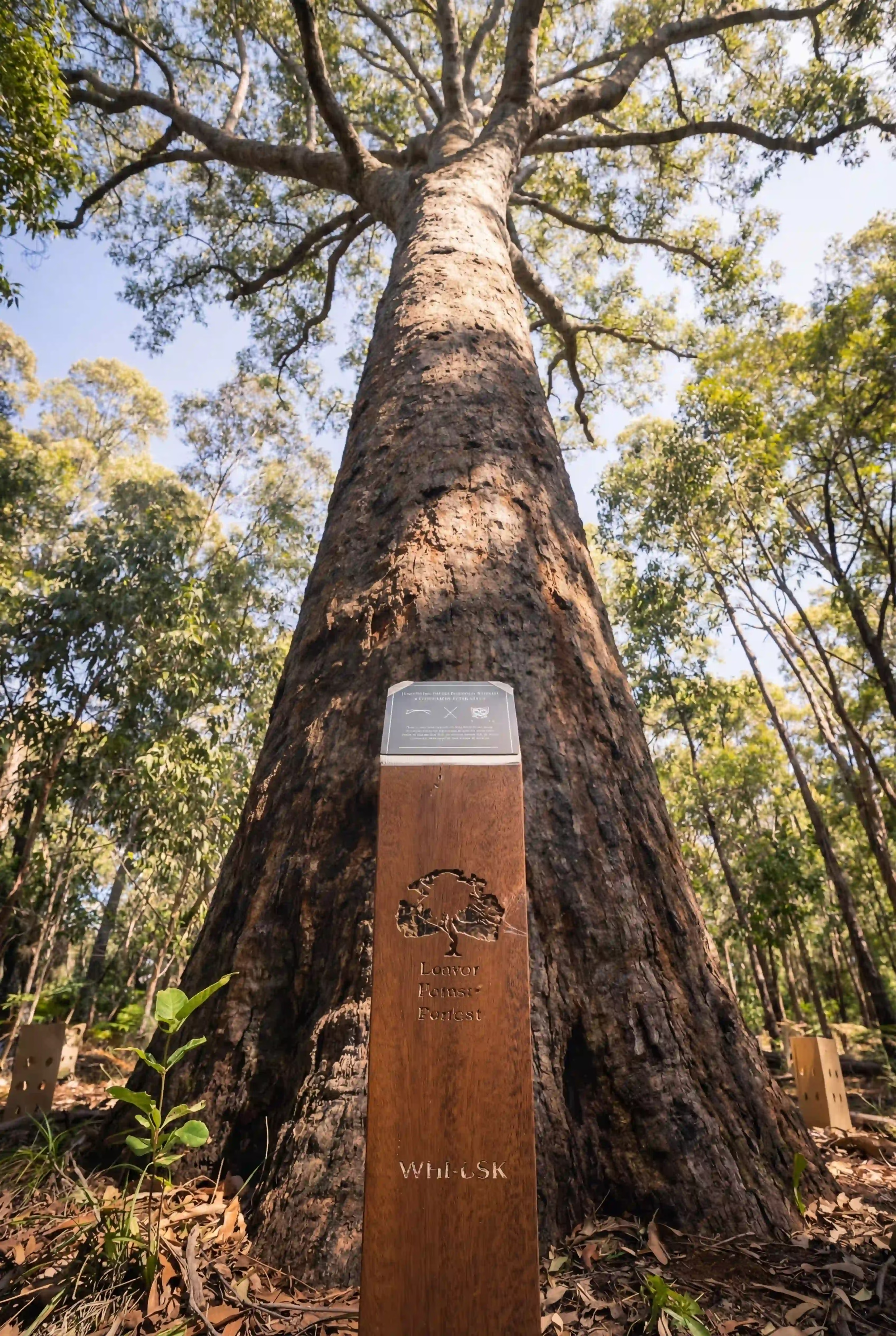
The base is the starting point. The bark from the ground up to about two to three metres is rough, thick, fibrous, and deeply furrowed, usually dark grey-brown to almost black. On trees that have experienced fire, this base is often genuinely charred. On trees that have not been directly burned recently, the bark remains rough and dark but not scorched. Either way, it stands in stark contrast to what happens above it.
The smooth upper trunk
Above the rough base, the trunk transitions to smooth, pale grey bark. This two-tone appearance, rough and dark below, smooth and pale above, is the most distinctive visual feature of a mature Blackbutt and the fastest way to identify one in the field. No other common tree in the Southwest forest shows this same pattern with the same clarity.
The transition is not always sharp. On younger trees or in sheltered conditions, the rough bark may extend higher up the trunk. But on mature specimens in the Darling Range and Wellington area, the contrast is usually unmistakable.
Canopy and leaves
The canopy is dense and heavy, forming a dark rounded crown that provides substantial shade. The leaves are lanceolate to slightly curved, between 8 and 17 centimetres long, dull green and roughly the same shade on both sides. This sets them apart from Jarrah, which has distinctly discoloured leaves, darker on top and paler below.
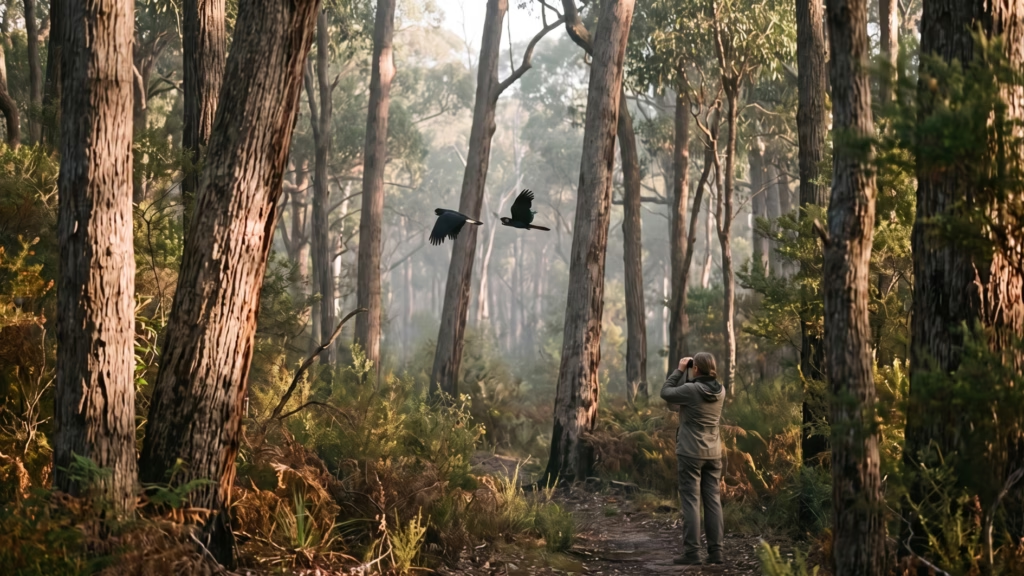
The canopy provides habitat and food for honeyeaters, rosellas, and cockatoos across seasons. In spring and summer, when the flowers are open, the tree draws considerable bird activity. Through autumn and winter, the canopy itself shelters nesting and roosting birds.
Flowers and fruit
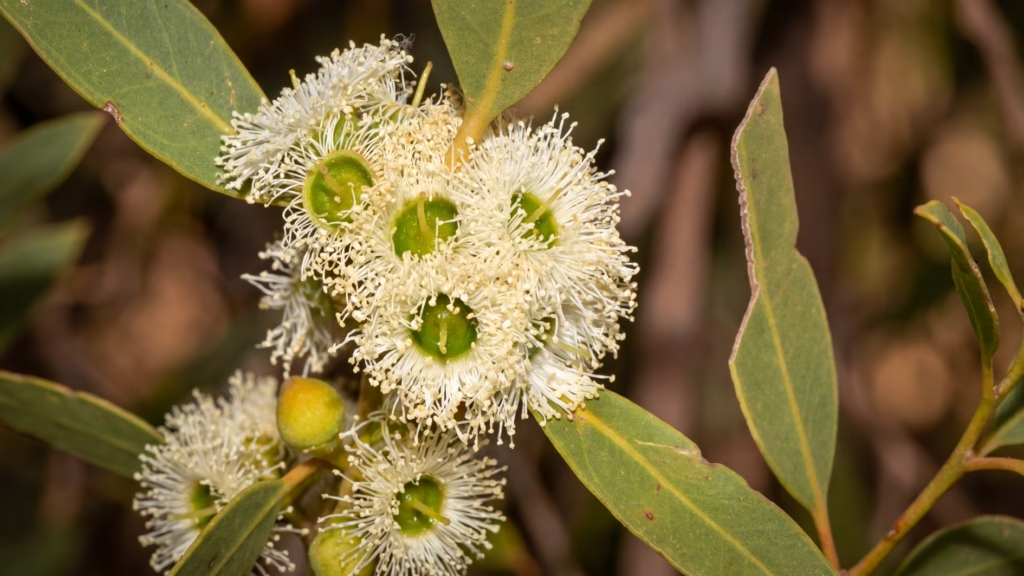
The flowers are creamy white, held in clusters of 7 to 11 buds, and bloom most heavily between November and February with a secondary flush possible in July and August. The spring and summer bloom is the main event: a large Blackbutt in full flower is conspicuous from a distance and draws birds from across the surrounding forest.
The fruit is a small woody capsule, roughly spherical to oval, between 9 and 14 millimetres long. Smaller and less dramatic than a Marri honky nut, it is still a food source for seed-eating birds including black cockatoos.
Quick identification guide
| Feature | What to look for |
| Base bark | Rough, thick, fibrous, dark grey-brown to black. Deeply furrowed. Often charred on fire-affected trees. |
| Upper trunk | Smooth, pale grey. Transitions from rough base. Two-tone appearance is diagnostic. |
| Leaves | Lanceolate, 8 to 17 cm, dull green, same shade on both sides. Differs from jarrah’s discoloured leaves. |
| Flowers | Creamy white, in clusters of 7 to 11. Blooms November to February (main), July to August (secondary). |
| Fruit | Small woody capsule, 9 to 14 mm. Spherical to oval. Smaller than Marri honky nuts. |
| Habitat | Gullies, creek lines, valley floors. Moist loamy soils. Often alongside jarrah and marri. |
| Scientific name | Eucalyptus patens. Also known as yarri. |
How Blackbutt compares with Jarrah and Marri
Jarrah has rough, fibrous bark running the full length of the trunk in long flat strips, with no pale upper section. Its leaves are dark and shiny above, pale below. Marri has tessellated, blocky bark across the whole trunk and produces the large ribbed honky nuts that are hard to mistake for anything else. Blackbutt’s two-tone trunk is its distinguishing character: rough and dark below, smooth and pale above. In a forest that contains all three, which is common in the Wellington area, this contrast makes Blackbutt the easiest of the three to pick out.
The fire adaptation that defines Blackbutt
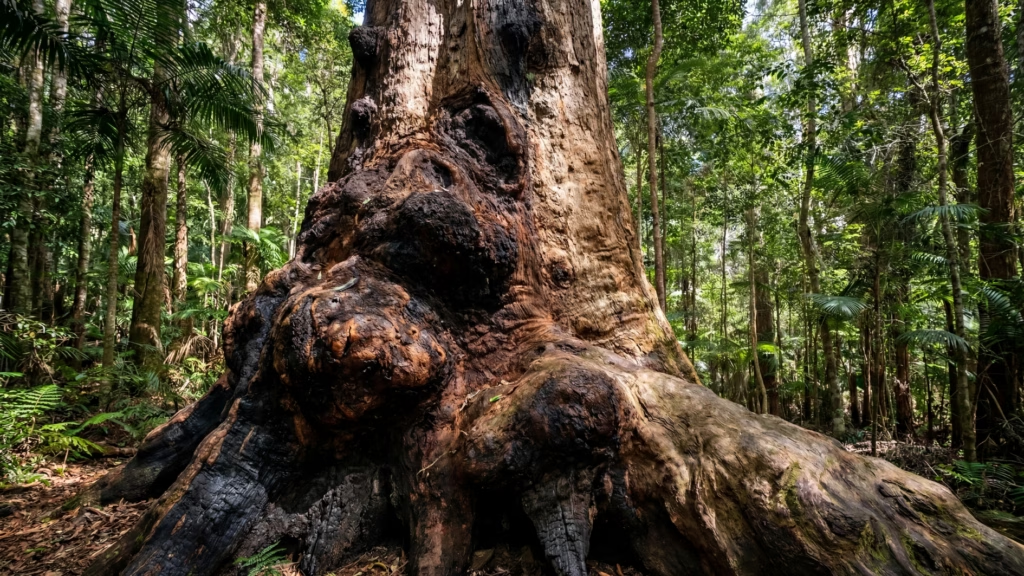
Blackbutt’s name is not incidental. It is a precise description of an ecological strategy.
The thick, fibrous bark at the base of the tree is not cosmetic. It functions as insulation. When fire moves through the understorey, the heat at ground level is intense, but the bark absorbs and deflects enough of it to protect the living tissue, the cambium, the sapwood, and the root system. The outside chars. The inside lives.
Blackbutt also forms a lignotuber at the base of the trunk,which stores carbohydrates and dormant buds. If fire damages the canopy or upper trunk, the lignotuber provides the energy and the growing points needed to resprout from the base. Other species recover more slowly. Blackbutt responds quickly, sending up new growth within weeks of a fire passing through.
Over centuries, in a landscape where fire is a recurring event rather than an exceptional one, this combination of thick insulating bark and lignotuber persistence means that a Blackbutt can survive fires that kill or severely set back most other plants around it. The charred base is not evidence of damage. It is evidence of survival.
A Blackbutt that has a blackened base has been in a fire and comes through it. It has done this, in all likelihood, more than once. The black marks are its record.
How large does Blackbutt grow, and how long does it live?
In good conditions, Blackbutt reaches 40 metres or more. The tallest documented specimens in moist valley conditions approach 45 metres. The trunk is typically straight and relatively slender for its height, which gives mature trees a clean, columnar form before the crown expands.
In drier or more exposed conditions, growth is smaller and slower. Trees in shallow soils or on ridge lines may remain under 20 metres. The gully-dwelling Blackbutts of the Southwest forests, growing in deeper soils with reliable moisture from adjacent waterways, are the ones that reach the impressive dimensions.
Longevity is harder to pin down precisely, but stands of Blackbutt in protected areas of the Southwest have been estimated at over 200 years, with some specimens in undisturbed conditions reaching considerably older. The combination of fire resilience, deep root access to groundwater along creek lines, and dense hardwood resistant to most fungal decay and insect attack means that once a Blackbutt is established, there are relatively few natural processes that bring it down quickly.
The lignotuber means the tree can, in a sense, restart. A Blackbutt that loses its canopy to fire does not die the way a tree without that reserve would. It uses what it has stored below ground and begins again. This capacity to reset while maintaining the root system and base adds to effective lifespan in ways that simple height or trunk diameter measurements do not fully capture.
Blackbutt as a habitat tree
A mature Blackbutt canopy is dense enough to alter the microclimate beneath it. The shade is deep, the leaf litter is substantial, and the canopy intercepts enough rainfall to affect how moisture moves through the soil. This makes Blackbutt more than a tree: it is a structure that shapes the environment around it.
For birds, the canopy provides cover across seasons. In spring and summer, honeyeaters and lorikeets work the flowers for nectar, and the activity during a good flowering year is constant. Rosellas and parrots take seeds from the capsules. Black cockatoos, which are listed as threatened species in Western Australia, are also recorded foraging on Blackbutt.
As Blackbutt trees age and develop hollow limbs and trunks, they become nesting sites for parrots, owls, and possums. Hollow formation takes time, often more than a century in hardwood trees of this density. Old-growth Blackbutt, like old-growth Jarrah, carries a biological value that no young tree can replicate regardless of how it is managed.
Blackbutt at the Living Conservation Forest at Wellington Dam
Blackbutt is one of the three approved tree species at the Living Conservation Forest at Wellington Dam, alongside Jarrah and Marri. Wellington National Park, where the forest sits, is within the natural distribution of Blackbutt in the Southwest: gullied, reasonably moist, with the kind of valley terrain where this species grows best.
A Blackbutt ceremony at Wellington Dam in November or December takes place beneath a tree coming into flower. The canopy will be full. The birds will be there. The black base of the trunk will stand behind the family as the ashes go into the soil.
A Blackbutt planted in the forest today will carry its charred base and its smooth pale upper trunk for the next two centuries at least, if left undisturbed. The conservation covenant administered by the Department of Biodiversity, Conservation and Attractions means the land cannot be cleared, logged, or sold. The protection is legal, not merely intended.
The forest is open seven days a week at 1 Wellington Dam Road, Worsley WA 6225, approximately 30 minutes from Bunbury and two hours south of Perth.
| Blackbutt is one of three native tree species available at the Living Conservation Forest at Wellington Dam. Learn more at livinglegacywellingtondam.org.au or call 0427 096 944 |
Read more: Best Things to Do at Wellington Dam for a Perfect Day Trip
Frequently asked questions
What is the scientific name of the Blackbutt tree in Western Australia?
The Western Australian Blackbutt’s scientific name is Eucalyptus patens. It is also known as yarri, the Aboriginal name that many botanists and land managers now prefer because ‘blackbutt’ is shared by several unrelated eucalyptus species in eastern Australia. Eucalyptus patens is one of the six forest giants of Southwest Western Australia.
How do you identify a Blackbutt tree in the wild?
The most distinctive field character is the two-tone trunk: rough, dark, fibrous bark at the base, transitioning to smooth pale grey bark higher up. No other common tree in the Southwest forest shows this pattern with the same clarity. The base is often genuinely charred on fire-affected trees. The canopy is dense and rounded, the leaves are dull green and roughly the same shade on both sides, and the flowers are creamy white appearing mainly between November and February.
Why does the Blackbutt tree have a black base?
The blackened base is the result of fire. The thick, fibrous bark at the base of the tree functions as insulation: when fire moves through the understorey, the bark chars on the outside while protecting the living tissue inside. Blackbutt also forms a lignotuber, a woody swelling at the base that stores energy and contains dormant buds, allowing the tree to resprout if the canopy is damaged. The charred base is evidence of survival, not damage.
How tall does a Blackbutt tree grow in Western Australia?
In good conditions, particularly in gullies and along creek lines with moist, loamy soils, Blackbutt grows to 40 metres or more. Some specimens in ideal conditions approach 45 metres. In drier or more exposed locations, growth is considerably smaller. The tree is classified as one of the six forest giants of Western Australia.
When does Blackbutt flower in Western Australia?
Blackbutt flowers most heavily between November and February. A secondary flowering flush is possible in July and August. The spring and summer bloom is the main event, with large trees conspicuous from a distance during a good flowering year. The flowers are creamy white and are an important nectar source for honeyeaters, lorikeets, and other native birds.
Where does Blackbutt grow in Southwest WA?
Blackbutt grows across the Darling Range and Southwest, from near the Avon River in the north down through the Peel and South West regions to near Albany. It favours depressions, creek lines, valley floors, and other areas with moist, loamy soils. In Wellington National Park near Bunbury, Blackbutt grows in the gullied terrain alongside Jarrah and Marri.
Is Blackbutt the same as the eastern Australian Blackbutt?
No. The WA Blackbutt (Eucalyptus patens) is a different species from the eastern Australian Blackbutt (Eucalyptus pilularis), which is common in Queensland and New South Wales. The two trees share a common name because both have a blackened base, but they are botanically distinct. The WA species is also called yarri to avoid this confusion.