
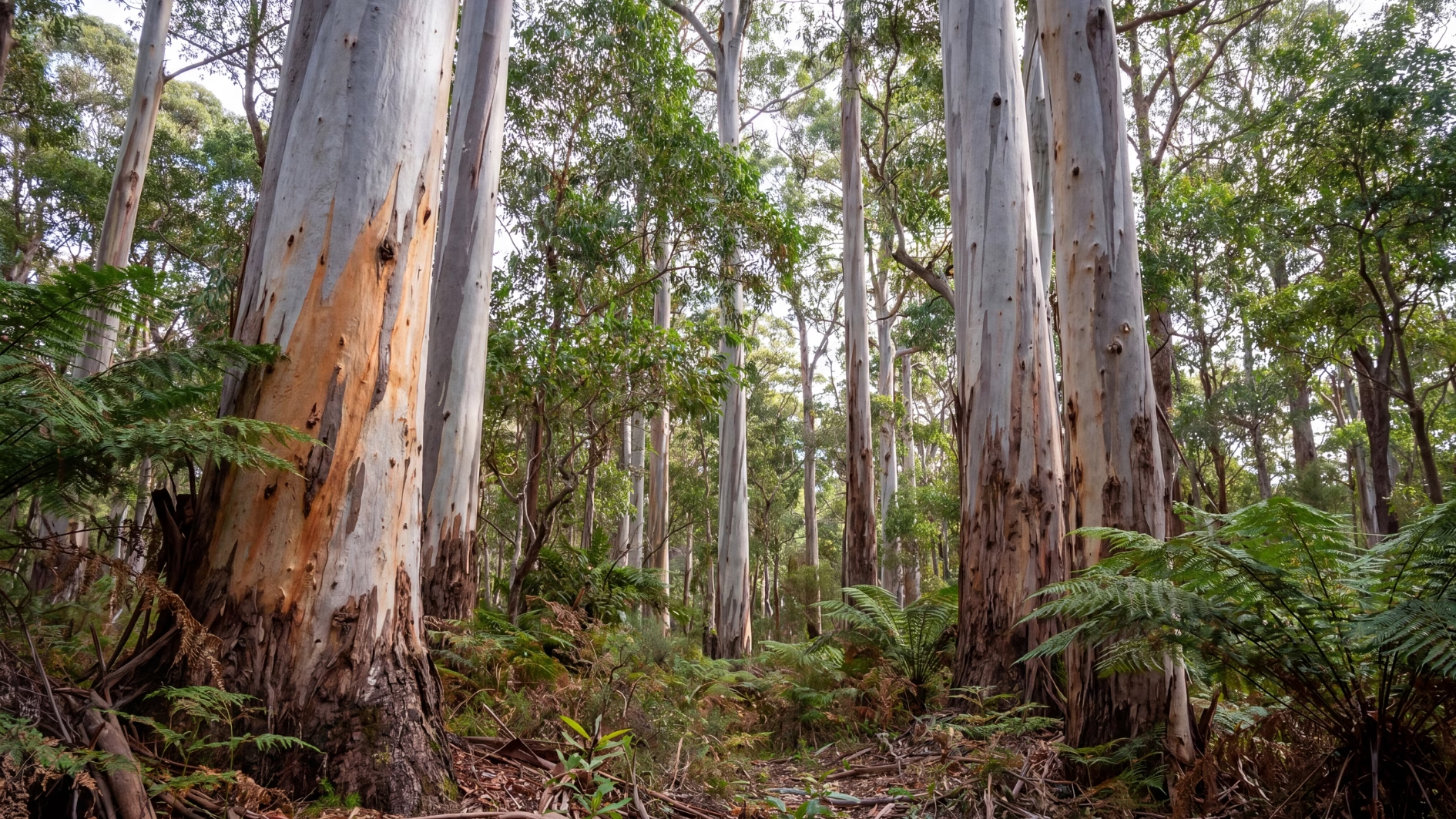
Most people walking through the Southwest forests of Western Australia can identify a Jarrah or a Marri. The Bullich is less well known, which makes it one of the more interesting trees to encounter. It grows where water gathers: in swampy depressions, along stream banks, and in the moist gullies of the Darling Range where the soil holds moisture long after the surrounding ridge country has dried out. Its bark glows pale orange when new, fading to white, then grey. It flowers in winter when almost nothing else in the forest does.
If you have come across a smooth-barked tree standing in or near wet ground in the Southwest, somewhere between Perth and Albany, and wondered what it was, there is a reasonable chance you were looking at a Bullich.
What is the Bullich tree?
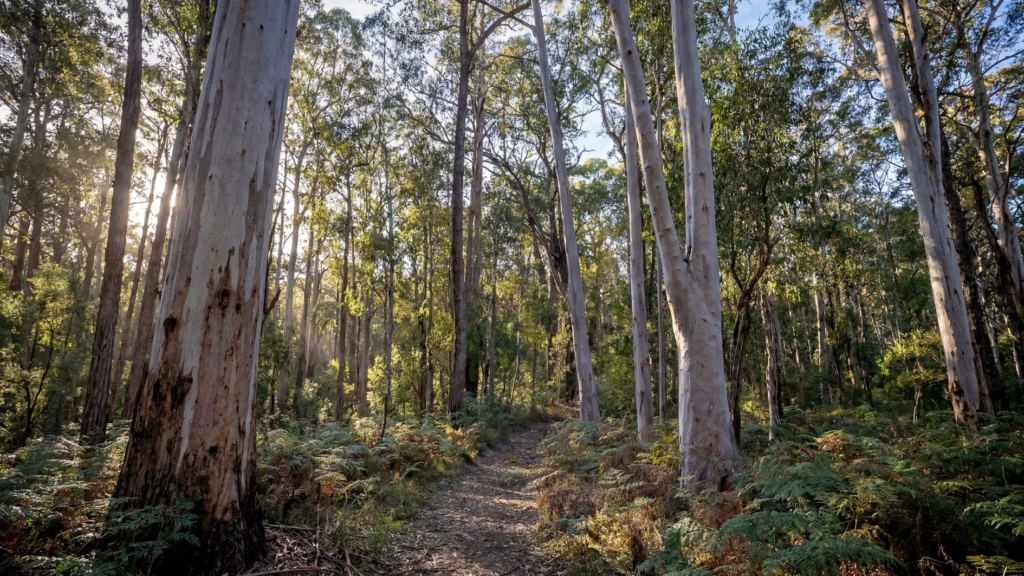
Bullich (Eucalyptus megacarpa) is a native eucalypt found in the south-west corner of Western Australia. The name Bullich comes from the Noongar language, the language of the Traditional Custodians of the Southwest. Its scientific name, megacarpa, comes from Latin and means ‘large-fruited’, a reference to the tree’s distinctively large seed capsules.
It grows from near Perth south and east to Albany, always in areas of higher rainfall and consistently moist ground. It is uncommon in the Perth metropolitan area, appearing mainly in the Darling Range, and becomes more prevalent in the southern and wetter parts of its range. In the right conditions, it reaches 20 to 35 metres in height. In poorer sites, on hillsides or drier ground, it may grow as a robust mallee, reaching only five metres.
Another name for Bullich is swamp Karri. It is not closely related to Karri, and does not grow as tall, but the smooth pale bark and erect open habit are similar enough that the comparison is understandable. Where the two grow in the same region, habitat is the clearest way to tell them apart: Karri favours deep, fertile soils in high-rainfall areas near the south coast; Bullich prefers swampy ground and creek margins across a wider range.
How to identify a Bullich tree
Bark
The bark is smooth across the entire trunk and branches. There is no rough fibrous base of the kind you see on Jarrah or Blackbutt. When the bark is shed, usually in summer, the new surface underneath is pale yellow-orange or apricot, which fades gradually to white and then to a mottled grey. On a tree in the process of shedding, you may see all three colours present at once. This gives mature Bullich a patchy, layered appearance that is quite distinctive.
Leaves and flowers
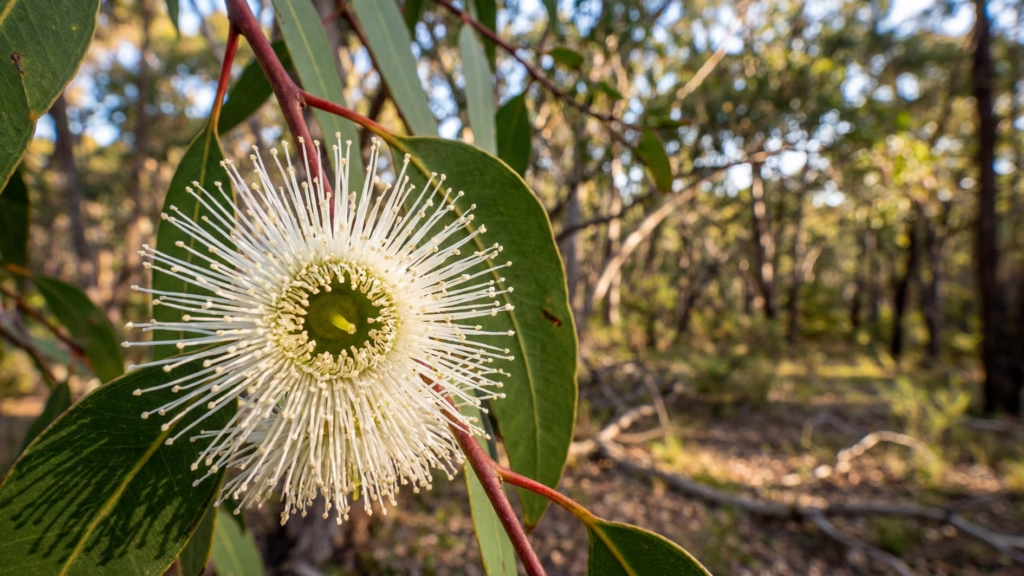
The adult leaves are lance-shaped to slightly curved, between 7 and 14 centimetres long and 1.5 to 3 centimetres wide, dull to slightly glossy green. They are roughly the same colour on both sides, which helps distinguish Bullich from Jarrah, whose leaves are darker above and paler below.
The flowers are creamy white and appear in winter, from around June to September, in clusters of three buds. Winter flowering is one of the most distinctive things about this species. While much of the Southwest forest is quiet, Bullich produces nectar and pollen that native birds and insects depend on through the colder months.
Fruit
The seed capsules are cup-shaped to hemispherical, between 1.5 and 3 centimetres across. They are notably large for a eucalypt of this size, which is the origin of the name megacarpa. The fruit is woody, persistent, and easy to spot on the ground beneath a mature tree.
Quick identification guide
| Feature | What to look for |
| Bark | Smooth throughout. New bark pale orange-apricot, fading to white then grey. Sheds in summer. |
| Leaves | Lance-shaped, 7 to 14 cm, dull to slightly glossy green. Same colour on both sides. |
| Flowers | Creamy white, in clusters of 3. Blooms June to September (winter). |
| Fruit | Large cup-shaped woody capsule, 1.5 to 3 cm. Notably large for this size of eucalypt. |
| Habitat | Swampy depressions, stream banks, moist gullies. Always near water. |
| Form | Tree 20 to 35 m in good conditions. Robust mallee to 5 m on poorer sites. |
| Scientific name | Eucalyptus megacarpa. Noongar name: Bullich. Also called swamp Karri. |
How Bullich compares with other Southwest eucalypts
Jarrah has rough, fibrous bark running the full length of the trunk. Marri has tessellated, blocky bark and produces the large ribbed honky nuts that are unmistakable. Blackbutt has a dark roughened base and smooth pale upper trunk. Bullich has smooth bark all the way to the ground, glowing orange when fresh, and always grows in or near wet ground. In a forest that contains all four, habitat is the fastest sorting guide: if the ground is dry and gravelly, it is probably Jarrah. If it is swampy or beside a stream, Bullich is worth checking.
Why Bullich grows where it does
Bullich is not adapted to dry conditions. It is adapted to wet ones. The species has evolved to occupy the niches within the Southwest forest where water accumulates: the valley floors, the drainage lines, the swampy flats that sit at the base of granite slopes and catch runoff from surrounding ridges. In these places, the soil stays moist through summer when the broader landscape has dried out.
This means Bullich occupies a specific and ecologically important role. Riparian and swampy vegetation communities in the Southwest are disproportionately rich in species diversity relative to their area, partly because they retain moisture through dry periods that allow different plant communities to establish. Bullich is often a dominant tree in these communities, structuring the habitat for everything that lives beneath and within it.
Because it flowers in winter, Bullich provides food for honeyeaters, lorikeets, and other nectar-dependent birds during a period when most other flowering trees have finished. Bullich is also recorded as attracting black cockatoos. The large fruit capsules provide seed for seed-eating birds across seasons.
Bullich forms a lignotuber, a woody swelling at the base of the trunk that stores energy and dormant buds. This allows the tree to resprout from the base after fire or damage. In the moist gully environments where Bullich grows, fire is less frequent than on surrounding ridges, but the lignotuber provides resilience when it does occur.
How long does a Bullich tree live?
Bullich is one of the long-lived trees of the Southwest forest. The brochure for the Living Conservation Forest at Wellington Dam describes Bullich as capable of living 300 to 500 years or more. The tree’s combination of moist habitat preference, lignotuber persistence, dense hardwood resistant to most wood-decay fungi, and protected position in gullies and riparian zones all contribute to longevity.
A Bullich that establishes in good conditions, in a moist gully with reliable water availability and protection from repeated severe fire, can outlive almost everything planted around it. The trees that reach old age in Southwest gullies develop hollow branches and trunk cavities that become nesting sites for parrots, possums, and other cavity-dependent species. This accumulated biological complexity takes generations to develop and cannot be replicated by young trees regardless of management.
Bullich in Noongar culture and the Southwest landscape
The name Bullich is Noongar in origin. The Noongar people are the Traditional Custodians of the country across which the Bullich grows, a continuous territory spanning the Southwest corner of Western Australia. Noongar relationships with the plants and ecosystems of the Southwest reach back tens of thousands of years, and species names in Noongar language often encode ecological knowledge: habitat, seasonal behaviour, use, or character.
Specific traditional uses of Bullich are not widely documented in publicly available sources, so it is best not to generalise. What can be said is that Bullich occupies habitat, the moist gullies and swampy depressions of the Southwest, that Noongar people have used and managed as part of broader Country stewardship. The retention of the Noongar name as the primary common name for this species is a meaningful form of recognition.
Bullich at the Living Conservation Forest at Wellington Dam
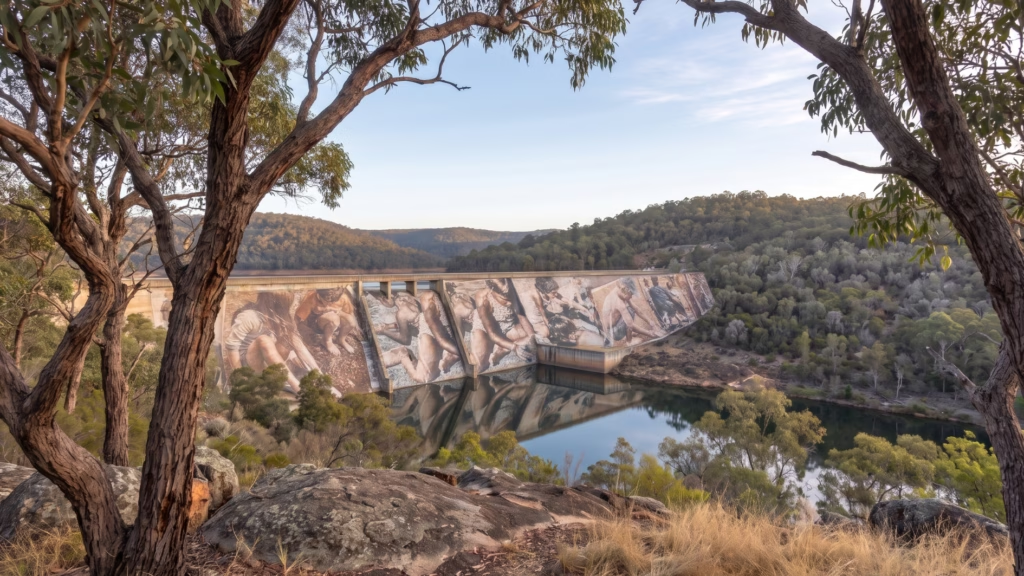
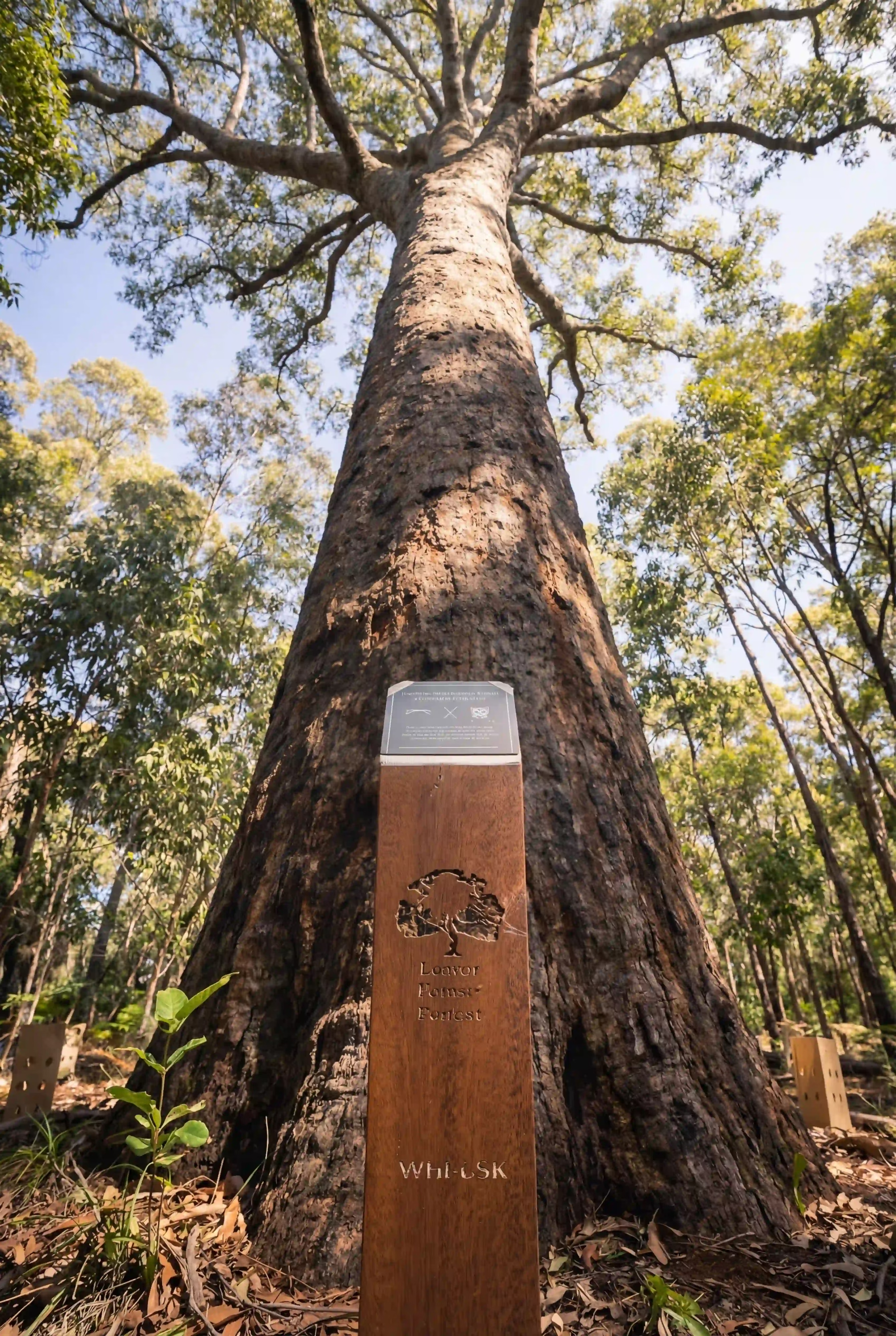
Bullich is one of the approved tree species at the Living Conservation Forest at Wellington Dam, alongside Jarrah, Marri, and Blackbutt. Wellington National Park, where the forest sits, is within the natural distribution of this tree in the Southwest: the gullied, moist terrain near Bunbury is exactly the kind of environment where this species grows.
A Bullich planted in the forest as a memorial tree will flower each winter, drawing birds through the cold months when the forest is otherwise quiet. It will grow into the canopy over decades. Given protection and reasonable conditions, it will still be standing and growing three or four centuries from now. The conservation covenant administered by the Department of Biodiversity, Conservation and Attractions means the land cannot be cleared, logged, or sold. The trees stay.
The forest is open seven days a week at 1 Wellington Dam Road, Worsley WA 6225, approximately 30 minutes from Bunbury and two hours south of Perth.
| Bullich is one of several native tree species available at the Living Conservation Forest at Wellington Dam. Learn more at livinglegacywellingtondam.org.au or call 0427 096 944 |
“Very peaceful place for the burial of my grandfather Jimmy. The owners have great compassion and a great sense of understanding of the family bond that comes with each and every life. I am immensely impressed that the people that run this place know you by your name and not just a transaction.”
— Jeffrey Chen, forest family
Frequently asked questions
What is the Bullich tree?
Bullich (Eucalyptus megacarpa) is a native eucalypt found in the south-west corner of Western Australia. It grows in swampy depressions, along stream banks, and in moist gullies from near Perth to Albany. Its Noongar name is Bullich and it is sometimes called swamp Karri because of its smooth pale bark and open growth habit. It is one of the longer-lived trees of the Southwest forest, capable of surviving for several centuries in good conditions.
How do you identify a Bullich tree?
The most distinctive field character is the smooth bark across the entire trunk and branches, which glows pale orange-apricot when freshly shed, fading to white and then mottled grey. Unlike Jarrah or Blackbutt, there is no rough fibrous base. The tree is almost always found near water: swampy ground, creek banks, or moist valley floors. The large cup-shaped fruit capsules on the ground beneath the tree are also distinctive.
Where does Bullich grow in Western Australia?
Bullich grows in the south-west corner of Western Australia, from near Perth south and east to Albany. It is a tree of moist environments and is found in swampy depressions, along stream banks, and in gullies where water accumulates. It favours the highest-rainfall parts of the Southwest and is uncommon in the northern parts of its range near Perth, where it is mainly confined to the Darling Range.
When does Bullich flower?
Bullich flowers in winter, from approximately June to September. The flowers are creamy white and appear in clusters of three. Winter flowering makes Bullich an important food source for honeyeaters, lorikeets, and other native birds during the period when most other eucalypts in the Southwest forest have finished flowering.
Is Bullich the same as karri?
No. Bullich is sometimes called swamp karri because of its smooth pale bark and similar growth habit, but it is a different species. Bullich is Eucalyptus megacarpa; Karri is Eucalyptus diversicolor. Karri grows taller, favours deep fertile soils in the very high-rainfall south coast region, and is one of the tallest trees in Australia. Bullich is smaller and grows in swampy ground across a wider range.
How long does a Bullich tree live?
Bullich is a long-lived tree capable of surviving for 300 to 500 years or more in good conditions. The combination of moist habitat, dense hardwood, lignotuber resilience, and protected gully position all contribute to longevity. Old Bullich trees develop hollow branches and cavities that become nesting habitat for native birds and possums.
Is Bullich available as a memorial tree at Wellington Dam?
Yes. Bullich is one of the tree species available at the Living Conservation Forest at Wellington Dam in Wellington National Park. The forest is approximately 30 minutes from Bunbury and two hours south of Perth. Call 0427 096 944 or visit livinglegacywellingtondam.org.au to learn more.