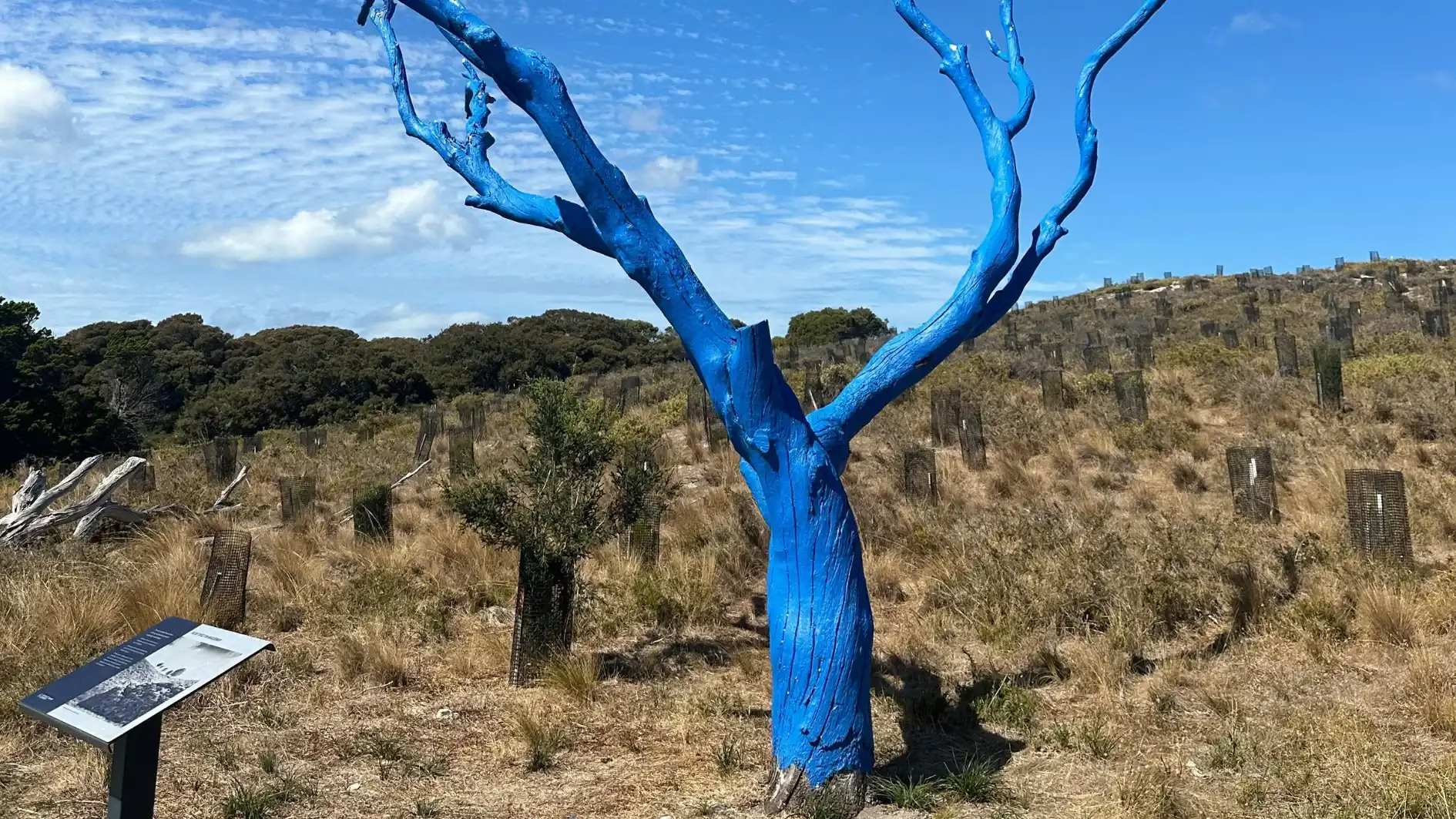
Drive far enough along any country road in Western Australia and sooner or later you will see one. A dead tree painted in a bold, unmissable blue, standing in a paddock, beside a fence line, or at the edge of a town. It does not match anything around it. It is a tree, deliberately turned the wrong colour, asking to be noticed.
What you are looking at is part of a movement that began in regional WA and has since spread across the country and overseas, with more than 1,400 registered blue trees worldwide. Each one exists for the same reason: to make people stop, ask questions, and start talking about mental health, particularly the conversations Australian men have been slowest to begin. A painted blue tree in Australia is a quiet, public cue that someone is paying attention.
What a Blue Tree in Western Australia Represents
Visibility and Conversation About Mental Health
Mental health is invisible by nature. People carry it through their days while showing little of what they are carrying. A blue tree is the opposite: it interrupts the landscape, and in interrupting the landscape, it interrupts the silence. Nothing else in the WA bush is that blue, so the eye stops.
The first question anyone asks is what it is. From there, the talk often shifts to who in the asker’s life might be quietly struggling, which mate has gone quiet, or which family member they have not called in too long. The blue trees meaning isn’t carried in any single tree. It is carried in the questions the tree provokes between two people standing near it.
Focusing on Men’s Mental Health and Suicide Prevention
The movement grew out of the loss of a young man in regional WA, and that origin shapes its focus. Suicide is the leading cause of death for Australians aged 15 to 44, and over three-quarters of those deaths nationally are men. Men also seek formal mental health support far less often than women. A bright tree along a familiar road is not a clinical service, but it is easier to engage with than a number on a flyer. It does not ask anyone to disclose anything. It just makes the topic visible enough that the next conversation might happen sooner.
The Story Behind the First Blue Tree
A Prank in a Mukinbudin Paddock
The first blue tree was not painted as a public statement. In 2014, on his family’s grain and sheep farm in Mukinbudin in the central WA wheatbelt, a young man named Jayden Whyte and his close friend Tjarda found leftover blue paint in a shed and used it on a dead tree out in the paddock. They wanted to see how long it would take Jayden’s father to notice. It was a quiet bit of mischief between mates, the kind of thing told later as a family story.
Four years later, in 2018, Jayden died by suicide at the age of 29. The story of the painted tree was told at his funeral, and the colour took on a meaning that no one had assigned to it at the time it was painted. People who had never seen the tree came to know it through that telling.
From One Farm Tree to a Global Movement
Kendall Whyte, Jayden’s sister, founded the Blue Tree Project as a registered charity in 2019. What started as a memorial gesture in one paddock has since grown into an organised movement, with mental health awareness sessions, school and community engagement, mental health first aid training, and a free blue paint partnership with Wattyl that now extends across Australia and New Zealand.
The project keeps returning to the same point: a conversation about mental health needs somewhere ordinary to be visible before it can begin. A tree on a farm, a tree on a roadside, a tree in a school yard. The trees are the doorway. The conversation is what walks through.
Why a Tree Was Chosen as the Symbol
A Public, Growing Reminder in the Landscape
A tree is public, but it is not commercial. It is owned by the place rather than by a brand, and people walk past it, drive past it, and live near it across years rather than seasons. That is why so many Australians ask why are trees painted blue when they first encounter one, and why the answer tends to stay with them. A community-owned reminder on a fence line near a sports oval is harder to dismiss than a poster on a noticeboard.
How the Fading Paint Echoes the Message
Paint fades. Sun and weather work on a blue tree across years, and the colour softens long before the tree itself comes down. People who tend these trees often treat the fading as part of the message rather than a problem to fix. When a community returns to repaint a tree, it is also returning to the conversation. Between paintings, the tree continues its work in a softer voice, which is closer to how mental health support actually functions across years.
Blue Trees and Men’s Mental Health in Western Australia
Why Men Need Visible Mental Health Cues
Australian men have a documented pattern of waiting too long to ask for help. By the time many of them reach out, the distress has been carried alone for months. A clinical setting is not the most natural first step, particularly for men who grew up where talking about feelings was not modelled. A blue tree mental health cue, sitting outdoors where men already pass it, fits the rhythm of how men often move toward help: slowly, across several encounters before any action.
Rural and Regional Men in WA Communities
Many of WA’s blue trees stand in farming, mining, and small-town areas where isolation and long-distance work are part of ordinary life. Suicide rates in regional and remote Australia run substantially higher than in the major cities, and the men who live there are often working long shifts far from family, with limited access to in-person support. The trees sit on station entrances, near sports grounds, and along the routes between mine sites and home. The blue tree WA story is a regional story before anything else.
Read more: Men’s mental health support in Western Australia: helplines, services, and groups that can help
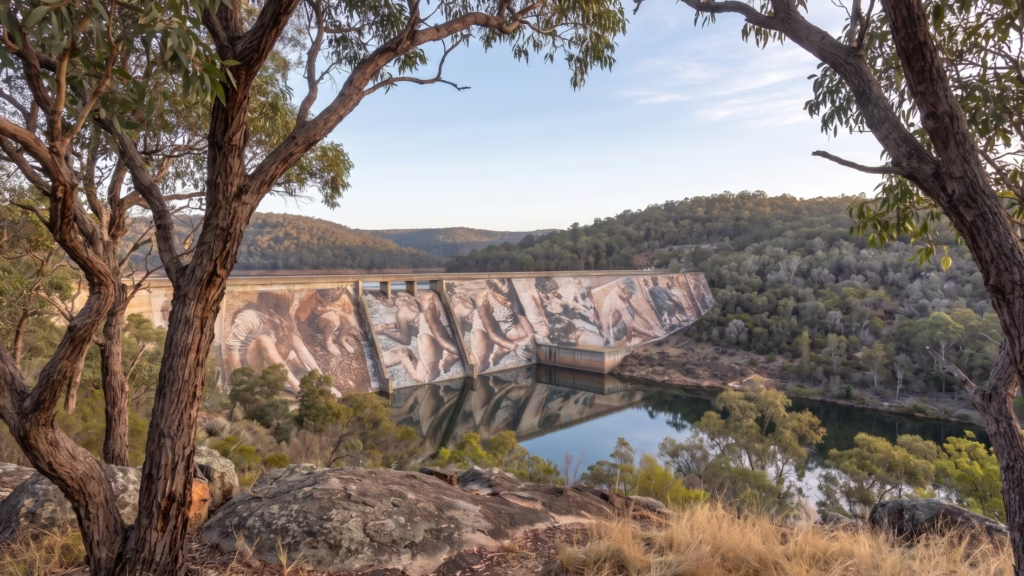
A Blue Tree at the Living Conservation Forest at Wellington Dam
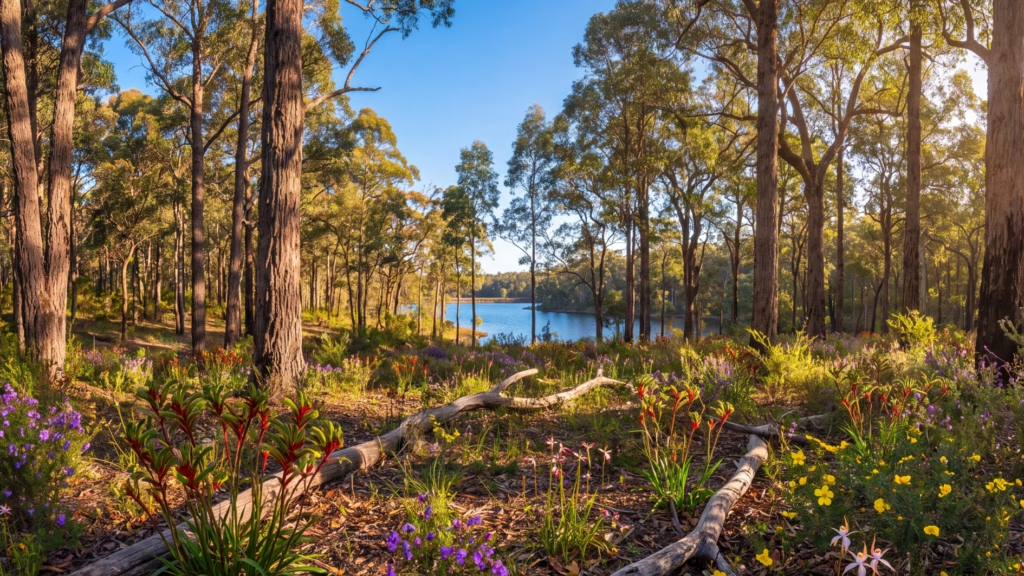
Location and Setting in the Wellington Dam Forest
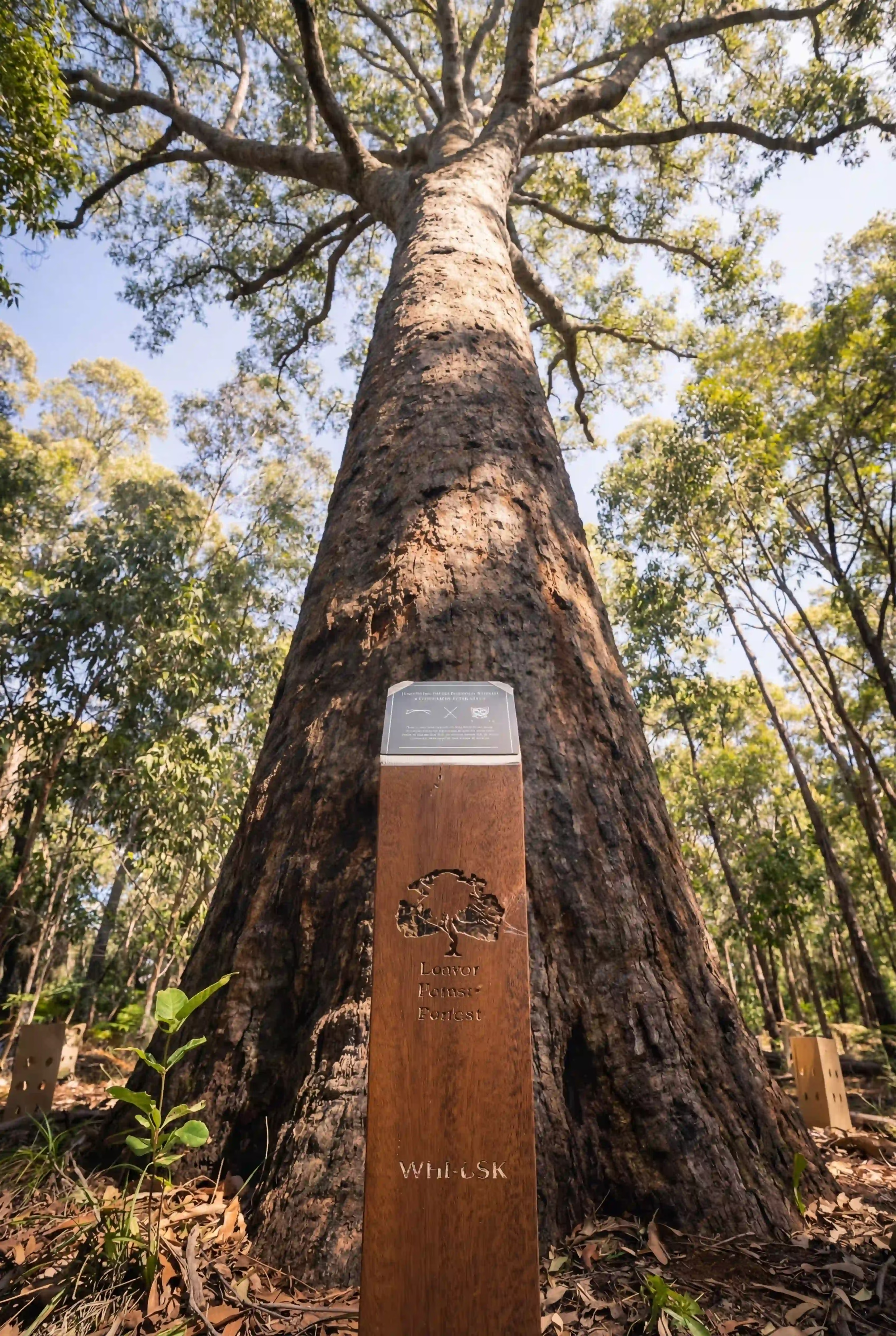
The Living Conservation Forest at Wellington Dam sits in WA’s south west, inside Wellington National Park, near Worsley and within reach of both Collie and Bunbury. The wider park covers around 25,000 hectares of protected bushland. Inside it, families plant a native Jarrah, Marri, or Blackbutt, and a person they have lost is brought into the soil beneath it. This is a place built for long-term remembrance, with walking tracks, quiet gathering areas, and trees that will outlive everyone visiting today.
Appearance and Placement of the Blue Tree
Within that setting, a painted blue tree stands as a deliberate, distinct feature. Against the muted greens, browns, and reds of the south west bush, the colour reads from a distance. Visitors pass it as part of their walk, often without expecting to. The placement is intentional: somewhere that catches the eye on the way to a more reflective space, so the encounter happens in passing. It is a tree, not a monument.
How It Connects to Mental Health and Remembrance
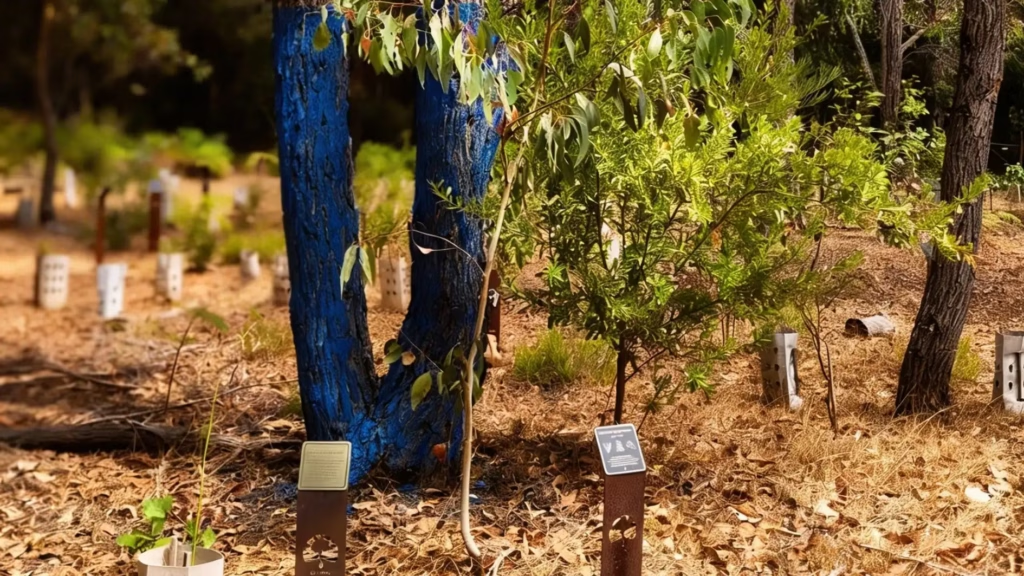
The blue tree at Wellington Dam holds two ideas at once. It carries the Blue Tree Project’s message about checking in and about silence as a risk factor. It also sits inside a place dedicated to ongoing connection with people who have died, including some who died by suicide.
A blue tree on a fence line and a Marri planted in Wellington National Park are not the same gesture, but they sit on a continuous line. One asks the living to talk. The other gives the dead a place to remain. A family who has lost someone to suicide can find both inside the same forest, on the same afternoon.
How WA Families and Communities Use Blue Trees in Remembrance
Community Painting Events Across Western Australia
Painting a blue tree has become its own kind of community event, often organised by shires, councils, sporting clubs, or workmate groups. The most common dates are Men’s Health Week in June, RUOK Day in September, and Suicide Prevention Awareness Month, though many groups choose local anniversaries instead. These events are practical, outdoorsy, and shared. For men who would not attend a formal awareness session, the painting is the entry point, and the conversation tends to follow the activity rather than the other way around.
Personal Tributes and Shared Grief
Some blue trees are private acts. A family will paint a tree near a farm gate, a roadside, or a community park in memory of someone who died by suicide, and tend it themselves. The act takes private grief, particularly grief the broader community has not always known how to discuss, and turns it into something visible. A repainted tree on a fence line is a quiet message to the next person driving past who is carrying something they have not named.
Keeping Stories and Conversations Alive
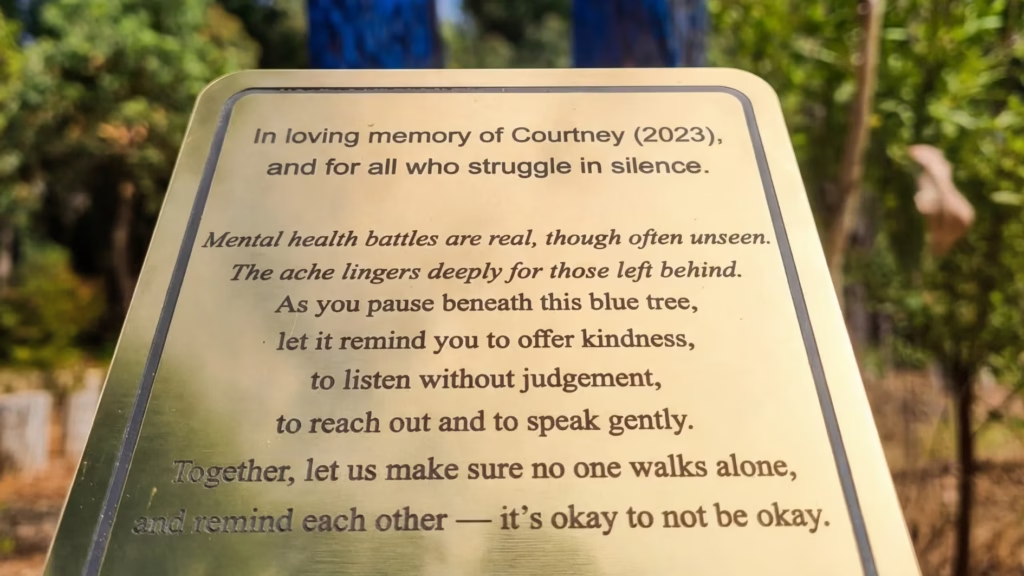
Some sites now include small plaques, signs, or QR codes at the base of a painted blue tree in Australia. The plaque might name the person being remembered. The QR code might link to a support directory or a short page about the family’s story. Where families have added information, the tree starts answering its own question for anyone who stops, and a memorial begins to do useful work for strangers.
Crisis Support When You or Someone Else Is Struggling
National Suicide and Mental Health Support Services
If you or someone else is in immediate danger, call 000. Lifeline is available 24 hours a day on 13 11 14, with online chat at lifeline.org.au. Beyond Blue offers 24-hour support on 1300 22 4636, with online chat at beyondblue.org.au. MensLine Australia is a free, anonymous service for men dealing with relationship, family, or emotional concerns, available 24 hours a day on 1300 78 99 78. Suicide Call Back Service is available on 1300 659 467 for anyone affected by suicidal thoughts, attempts, or bereavement. Saving one of these numbers in a phone is a small act with a long reach.
Western Australia Specific Helplines and Help Options
For people living in regional and remote WA, Rurallink provides specialist after-hours mental health crisis support on 1800 552 002, operating outside business hours on weekdays and around the clock on weekends and public holidays. For Perth metropolitan callers, the equivalent 24-hour service is the Mental Health Emergency Response Line.
13YARN, the national Aboriginal and Torres Strait Islander crisis line, is available 24 hours a day on 13 92 76, staffed by Aboriginal and Torres Strait Islander crisis supporters. Reaching out, for yourself or for someone you are quietly worried about, is the practical response to a problem that tends to last longer than a single bad week.
Frequently Asked Questions About Blue Trees in Australia
What does a blue tree in Australia mean?
A blue tree in Australia is a public mental health awareness symbol. The colour, painted onto a dead or non-living tree, is intended to interrupt the landscape so that passers-by stop, ask questions, and start a conversation about mental health and suicide prevention. The trees are part of the Blue Tree Project, founded in regional Western Australia in 2019.
Who started the Blue Tree Project?
The Blue Tree Project was founded by Kendall Whyte in 2019, after the loss of her brother Jayden Whyte to suicide in 2018. The first blue tree was painted by Jayden and his friend Tjarda on the Whyte family’s farm in Mukinbudin in 2014, originally as a prank rather than a campaign. The story of the tree was told at Jayden’s funeral and became the foundation for the wider movement.
Why are trees painted blue in Australia?
Trees are painted blue to make a quiet topic visible. Mental health and suicide are subjects many Australians, and Australian men in particular, are slow to raise in conversation. A bright blue tree in a paddock or beside a road is impossible to ignore visually, which makes it an easy first prompt for the conversations that often need to happen but rarely begin on their own.
Where can I see a blue tree in Western Australia?
Painted blue trees stand throughout regional and rural WA, from the wheatbelt across to the south west and up into the Pilbara. They are commonly found near sports grounds, on farm entrances, beside rural roads, and in small towns. The Blue Tree Project maintains a public map of registered trees on its website, which is the simplest way to find one near you.
Can I paint a blue tree on my own property?
Yes. The Blue Tree Project encourages individuals, families, sporting clubs, workplaces, and community groups to paint a non-living tree blue and register it through the project’s website. Free blue paint is available in Australia and New Zealand through the project’s partnership with Wattyl. Painting events are often timed around Men’s Health Week in June or RUOK Day in September, but any time of year works.
Is there a blue tree at the Living Conservation Forest at Wellington Dam?
The Living Conservation Forest at Wellington Dam, in WA’s south west, is a memorial forest where families plant native trees in remembrance of someone they have lost. A painted blue tree within the forest links the Blue Tree Project’s mental health awareness message with the wider work of remembering people, including those lost to suicide.
What does RUOK Day have to do with blue trees?
RUOK Day, observed each September, is an Australian initiative encouraging people to ask the simple question “Are you OK?” of friends, family, and colleagues. Many blue tree painting events are scheduled around RUOK Day because the two messages share the same goal: opening a conversation that might otherwise be put off.
Are blue trees only in Western Australia?
The movement began in regional WA, but blue trees are now registered across every Australian state and territory, as well as in New Zealand, the United Kingdom, Germany, and the United States. Western Australia remains the heart of the movement, and the highest concentration of blue trees is still found in regional and rural WA communities.
Closing Reflection: Honouring Lives and Conversations
What the Blue Tree Asks of Us Today
A blue tree along a road in WA is not asking for much. It is asking the people who pass it to do one thing they would otherwise put off: check in with a friend who has been quiet, call the brother who has stopped picking up, ask the question rather than letting it pass again. The hardest part of suicide prevention is rarely the conversation itself. It is the moment before it, when most of us decide we will get to it later. What the trees do, slowly, is shorten that moment.
Remembering Those Lost and Those Who Care
Every blue tree in Western Australia stands for someone. Sometimes that someone is a person whose death prompted the painting. Sometimes it is the person doing the painting, working through their own grief by giving it a colour. Sometimes it is a stranger who will see the tree years from now and find a reason to call a number they had been carrying in their phone. Together, across a state the size of WA, the trees form a thin but real safety net: a network of small reminders that someone is still paying attention.