

If you or someone close to you is in crisis, the rest of this article can wait. Make a call first.
Crisis numbers
- Triple Zero (000) if life is in immediate danger.
- Lifeline: 13 11 14. Free, 24 hours, every day.
- Mental Health Emergency Response Line (Perth metro): 1300 555 788.
- Mental Health Emergency Response Line (Peel): 1800 676 822.
- Rurallink (regional and remote WA, after hours): 1800 552 002.
These services are staffed by trained crisis supporters and clinicians. You do not need to be at the worst point of your life to call. People call when they feel flat, when they feel stuck, when they are not sure what is wrong but something is. That is what the lines are for.
Why men’s mental health is treated as its own conversation?
In 2024, 2,529 men died by suicide in Australia, an average of seven men a day. That figure represents 76.5% of all suicide deaths, and the proportion has not dropped below 75% in any year since 1983. The age-standardised rate for Australian men was 18.3 per 100,000, against 5.5 for women. In Western Australia the rate is higher again, at 21.9 per 100,000, roughly twenty percent above the national male average. These figures come from the Australian Bureau of Statistics Causes of Death release of November 2025, with state breakdowns analysed by the Australian Men’s Health Forum.
There is no single reason behind these numbers. The Australian Institute of Family Studies’ Ten to Men study, the country’s largest longitudinal study of male health, points to a combination of factors that affect men differently: lower rates of help-seeking, higher rates of alcohol and substance use, financial and employment stress, isolation in regional and remote work, and the long, slow influence of cultural messaging that frames distress as weakness. None of these is a complete explanation. Together, they make a strong case for talking about men’s mental health on its own terms, and for building services that men actually use.
Helplines and services at a glance
Every service discussed in this article, with phone, hours, and what each is best suited to. Click any name for the full website.
| Service | Phone | Hours | Best for |
|---|---|---|---|
| Triple Zero | 000 | 24/7 | Life in immediate danger |
| Lifeline | 13 11 14, text 0477 13 11 14 | 24/7 | General crisis support, anyone in distress |
| MensLine Australia | 1300 78 99 78 | 24/7 | Men: relationships, parenting, anger, mental health |
| Beyond Blue | 1300 22 4636 | 24/7 | Anxiety, depression, treatment guidance |
| Suicide Call Back Service | 1300 659 467 | 24/7 | Suicidal thoughts or bereavement, up to six ongoing sessions |
| 13YARN | 13 92 76 | 24/7 | Aboriginal and Torres Strait Islander crisis support |
| Brother to Brother | 1800 435 799 | 24/7 | Aboriginal men, supporters with lived experience |
| MHERL (Perth metro) | 1300 555 788 | 24/7 | WA mental health crisis, clinical assessment |
| MHERL (Peel) | 1800 676 822 | 24/7 | Mental health crisis in the Peel region |
| Rurallink | 1800 552 002 | After hours weeknights, 24h weekends | Regional and remote WA crisis support |
| HelpingMinds | 1800 811 747 | Business hours | WA: support for carers and families |
| MATES in Construction WA | 1300 642 111 | 24/7 | Construction, mining, energy industry workers and families |
| Regional Men’s Health Initiative | (08) 9690 2277 | Business hours | Rural and regional WA outreach and education |
| Men’s Sheds of WA | Find your local shed | Varies | Community workshops, ongoing membership |
When a phone call feels like too much
Several services offer a way in that is not a voice on the line.
Lifeline accepts texts as well as calls, using the same trained crisis supporters. MensLine offers online chat and scheduled video counselling through their website, useful for men who want a face-to-face conversation without travelling to a clinic. Beyond Blue runs a web chat with mental health professionals and an online forum where users post anonymously and respond to each other.
For longer-term self-help, MindSpot (mindspot.org.au) provides free assessments and structured online treatment programs for anxiety, depression, and stress, designed by clinical psychologists. Head to Health (headtohealth.gov.au) is the Australian Government’s mental health gateway and connects users to digital programs, helplines, and local services based on what they describe.
Support groups across Perth and regional WA

Groups offer something a phone line cannot: a regular space to be among other men, doing something, with the option of conversation.
Men’s Sheds
Are community workshops where men meet to build, fix, talk, or sit with a cup of tea. WA has a strong network of sheds across Perth, the South West, the Wheatbelt, the Goldfields, and the North West. There is no membership criterion beyond turning up. The Australian Men’s Shed Association estimates around 50,000 Australian men participate nationally.
MATES in Construction WA
Operates across construction, mining, and energy sites in WA. The MATES program trains workers on-site to recognise distress in their colleagues and to connect mates to support, with a 24-hour helpline open to construction workers, their families, and anyone working in the affiliated industries.
The Regional Men’s Health Initiative
Has been working across rural and regional WA since 2002, delivering community education sessions, the Fast Track Pit Stop health checks, and one-to-one outreach. The slogan, “before it all gets too much, talk to a mate,” reflects their model: not clinical, not crisis-driven, focused on starting conversations early.
Aboriginal and Torres Strait Islander men’s services
Services designed by and for Aboriginal and Torres Strait Islander people often achieve outcomes that mainstream services cannot, because the conversation begins from a different starting point.
13YARN
Is the national crisis support line co-designed by, and run for, Aboriginal and Torres Strait Islander people. The line is reachable from any phone in Australia, and supporters on the other end are mob.
Brother to Brother
Is a national crisis line specifically for Aboriginal men, launched in 2020 by Dardi Munwurro. The line is staffed by Aboriginal men, including Elders, with lived experience of the issues callers raise: relationships, family violence, parenting, alcohol and other drugs, grief.
For non-crisis care in WA, local Aboriginal Medical Services and Aboriginal Community Controlled Health Organisations are often the most direct route to culturally safe support. The Aboriginal Health Council of Western Australia (ahcwa.org.au) maintains a list of member services across the state.
How to support someone you are worried about
If you have noticed a change in someone, you do not need clinical training to be useful. The conversation matters more than the words you choose.
Pick a moment without an audience. A drive, a walk, a task you can do together. Sitting directly across from someone can feel exposing for a man who is not used to talking, and many men open up more readily while the focus is on something else.
Ask the question plainly:
- How are you actually doing?
- I have noticed you have not been yourself, what is going on?
Direct questions are easier to answer honestly than vague ones. If you suspect they are thinking about suicide, it is appropriate to ask. The fear that asking might plant the idea is widespread, but the evidence does not support it. Studies on suicide intervention have generally found that asking openly about suicidal thoughts does not increase risk, and may reduce it by giving the person permission to speak.
Listen without rushing in with solutions. The most common mistake is to leap to advice. Sit with what they are telling you. Ask one or two follow-up questions. Resist the impulse to make it about your own experience unless it genuinely helps.
Encourage one practical next step. That might be a call to one of the helplines above, a GP appointment, or a conversation with a trusted family member. You can offer to help make the call, sit with them while they make it, or drive them to the appointment. Concrete offers tend to work better than the open-ended “let me know if you need anything.”
Check in again, more than once. A single conversation can feel like a turning point for the person checking in and barely register for the person who is struggling. The follow-up two weeks later, the unexpected message a month on, is often where trust is built.
If at any point you believe the person is in immediate danger, call 000 or take them to the nearest emergency department. You are not betraying them by acting. You are choosing their safety over your discomfort.
Why we are publishing this
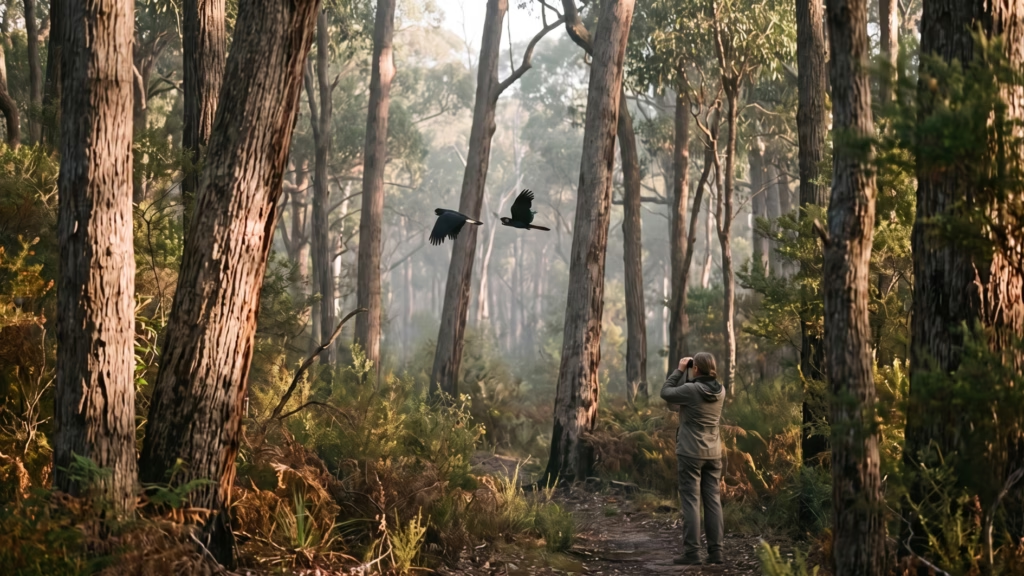
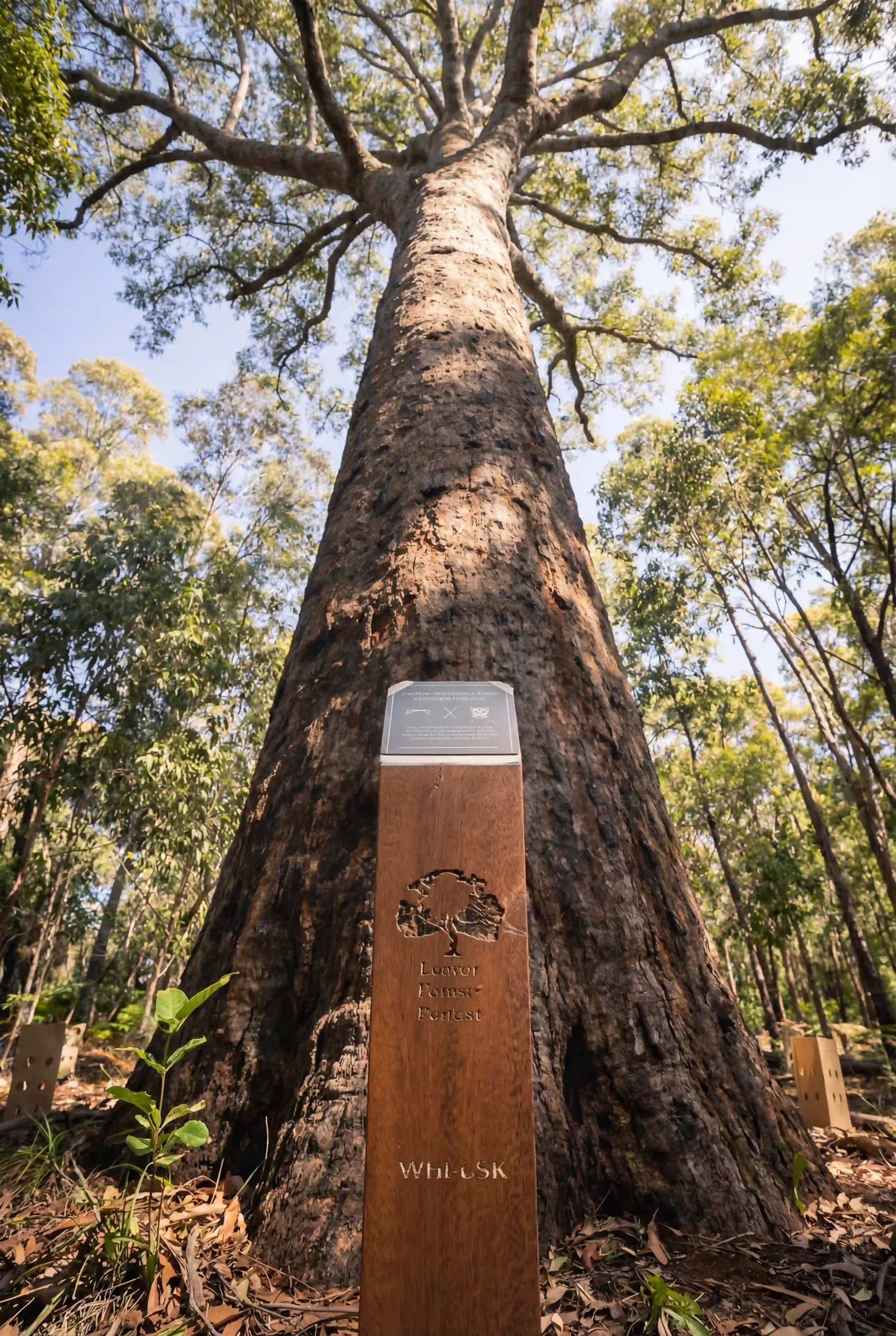
Living Conservation Forest at Wellington Dam is a conservation forest near Bunbury, in the Southwest of WA. Families come here to plant native memorial trees in the bushland of Wellington National Park. Among them, a portion are grieving someone they lost to suicide or to mental illness that went untreated for too long. It is a thread that runs quietly through our work.
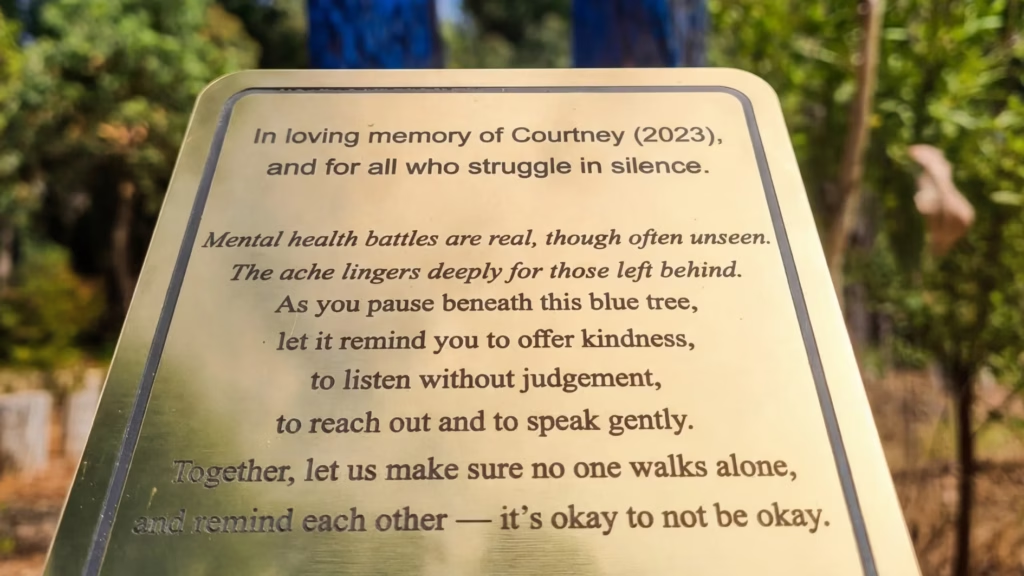
Earlier this year, we painted one young tree blue, in memory of a family who had lost their son to men’s mental health. The blue tree stands among the other memorial trees. As the paint fades, the tree itself will keep growing.
Families honouring a life lost this way are welcome here. To read more about how the forest works, see our piece on memorial trees and the conservation covenant. To learn about planting a tree, visit our memorial tree information page.
Read more: Blue Trees in Western Australia: A Mental Health Awareness Symbol
A final note
A common observation from people who eventually call one of the numbers on this page is that they wish they had called sooner. The conversation was less difficult than they expected, the person on the line was less judgemental than they feared, and the relief of having said the thing aloud was greater than the dread of saying it.
If you are reading this for yourself, the call you make today does not have to fix anything. It only has to begin something.
If you are reading this for someone else, save these numbers in your phone before you put the article down. The moment you need them is rarely the moment you have time to find them.
This article discusses suicide and mental illness. If reading it has raised concerns for you personally, please contact Lifeline on 13 11 14 or any of the services listed above. All numbers and links were verified live on 30 April 2026.